National Geographic has listed Halong Bay among the world’s finest paddling destinations, and that distinction holds firm today.
A cruise ship anchors in open bay and offers a wide panoramic view of the karst landscape. A kayak lets you enter it. You glide through limestone tunnels only a few metres across, into enclosed lagoons where the water sits perfectly still, and alongside the floating homes of communities that have lived on the bay for generations.
This guide covers everything you need to plan your trip: the best spots to paddle across Halong Bay and Lan Ha Bay, the seasons that make the most of calm conditions, what to bring, and the access regulations that govern the heritage.
Why Kayaking in Halong Bay Belongs on Every Itinerary?
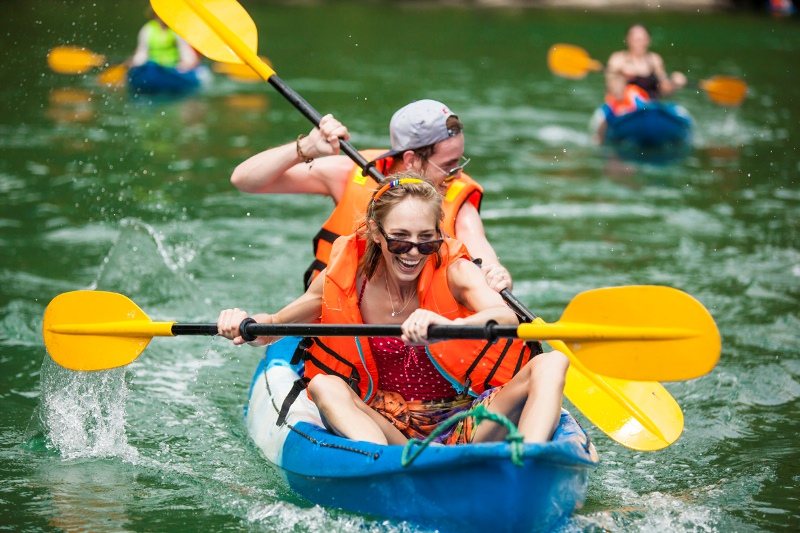
Kayaking gives you the version of Halong Bay that a cruise deck cannot. The bay’s thousands of limestone karst islands create naturally sheltered corridors and enclosed lagoons that larger vessels cannot enter. Once inside those spaces, the scale of the rock formations shifts from distant and dramatic to immediate and personal.
The dense network of karst islands surrounding the bay acts as a natural windbreak, keeping surface chop low even when conditions further out in the Gulf of Tonkin are less settled. This makes the activity genuinely accessible for first-time paddlers, families with children from around four years of age, and older travelers with no prior experience on the water.
Paddling through a cave passage or along a limestone wall in near-silence also allows you to hear what a motorized excursion drowns out: macaque monkeys moving along rocky faces, fish visible through clear water beneath your hull, and seabirds working the thermals above the karsts.
Most multi-day cruise itineraries in Halong Bay include a guided kayaking session as a standard activity, with no additional booking or cost. For travelers who want to pair guided paddling with a broader wellness programme, Bhaya Soul’s boutique luxury & wellness cruises weave kayaking alongside Tai Chi sessions on deck, onboard spa treatments, and health-conscious dining into a single curated voyage.
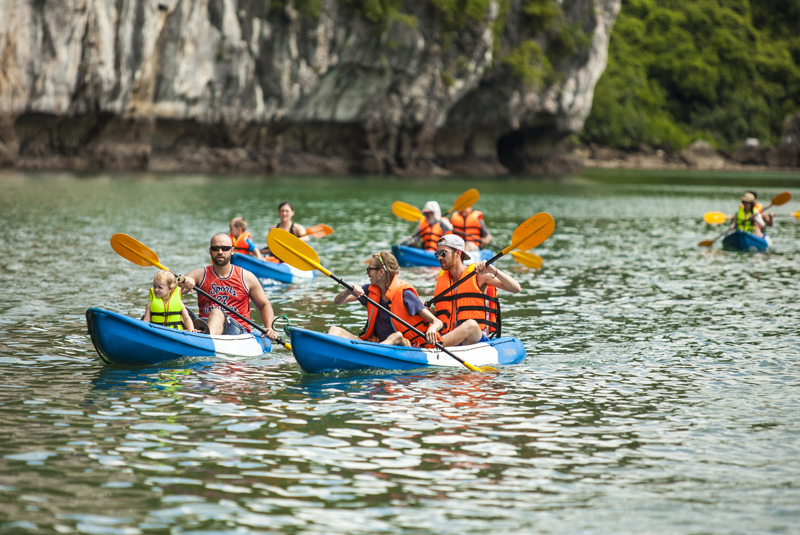
Top Kayaking Spots in Halong Bay
The best paddling experiences in Halong Bay range from iconic cave passages to quiet cultural encounters. The four spots below represent distinct aspects of the bay and suit different traveler preferences. Access to some locations depends on tidal conditions or guided routing, so confirm availability with your cruise operator when you book.
Luon Cave
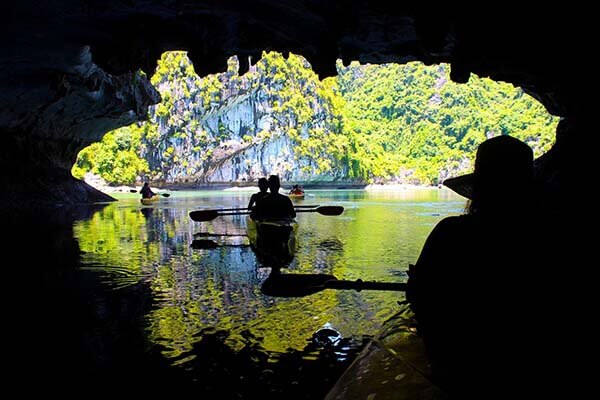
Luon Cave is the most celebrated kayaking spot in Halong Bay. Located on Bo Hon Island, it presents a low natural stone archway, approximately 60 metres (197 feet) long, that only kayaks and traditional bamboo boats can pass through. On the other side, a circular enclosed lagoon opens up, ringed by steep cliffs and framed by lush vegetation growing from the rock above.
The atmosphere inside is unlike any other part of the bay. Macaque monkeys move along the cave walls. Fish are visible through the water just below your kayak. The sounds of the open bay disappear entirely behind the archway. Sessions at Luon Cave are timed to tidal conditions and are most accessible at low to mid-tide. Morning departures produce a calmer and less crowded experience, as visitor numbers in this area grow steadily through late morning. Luon Cave features on most 2-night and 3-night cruise itineraries operating in the central bay.
Cua Van Village
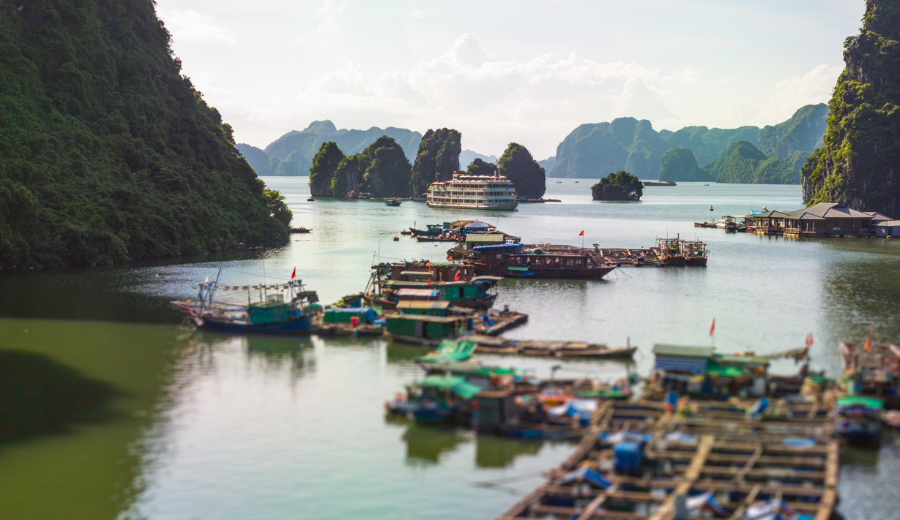
Cua Van offers a different kind of paddling: cultural rather than geological. One of the oldest floating fishing communities in Halong Bay, the village is home to families who have lived on the water for generations, many in painted wooden houses anchored to the bay floor by ropes and weighted chains.
Kayaking through Cua Van means moving alongside traditional fishing boats, watching nets being maintained, and passing through the narrow channels between floating structures. The physical effort is low, making it well suited for travelers who want human interest and cultural context alongside the scenery. Most visits are organized as guided excursions from a cruise, and a local guide provides background on the village’s history and the lives of those still living here.
Ba Ham Lake
Ba Ham Lake is the standout kayaking destination in the wider Halong Bay area, both for its scenery and for how far it sits from the crowds. Set near Dau Be Island at the bay’s southwestern edge, it holds three small lakes joined by a narrow limestone tunnel that opens to kayaks only at low tide. Inside, steep cliffs wrap around still water, broken only by birdsong and the occasional splash from a monkey along the rock face.
The tidal access window and remote setting keep visitor numbers low, giving paddlers a sense of solitude rarely found elsewhere in the bay. Ba Ham Lake does not appear on standard day-cruise routes and typically requires a longer itinerary built around it. Bhaya Soul’s wellness-inclusive cruises include a guided kayaking session at Ba Ham Lake, pairing the bay’s quietest scenery with the line’s focus on calm, restorative travel.
Trinh Nu Cave
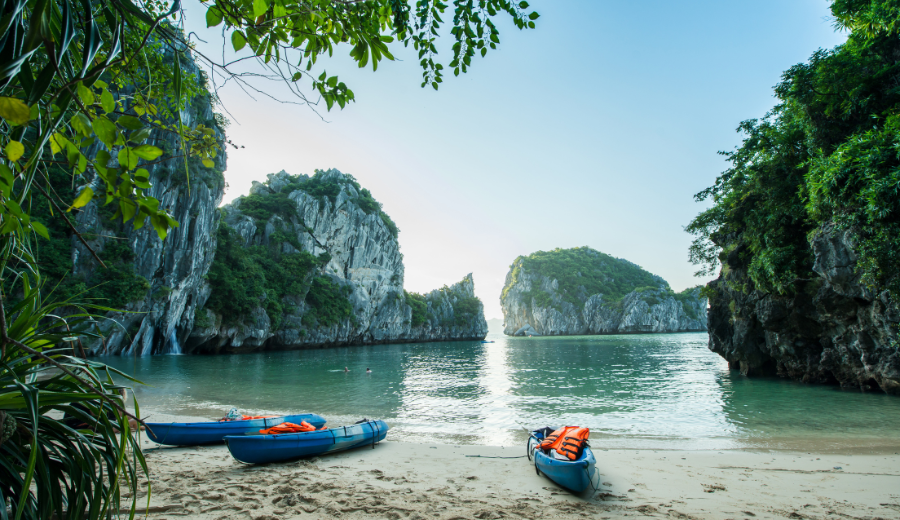
Trinh Nu Cave draws fewer visitors than Luon Cave, which is exactly what makes it appealing for those who want a quieter paddle. The cave’s stalactite formations are accessible by kayak and can be appreciated in natural daylight during morning sessions, when the light angle illuminates the interior without the need for artificial lighting.
The site is connected to a well-known local legend about a young woman and the sea, and a guide can share that story on the water, adding a layer of cultural depth to the paddling experience. For travelers who have already visited Luon Cave, or who simply prefer to avoid the busiest areas of the bay, Trinh Nu offers a reflective and unhurried alternative.
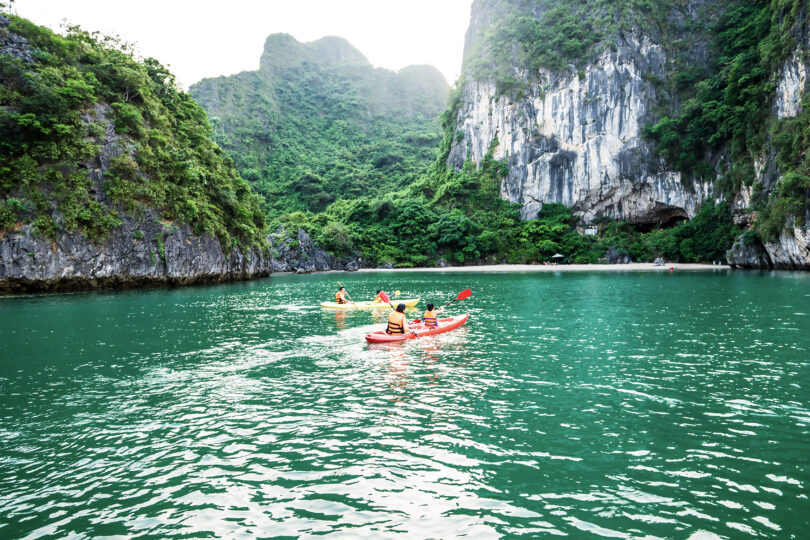
Halong Bay or Lan Ha Bay: Which Is Better for Kayaking?
Both bays offer rewarding paddling, but the experience and the access rules differ in important ways. Halong Bay provides access to the region’s most iconic kayaking spots, including Luon Cave, Cua Van Floating Village, and Ba Ham Lake, supported by well-established cruise infrastructure.
Lan Ha Bay’s kayaking access has narrowed. As of June 2026, cruise passengers may only kayak in the Ao Ech area near Cat Ba Island. Kayaking at the Dark and Bright Cave and at Ba Trai Dao is no longer permitted, although both sites remain open to visitors arriving by tender boat. The bay has also grown busier rather than quieter. Large modern cruise ships now bring sizeable crowds to the handful of attractions still open there: the Dark and Bright Cave, Ao Ech, Viet Hai Village, and Cat Ba National Park.
The choice often comes down to pace and experience level. Halong Bay rewards first-time visitors who want to see the signature sites: Luon Cave, Cua Van Floating Village, and the central karst panoramas that define postcards of the region. Lan Ha Bay appeals to travelers returning for a second visit, those prioritizing privacy, and anyone drawn to a more exploratory setting where other vessels are rarely in sight.
For those who want both, The Au Co’s 3-day itinerary covers Halong Bay and Lan Ha Bay within a single voyage, including kayaking excursions planned across each area.
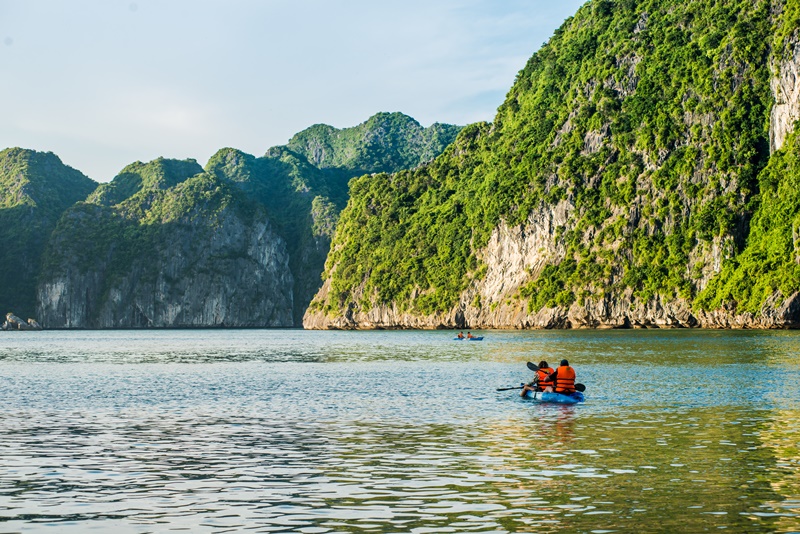
Kayaking Rules and Access (Updates for 2026)
All kayaking in Halong Bay operates within a regulatory framework designed to protect both visitors and the bay’s natural environment.
Independent kayak rental from shore is not available here. All paddling must be arranged through a licensed cruise operator or authorized day tour provider. This requirement keeps activity within designated zones approved by the Quang Ninh Province Department of Tourism and the Vietnam National Administration of Tourism. Venturing outside these approved areas is prohibited and carries fines for both operators and individual visitors.
Life jackets are mandatory throughout every session, regardless of swimming ability. Children are welcome from approximately four to five years of age, sharing a kayak with a supervising adult at all times. Before every excursion, your guide will provide a brief safety briefing covering the route, timing, and any specific conditions for that day.
Several site access changes apply as of 2026. Heavenly Palace Cave, known locally as Thien Cung, has been closed to kayaking since 2024 for environmental preservation. Surprise Cave (Sung Sot) prohibits kayak entry entirely and can only be visited by larger boat. Mat Rong Island was closed in 2025 for ecological restoration, and its current reopening status should be confirmed directly with your operator before departure.

Access to specific kayaking zones is subject to change based on decisions by the Quang Ninh provincial authorities. Please confirm current site access with your cruise operator before booking.
Planning Your Halong Bay Kayaking Trip
Kayaking in Halong Bay offers a perspective on this UNESCO World Heritage landscape that no view from a cruise deck can replicate. Whether you are paddling through the stone archway of Luon Cave, drifting through the quiet channels of Cua Van, or reading the wilder coastline of Lan Ha Bay from water level, the experience connects you directly to what makes this place extraordinary.
Planning a Halong Bay journey? Explore Bhaya’s collection of boutique cruises, where guided kayaking is woven into carefully designed itineraries across both Halong and Lan Ha Bay. Discover the voyage that fits your travel style at bhayacruises.com.
Frequently Asked Questions
Can I kayak independently in Halong Bay without a cruise or guided tour?
No. Under current Vietnamese regulations, independent kayak rental from shore is not permitted in Halong Bay. All kayaking activities must be arranged through a licensed cruise operator or an authorized day-tour provider. Most overnight cruises include guided kayaking as part of the itinerary, making it an easy and convenient activity for visitors exploring the bay.
Is kayaking in Halong Bay suitable for beginners and children?
Yes. Halong Bay’s sheltered waters, protected by hundreds of limestone islands and karsts, provide calm conditions that are ideal for first-time kayakers. Children from around four to five years old can typically participate when sharing a tandem kayak with a supervising adult, subject to the operator’s safety requirements.
What is the best kayaking spot in Halong Bay?
Ba Ham Lake is widely considered one of the most rewarding kayaking locations in Halong Bay thanks to its interconnected hidden lakes, secluded setting, and limited visitor numbers. Trinh Nu Cave is another excellent choice, offering calm waters and impressive limestone formations. Luon Cave remains the bay’s most popular kayaking destination, known for its dramatic scenery and iconic paddling experience.
How long does a typical kayaking session last on a Halong Bay cruise?
Most guided kayaking sessions last between 45 and 90 minutes, depending on the cruise itinerary and the destination visited. Longer two-night cruises often include additional kayaking excursions on separate days, allowing guests to explore different lagoons, floating villages, or pearl-farming areas across Halong Bay and Lan Ha Bay.
Which kayaking sites are currently closed in Halong Bay in 2026?
As of 2026, Heavenly Palace Cave (Thien Cung Cave) remains closed to kayaking for conservation reasons, while Surprise Cave (Sung Sot Cave) does not permit kayak access. Mat Rong Island was temporarily closed in 2025 for ecological restoration. Visitors should confirm the latest access status with their cruise operator before departure, as regulations and permitted activity areas may change.