
The first time you see Halong Bay, no photograph prepares you. Limestone towers rise from still, jade-green water-shapes that belong to a geological timeline, not a travel brochure. The scale stops you. The silence between cliffs holds something ancient. And for a moment, you simply look.
Planning that experience in 2026 is the most straightforward it has ever been. Transfer times from Hanoi have shortened. Cruise standards have risen. And the bay itself-protected, carefully managed, and increasingly studied-remains one of Southeast Asia’s most extraordinary natural formations.
This guide gives you everything a first-time visitor needs to arrive informed and leave with nothing missed. You’ll find the best time to go, how to travel from Hanoi, which bay suits your travel style, what to do on and off the water, how to read a cruise itinerary, and how to budget realistically for the trip. Practical tips, cost breakdowns, and packing guidance round out the picture.
With over two decades as a premium cruise operator in Halong and Lan Ha Bay, Bhaya Cruises has guided international travelers through these waters with precision and care-and a commitment to something that outlasts any single voyage.

Overview of Halong Bay
Halong Bay occupies Quang Ninh Province in northeastern Vietnam, roughly 170 kilometers from Hanoi. The bay spans approximately 1,500 square kilometers-a vast, island-scattered seascape stretching north toward the Chinese border and south toward Cat Ba Island. Within that space, some 1,969 islands and islets rise from the water, most of them uninhabited, many of them unnamed.
- Location: Quang Ninh Province, northeastern Vietnam
- Area: ~1,500 km² (UNESCO core zone)
- Islands & islets: ~1,969
- Nearest major city: Halong City (Quang Ninh Province)
- Nearest airports: Van Don International Airport (~50km); Cat Bi Airport, Hai Phong (~60km); Noi Bai International Airport, Hanoi (~160km)
- Main embarkation points: Halong International Cruise Port; Tuan Chau Island
UNESCO designated Halong Bay a World Heritage Site in 1994, with an expanded inscription in 2000 that recognized both the bay’s geological record and its ecological value. The karst landscape took shape over roughly 500 million years: ancient reef systems, riverine erosion, and marine submersion gradually carved the limestone pillars the bay is known for today. That record places Halong among the world’s most significant examples of marine karst topography.
The name “Halong Bay” covers the entire archipelago in common usage, but the region divides into three distinct bays.
- Halong Bay proper anchors the center-famous, well-charted, dense with landmarks.
- Bai Tu Long Bay extends northeast into quieter, less-navigated waters.
- Lan Ha Bay sits south of Cat Ba Island, sharing the same geological ancestry but operating at a slower pace with stronger adventure programming.
Each feels different on the water. The distinction matters when you choose an itinerary.
Why Visit Halong Bay in 2026?
Some destinations improve with time. Halong Bay is one of them-not because the landscape changes, but because the infrastructure around it does.
The Ha Long–Hai Phong Expressway has reduced overland travel from Hanoi to under three hours. Van Don International Airport handles direct regional connections. Across the cruise industry, sustainability standards have advanced: plastic-free cabins, certified waste management, and protected anchor zones are now standard among reputable operators rather than exceptions to it.
In 2026, Lan Ha Bay received wider recognition as part of the UNESCO Cat Ba Archipelago designation-a development that has drawn fresh attention to the southern waters and encouraged operators to expand curated itineraries into less-visited zones. For first-time visitors, this means more meaningful choices: iconic Halong Bay landmarks on a classic route, or a deeper voyage into territory most travelers never reach.
When to Visit Halong Bay in 2026-2027?
Halong Bay operates under a tropical monsoon climate shaped by four distinct seasons. The range across a full year is wider than most visitors expect-from cool, fog-draped winters to hot, rain-heavy summers-and each period offers a different version of the bay.
The best time to visit Halong Bay in 2026 depends on your priorities, but two clear windows stand out.
- For weather-first planning, March to May and September to November offer mild temperatures, lower rainfall, and stable sea conditions. These months allow full use of outdoor decks, excursions, and longer itineraries.
- For travelers focused on value, May, early June, and September provide a balance between price and experience. Conditions may be warmer or more changeable, but promotions and fewer international crowds can make the journey more flexible.
10:47 AM
Halong Bay’s weather shifts gently through the year, yet each month creates a distinct travel experience. Understanding these monthly patterns helps you plan activities, choose the right cruise length, and pack with purpose.
For a full breakdown of what to expect each month-including storm windows, sea conditions, and what to pack by season-visit Bhaya’s complete weather resource: [2026] Halong Bay Weather & Best Time to Visit Halong Bay.
How to Get to Halong Bay?
Getting There from Hanoi
Most visitors travel to Halong Bay from Hanoi, approximately 170 kilometers to the west. The overland journey takes between two and three hours depending on your departure point, vehicle type, and the time of day you travel.
The Ha Long–Hai Phong Expressway is the standard route for all road-based transfers.
- Shared shuttle buses depart from central Hanoi hotels each morning-typically between 7:30 and 9:00 a.m. and cost between USD 10 and 20 per person each way.
- Luxury limousine vans, offering fewer seats, more legroom, and a quieter ride, run at USD 30–60 per person.
- Private car hire sits at USD 80–150 for the full vehicle, one way.
Most quality cruise operators include round-trip transfers in their packages, which removes the need to arrange transport separately. Bhaya Cruises provides organized door-to-door transfers between central Hanoi hotels and Halong International Cruise Port or Tuan Chau Island for all guests boarding Bhaya Soul, The Au Co, Bhaya Classic, and Bhaya Legend. When transfers are included in your cruise package, your journey begins at hotel pickup-the planning ends there.
On your cruise checkout day, the return shuttle typically drops you back in Hanoi around 1:30-2:00 PM. Once you’ve checked back into your hotel, this leaves a free afternoon that’s perfect for adding a curated culture or wellness experience – such as a coffee workshop or a lotus tea ceremony – before you continue your trip.
For a full breakdown of all overland, air, and water transfer options, including seasonal timing tips and what to expect at each departure point, see Bhaya’s transfer guide: [2026] How to Get from Hanoi to Halong Bay?
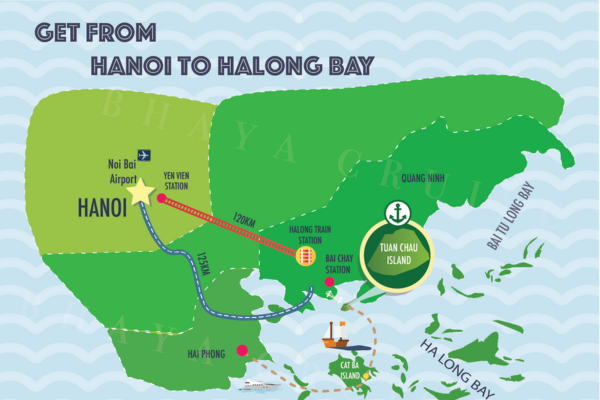
Other Ways to Reach Halong
Travelers flying within Vietnam may also arrive via Cat Bi International Airport in Hai Phong or Van Don International Airport in Quang Ninh.
- Cat Bi Airport in Hai Phong-around 60 kilometers from Tuan Chau-serves domestic flights and some regional routes. Cat Bi is often the quickest airport transfer to the bay, with road time commonly around 45 minutes to 1 hour.
- Van Don International Airport in Quang Ninh sits approximately 50 kilometers from the main cruise port and handles domestic routes and select regional connections. Van Don is also convenient, generally around 1 hour from Halong depending on your exact embarkation point.
Seaplane service between Hanoi and Halong was once the classic aerial option, but this service is no longer operating from April 2026.
Private helicopter services still exist at the high end, but they are niche and best suited to VVIP or special-occasion travel rather than standard first-time planning.
Large international cruise passengers also reach Halong Bay on shore excursions, usually in the form of day tours rather than overnight itineraries.

Halong Bay, Bai Tu Long & Lan Ha: Which Bay Is Right for You?
The broader Halong region encompasses three distinct bays, each with its own character. First-time visitors frequently ask which one to choose. The answer rests on what you want from the water-and how much solitude you’re willing to trade for convenience.
Halong Bay is the world-famous center of the archipelago. It holds the highest concentration of named caves, iconic viewpoints, and floating villages, alongside the densest traffic of cruise vessels during peak season.
If you want the landmarks-Sung Sot Cave, Ti Top Island, Fighting Cock Islet, the floating community at Cua Van-Halong Bay proper delivers them within a tightly programmed itinerary.
The trade-off is company: in peak months, the most popular sites receive several hundred vessels a day.
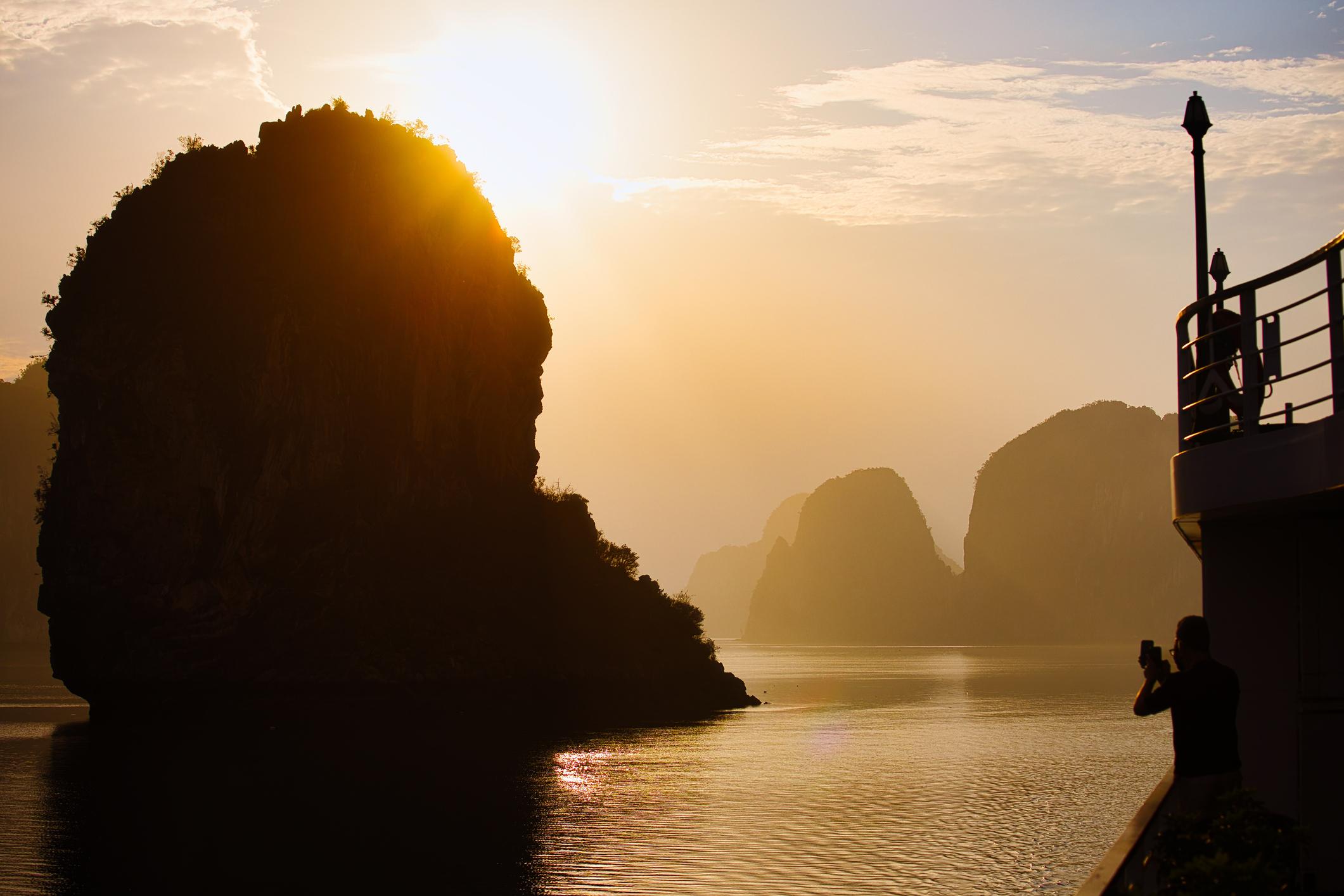
Lan Ha Bay sits south of Cat Ba Island, separated from Halong proper by a short passage. It shares the same geological foundation-limestone karsts, hidden lagoons, emerald coves-but operates at a slower rhythm.
The bay has grown in recognition since the broader Cat Ba Archipelago received UNESCO status, drawing travelers interested in kayaking, rock climbing, and routes that still feel discovered rather than documented. Infrastructure has improved; solitude has not yet disappeared.
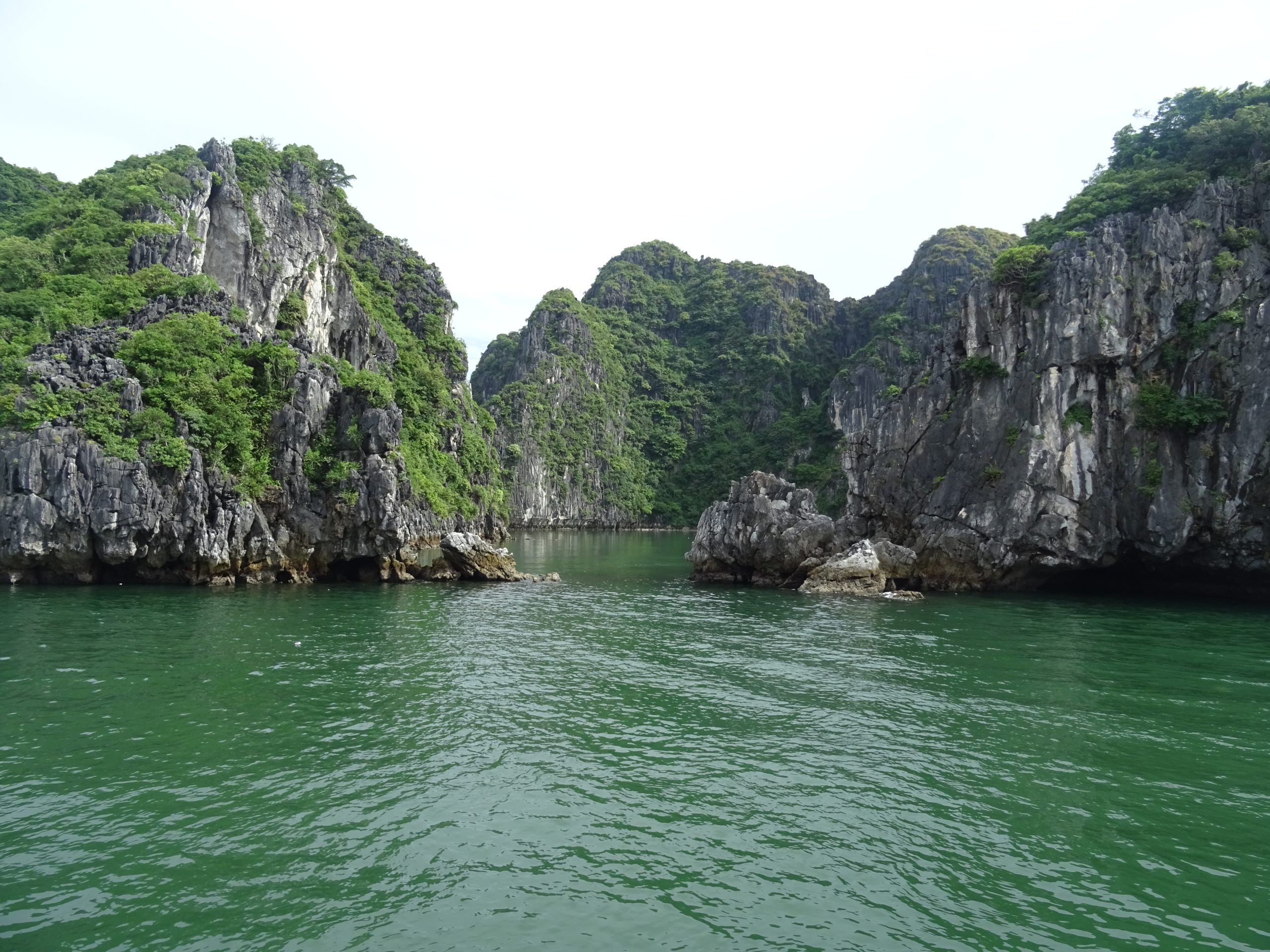
Bai Tu Long Bay extends northeast of Halong proper into less-navigated waters. Fewer operators hold permits here, which means fewer vessels, longer silences, and time spent anchored off empty beaches. The caves are less developed, the fishing villages smaller, and the pace unhurried.
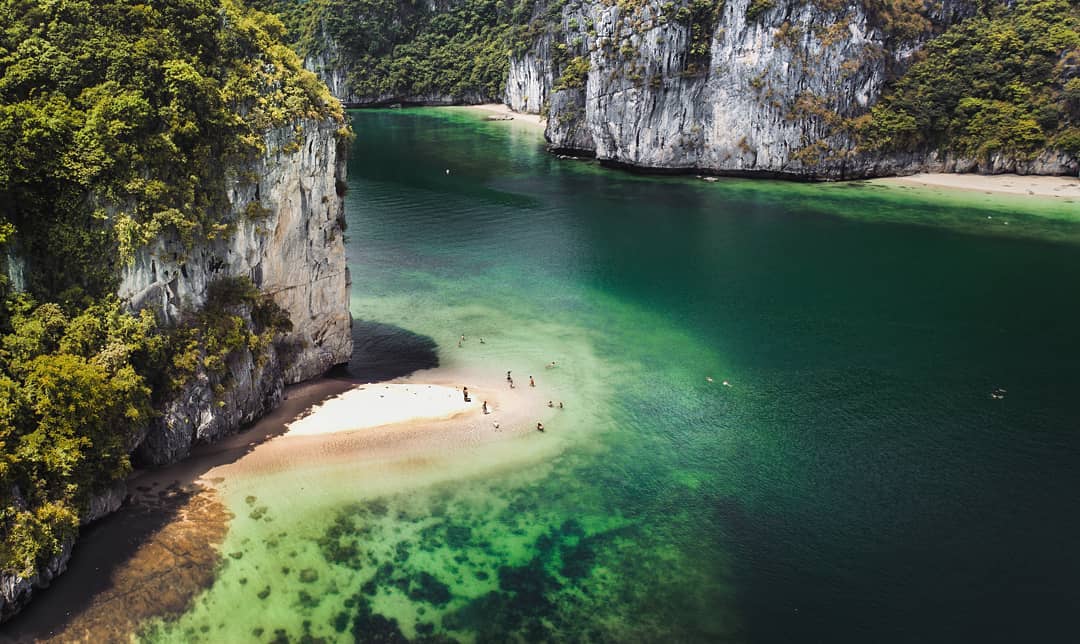
For travelers who find the classic Halong experience too structured, Bai Tu Long offers a genuine alternative-though it asks for a little more flexibility in return.
| Bay | Scenery | Crowd Level | Signature Attractions | Best Activities | Best For |
| Halong Bay | Iconic karst towers, sea caves, islets | High in peak season | Sung Sot Cave, Titop Island, Cua Van Village, Fighting Cock Islet | Cave tours, kayaking, village visits, viewpoint hikes | First-timers, couples, families, cruise first-timers |
| Lan Ha Bay | Wild karsts, hidden lagoons, forested cliffs | Moderate, growing | Dark & Bright Cave, Cat Ba National Park, rock climbing routes | Kayaking, rock climbing, beach stops, snorkeling | Adventure travelers, honeymooners, active couples |
| Bai Tu Long Bay | Undeveloped karst, quiet coves, empty beaches | Low | Thien Canh Son Cave, Cong Do Island, Vung Vieng Village | Snorkeling, squid fishing, beach lounging, village rowing | Solitude seekers, repeat visitors, off-the-path travelers |
Bhaya Cruises operates itineraries across all three bays.
- Bhaya Soul focuses on wellness, sailing toward the calmer, quieter waters on the border of Lan Ha and Halong Bay-suited to travelers seeking a slower pace, meditation sessions, and a retreat-like rhythm on the water.
- The Au Co sails a long-haul route combining Halong Bay and Lan Ha Bay-suited to travelers who want both the iconic and the undiscovered in a single voyage.
- Bhaya Classic covers the essential Halong highlights with efficiency and care.
- Bhaya Legend offers fully private charters with routes that can be customized across all three bays.
Explore the full range of destinations and cruise options through Halong Bay Cruise of Bhaya for Halong Bay, Lan Ha Bay, and Bai Tu Long Bay.
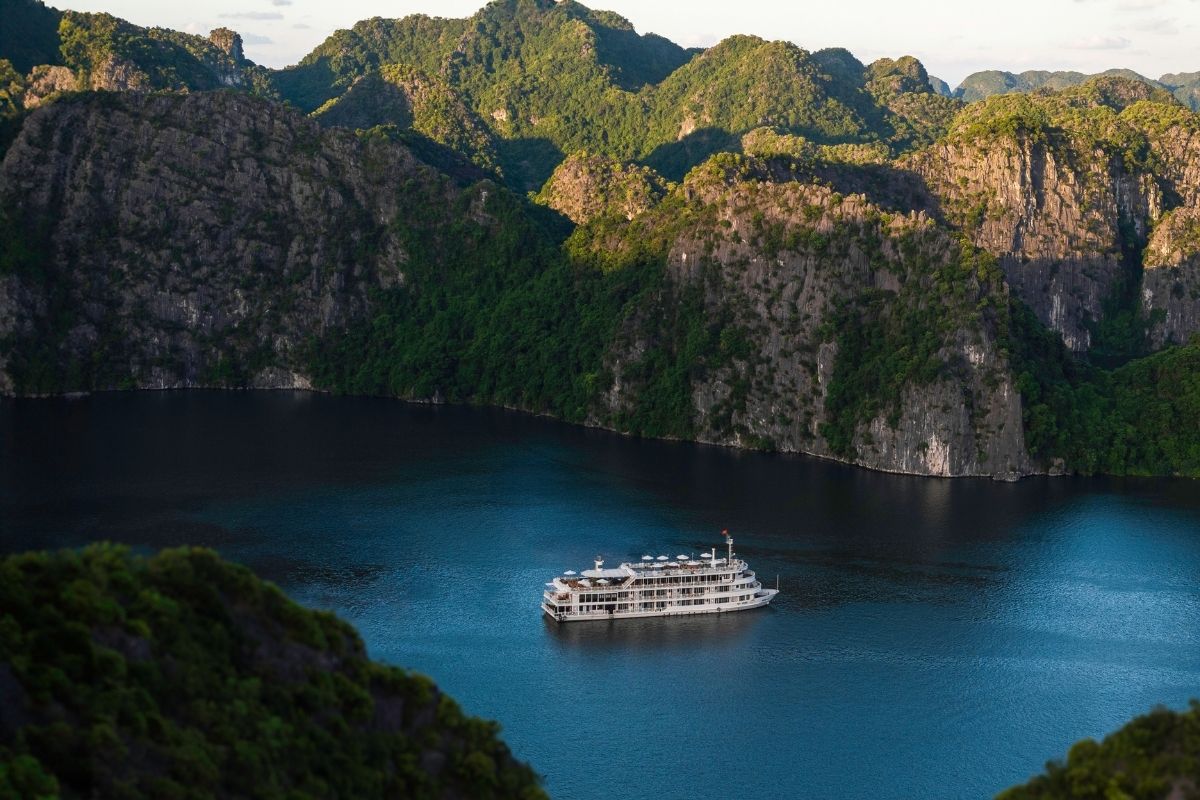
Halong Bay Cruise Routes & Must-See Highlights
One of the most useful things to understand before booking is that cruises operate on official routes. No single journey covers the whole bay. Even on a 2-day or 3-day trip, you are only seeing part of the heritage seascape, which is why route choice matters as much as cruise brand.
Route #1: Harbour – Van Canh Park Conservation Center
- Itinerary: Cruise Port → Thien Cung Cave → Dau Go Cave → Stone Dog Islet, Ba Hang Cave, Dinh Huong Islet, Trong Mai Islet
- Duration: 4 hours
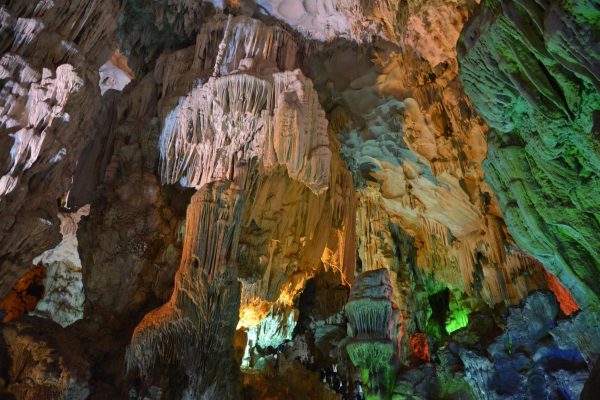
Thien Cung Cave
Thien Cung Cave, situated just 4km from the harbor, north of Dau Go Island, is a magnificent cave adorned with intricate stalactites and stalagmites, resembling a grand palace hidden within Halong Bay.

Dau Go Cave
Dau Go Cave, formed around 2 million years ago, is renowned for its vast chambers, striking rock formations, and historical significance as a strategic hideout in the 13th century, with an impressive entrance measuring 12 meters wide and 17 meters high.
Cho Da Islet
Cho Da Islet, located near Dau Go Cave in the west, stands about 8 meters high and resembles a dog with its back turned to the sea. As boats pass by, this striking rock formation enhances the bay’s picturesque beauty against the emerald waters.

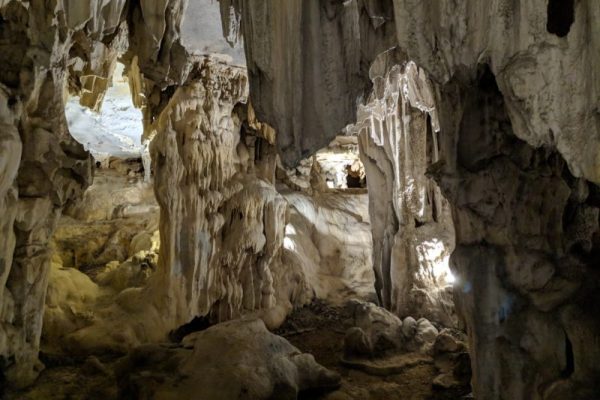
Ba Hang Cave
Ba Hang Cave has 3 small caves shaped like frog jaws located close to each other, connected to 2 saltwater lakes. A charming trio of caves best explored by bamboo boat or kayak, offering a serene experience of Halong’s beauty up close.
Dinh Huong
Dinh Huong, located southeast of Dau Go Cave near Cho Da and Con Meo islets, is a solitary islet shaped like an urn, a cult object that can be found in all temples and pagodas all over Vietnam Its unique form has earned it a place on Vietnam’s 200,000 VND note.
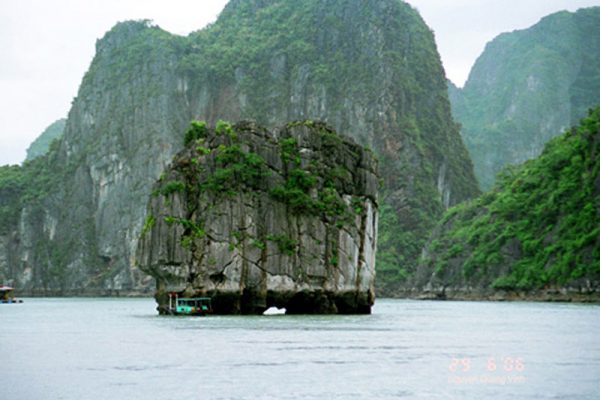
Trong Mai Islet
Trong Mai Islet, located 5 kilometers from Bai Chay Wharf, stands 10 meters above the sea and is a famous Halong Bay landmark. Also known as the Fighting Cock Islet or Kissing Rocks, it resembles a rooster and hen facing each other.
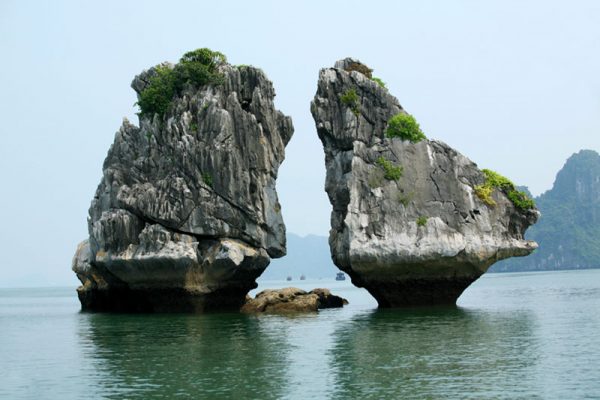
Route #2: Harbour – Cave Park Conservation Center
- Itinerary: Cruise Port → Soi Sim Island → Ti Top Island → Sung Sot Cave → Bo Nau Cave → Luon Cave → Trong Cave → Trinh Nu Cave → Me Cung Cave
- Duration: 6 hours
Soi Sim Island
Located in the southwest of Halong Bay, it covers 66,300m² and is known for its pristine landscape and former abundance of Sim trees. As part of a protected area, it’s an ideal spot for exploring the island’s ecosystem, enjoying water sports, and relaxing on its sandy beaches.
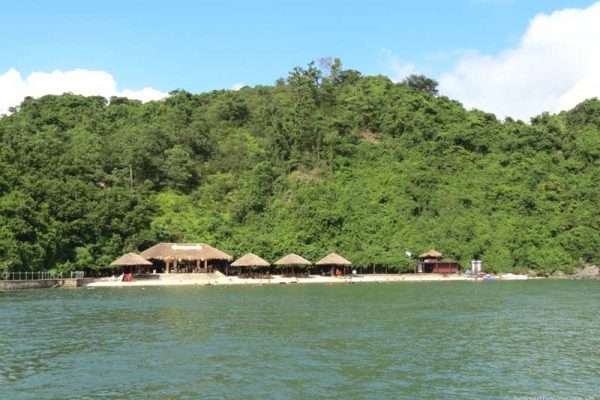
Ti Top Island
Covering a total area of 3.7 hectares, it captivates tourists with its crescent-shaped shoreline that forms a picturesque view from above. The coastline here is crescent-shaped, featuring soft white sand and surrounded by breathtaking natural beauty.
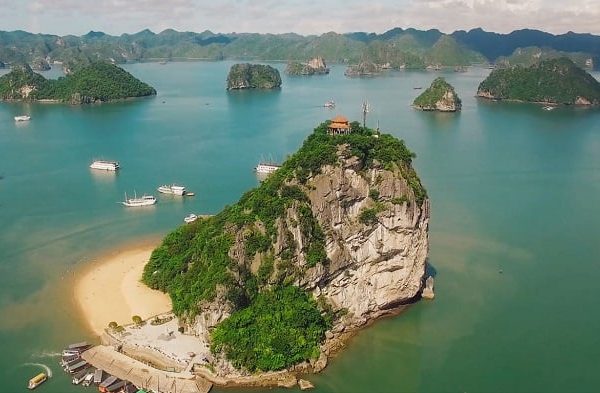
Sung Sot Cave
Surprise Cave stands as HaLong Bay’s largest cavern, promising a breathtaking experience with its diverse chambers that will leave you in awe throughout various sections of this expansive cave.
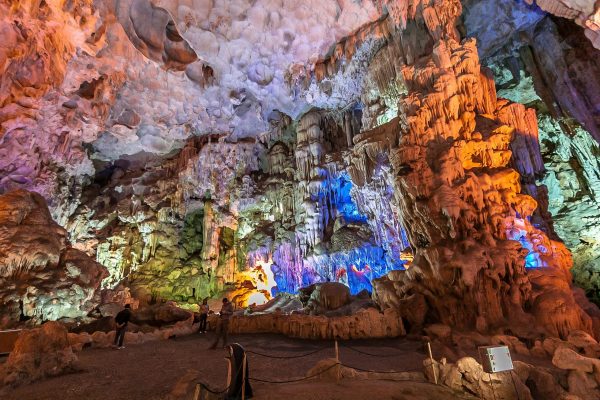
Luon Cave
Be enchanted by the serene ambiance while admiring the stunning stalagmites and stalactites up close. The tranquil waterway offers a relaxing journey as guests sail through the cave.
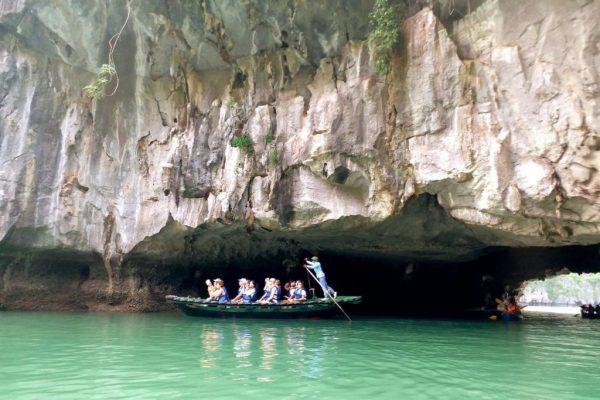
Trinh Nu Cave (Virgin Cave)
Trinh Nu Cave, steeped in romantic lore, emanates an irresistible charm and beauty. Uncover its enchanting story and immerse yourself in the elegant natural surroundings crafted by Mother Nature.
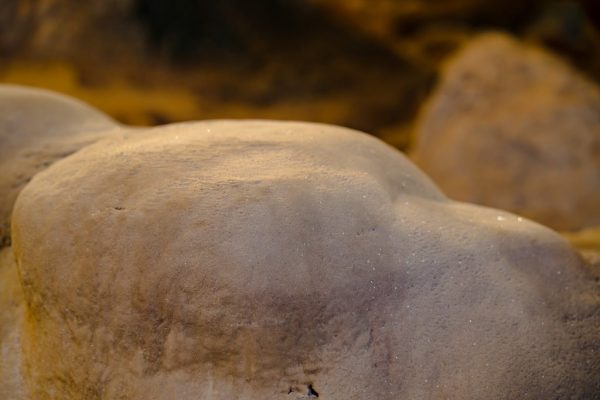
Me Cung Cave (Maze Cave)
Maze Cave boasts a complex structure, echoing remnants of ancient Halong culture from 7,000 to 10,000 years ago.

Route #3: Harbour – Marine Culture Conservation Center
- Itinerary: Cruise Port → Cua Van Fishing Village → Bamboo Forest area → Tien Ong Cave → Ang Du → Ba Ham Lake → Ba Men Temple
- Duration: 6-8 hours
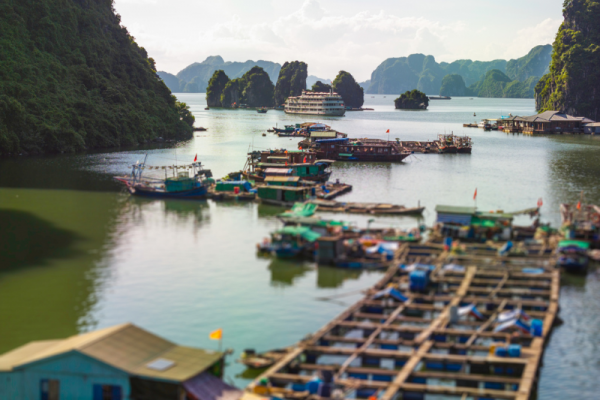
Cua Van Fishing Village
Step into the charm of Cua Van, acknowledged among the world’s most exquisite small villages by Huffington Post. However, after the typhoon Yagi in September 2024, Cua Van fishing village was completely submerged.
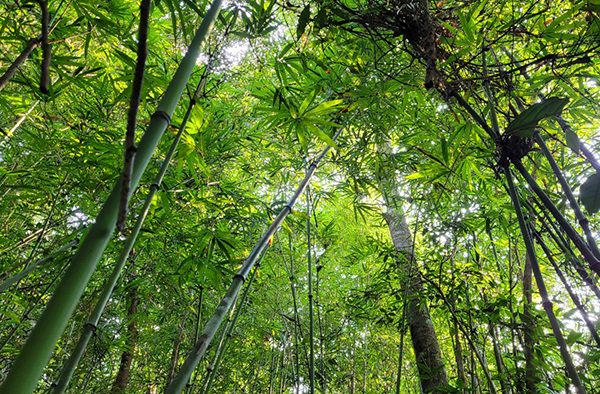
Bamboo Forest Area
With a dominant development of a dense bamboo population, it forms a poetic forest, which is also an ideal habitat for golden monkeys.
Tien Ong Cave
Tien Ong Cave captivates visitors with its pristine charm, boasting serene landscapes and the untouched allure of Halong Bay.

Ang Du Area
This 2-hectare lake, surrounded by limestone islands, has a unique ecosystem that remains biologically intact and separate from other areas in HaLong Bay.
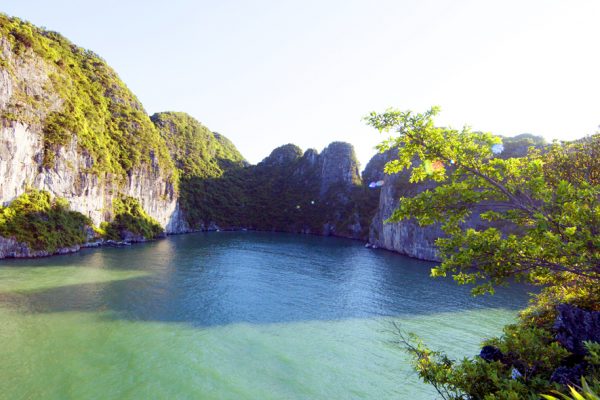
Ba Ham Lake
This idyllic water scene is ideal for activities like kayaking, snorkeling, and swimming. This destination offers a peaceful retreat for visitors seeking a spiritually uplifting experience.
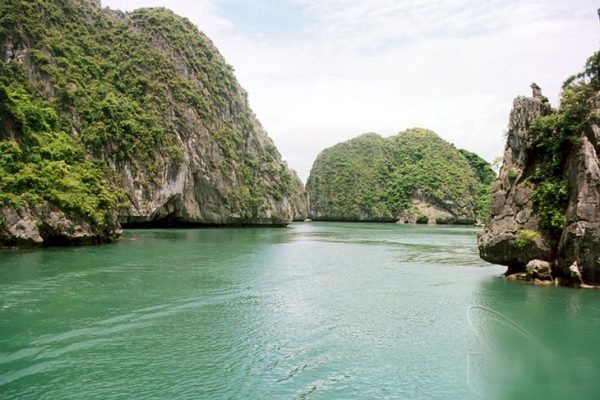
Ba Men Temple
Ba Men Temple is located on a wide sandy beach at the foot of Cat Ba Island, bordering HaLong and Cat Ba Island (Hai Phong), associated with a mysterious story about a goddess who always protects fishermen.
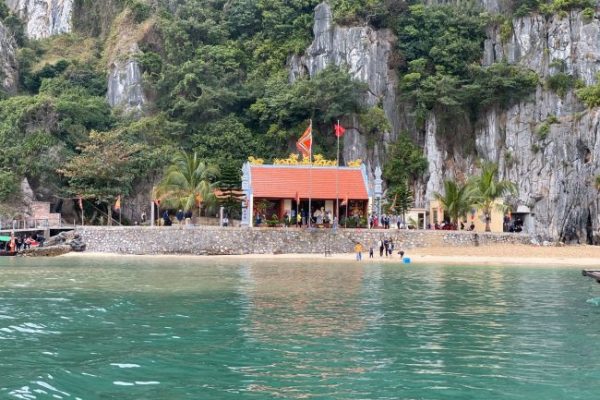
Route #4: Harbour – Marine Recreation Conservation Development Center Area
- Itinerary: Cruise Port → Co Cave → Thay Cave → Cong Do Island → Cap La Cave →Tung Ang Ecological Area → Hon Xep Park → Vung Vieng Fishing Village
- Duration: 8 hours
Co Cave
Co Cave is located at an altitude of 40m above sea level. The cave floor is flat, the space is open, and at the foot of the island there is a long stretch of white sand.

Thay Cave
A mysterious cave named after a local legend, featuring stunning rock formations and a peaceful atmosphere.
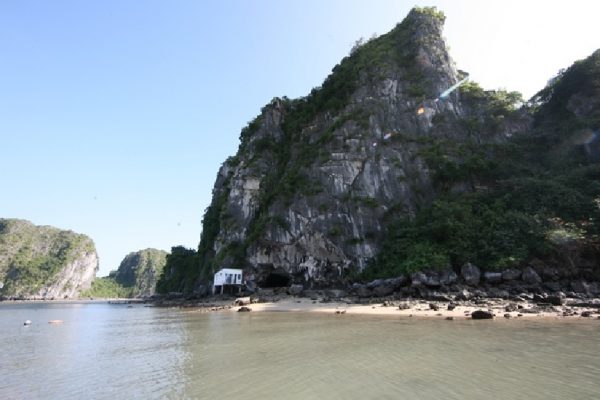
Cong Do Island
A pristine area with lush landscapes and crystal-clear waters, ideal for eco-exploration and relaxation.

Cap La Cave
A hidden gem in the bay with a total area of about 3,000m2, offers a serene environment perfect for kayaking and close-up views of nature.
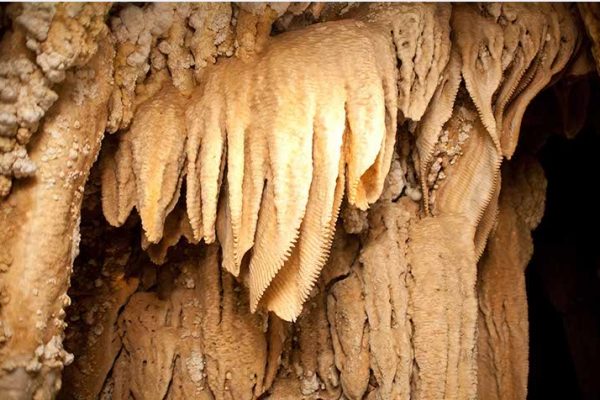
Tung – Ang Ecological Area in Cong Do
A rich biodiversity zone where visitors can explore lagoons and mangroves, ideal for nature lovers.
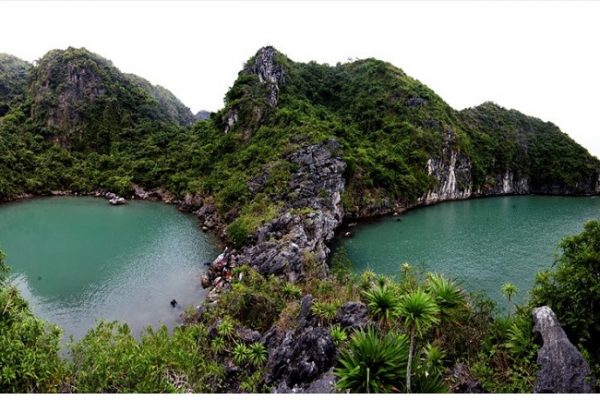
Hon Xep Park
A geological park featuring striking rock formations and diverse marine ecosystems, perfect for sightseeing and photography.
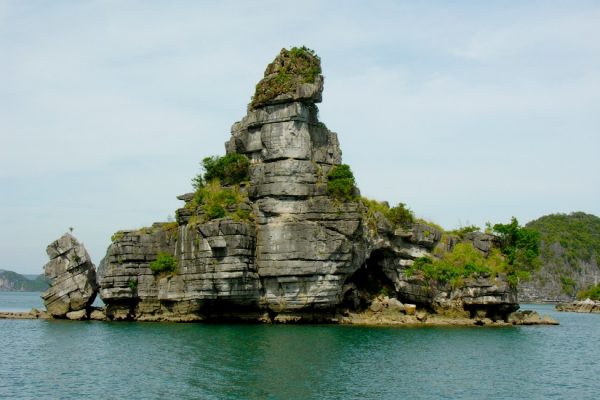
Vung Vieng Fishing Village
Take a junk tour into the daily life of a captivating fishing community, surrounded by stunning limestones, emerald waters and authentic cultural experiences.
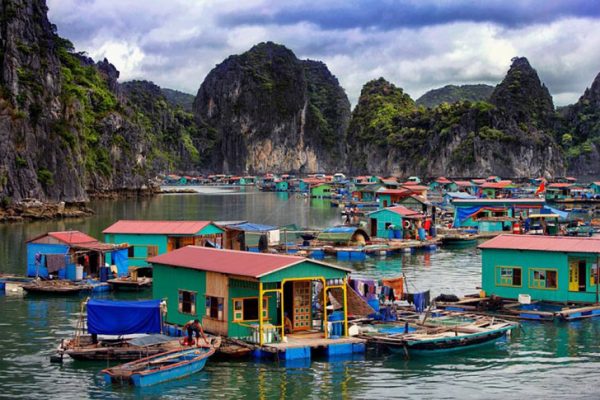
Bhaya itineraries aboard The Au Co and Bhaya Legend weave these cultural encounters into routes that also reach quieter coves and lesser-known cave systems-territory that larger, more standardized itineraries bypass entirely.
Top Things to Do in Halong Bay
The activity offering in Halong Bay has expanded considerably since the early days of overnight cruising. A well-programmed itinerary today covers far more than a cave tour and a set-menu dinner.
Excursions
On the water, kayaking remains the most direct way to enter the bay’s narrower spaces-sea caves, hidden lagoons, and mangrove channels that no motorized vessel can reach. At Ba Ham Lake, a cluster of three tranquil, cliff-enclosed lakes connected by low cave passages, Bhaya guests paddle through a karst arch at low tide, with the limestone rising on both sides and the water dropping clear beneath them-one of the most frequently cited memories of any Halong cruise.

Swimming off the stern in calm, sheltered anchorages offers a simpler version of the same immersion.

Rock climbing on the limestone faces of Lan Ha Bay draws a growing community of climbers who rate the routes among Southeast Asia’s most technically distinctive.

Cave visits remain a signature part of any Halong itinerary. Bhaya cruises call at some of the bay’s most storied caves, including Trinh Nu (Virgin) Cave, Sung Sot (Surprise) Cave, and Tien Ong Cave. Tien Ong stands apart from the rest: rather than a standard walkthrough, guests are guided through a walking meditation, moving slowly through the cave’s vast chambers in quiet reflection. It’s a standout activity that few operators offer, set away from the busier tour routes and pitched at a more refined, high-end pace. The experience is featured on Bhaya Soul, the line’s wellness-focused cruise.
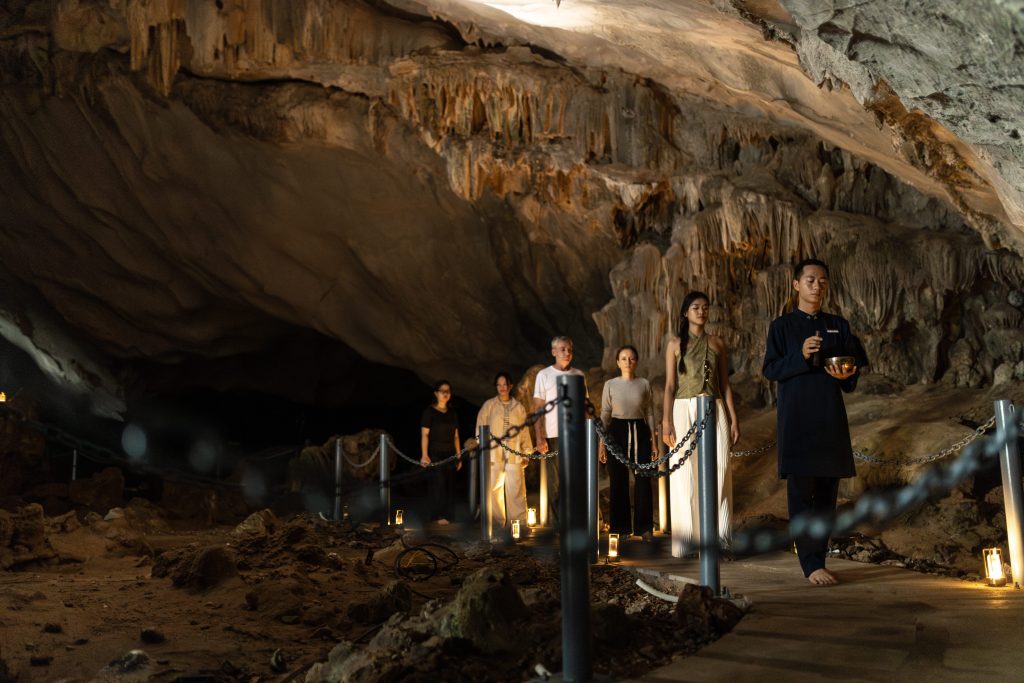
Beach stops, forested island treks, cycling tracks on Cat Ba Island, and freshwater cave exploration round out the outdoor options across the broader archipelago.

Onboard Activities
Onboard, the experience depends heavily on the vessel and the operator behind it.
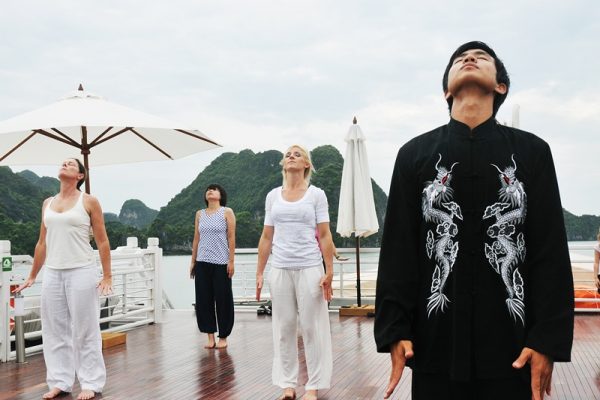
A morning Tai Chi session on the sun deck-mist still sitting on the water, the karst towers emerging from it as light strengthens-is a signature ritual exclusive to The Au Co, opening the day before guests head out to the morning’s excursions.
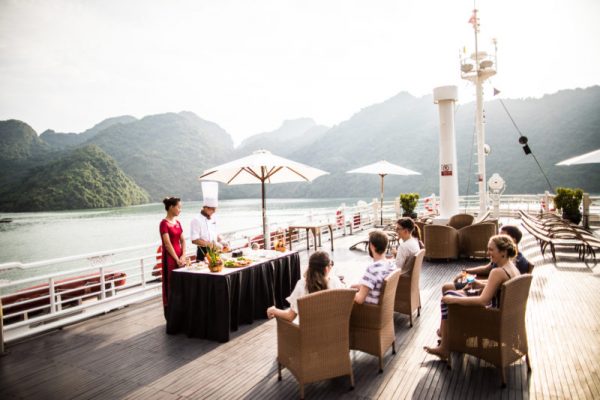
Vietnamese cooking classes, where guests learn to roll fresh spring rolls and balance the five flavor elements of Vietnamese cuisine, run in well-equipped onboard kitchens.
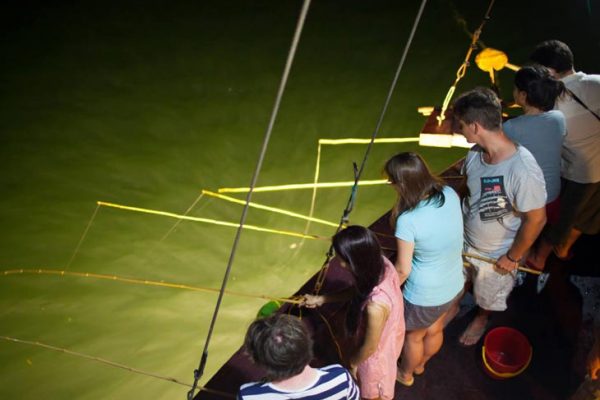
Squid fishing after dark draws guests to the stern with handheld lines and lights that attract prey to the surface; it is low-stakes, unexpectedly absorbing, and one of the activities guests most frequently mention in reviews.
Spa treatments are where Bhaya Soul sets itself apart. Built entirely around wellness, the ship offers a dedicated treatment menu that includes a 10-minute herbal foot ritual and a 30-minute wellness treatment, alongside full-body massage, herbal body wraps, and aromatherapy sessions-all delivered in dedicated treatment rooms or wellness decks designed for slower, more restorative time on the water.
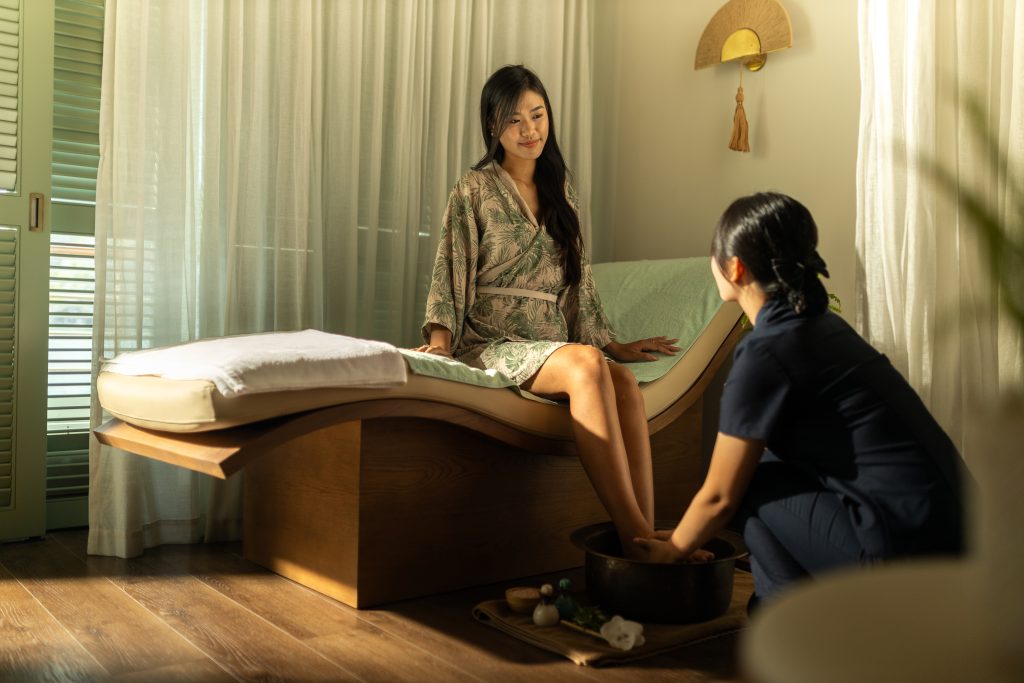
Farming tours-a less-publicized but genuinely memorable addition to select itineraries-bring guests ashore to work alongside local cultivators, learning the basics of Vietnamese aquaculture and coastal agriculture. The experience anchors the journey in something local and real, beyond the scenery.

Bhaya’s fleet is built around distinct experience profiles rather than a single cruise format.
- Bhaya Soul places wellness at the center of its programming: morning Tai Chi, onboard spa services, health-conscious cuisine, and anchorages chosen for morning stillness rather than proximity to peak-hour cave queues.
- The Au Co draws travelers with an appetite for culture, local community engagement, and routes that move beyond the familiar-its long-haul Halong–Lan Ha program covers territory that most itineraries never reach.
- Bhaya Classic delivers the essential Halong Bay experience with precision: iconic landmarks, professional guiding, and the kind of reliable comfort that first-time visitors need without the overhead of extras they may not use.
- Bhaya Legend exists for travelers who want the bay entirely on their own terms-private charter, custom routing, and a pace set by the group, not the program.
How to Choose the Best Halong Bay Cruise for First-Time Visitors?
Cruise length shapes everything else: the number of sites you visit, how deeply the onboard rhythm settles, and how rested you feel when you return to Hanoi. Getting this decision right matters more than almost any other variable in the planning process.
- A day cruise gives you a partial picture-usually one cave, one island stop, lunch on the water, and a return before sunset. It suits travelers with hard time constraints or those testing the waters before a longer return trip. What it cannot give you is a sunrise over limestone, stars from the stern, or the particular quiet that falls over the bay after the day-trip boats have all turned back.
- A 2D1N cruise is the practical minimum for a meaningful experience. One night at anchor allows for an evening on the water, a morning sequence of activities before the day-trip fleet arrives, and coverage of most of the bay’s Route 1 landmarks. For a first visit, it functions as a complete introduction.
- A 3D2N cruise is what most first-timers find most satisfying in hindsight. Two nights allow a deeper route-combining Halong’s signature points with entry into Lan Ha Bay or a second cluster of caves and floating village visits. The pace slows; the experience layers. You stop optimizing and start noticing.
- For 4D3N and beyond, the bay becomes a study rather than a visit. Extended voyages suit honeymooners, photographers, writers, repeat visitors, and anyone who wants the freedom of an unscheduled afternoon anchored somewhere that most itineraries never reach.
| Traveler Type | Priority | Recommended Cruise Style | Bhaya Option |
| Wellness-focused couples | Spa, morning stillness, healthy cuisine, Tai Chi | Boutique wellness cruise with curated anchorages | Bhaya Soul |
| Culture and exploration travelers | Village visits, extended routes, local engagement | Long-haul cultural voyage across Halong and Lan Ha | The Au Co |
| Families or private groups | Privacy, flexible scheduling, group-paced activities | Fully private charter with customizable itinerary | Bhaya Legend |
| First-timers seeking the classic experience | Iconic landmarks, professional guiding, reliable comfort | Classic overnight cruise covering Route 1 highlights | Bhaya Classic |
Book directly through the operator’s official website wherever possible. Direct bookings give you clearer inclusions, direct contact with the operations team, and-with Bhaya-access to value-added offers not available through third-party platforms.
Before confirming, verify that the operator holds a valid marine tourism license issued by Vietnam’s Ministry of Culture, Sports and Tourism. Cross-check reviews on TripAdvisor and Google using the vessel name, not just the company name-the gap between the two can be revealing.
For peak-season travel, book two to three months ahead. For shoulder seasons, four to six weeks is generally sufficient. Last-minute availability exists outside peak periods, but cabin selection narrows fast.
Practical Tips for First-Time Visitors
Entry, Visas & Travel Documents
Vietnam’s e-visa system covers most nationalities for stays of up to 90 days. Citizens of approximately 25 countries qualify for visa-free entry for defined durations. Verify your current entry status at the official portal (evisa.xuatnhapcanh.gov.vn) before booking—conditions update without extended notice.
- Apply for your e-visa online; the fee is USD 25 for most nationalities
- Print your e-visa approval and carry it alongside your passport
- Download or print your cruise booking confirmation and transfer documents before departure—Wi-Fi at embarkation points is unreliable
- Your cruise operator checks these documents at check-in; missing paperwork creates avoidable delays
Money, Payments & Connectivity
Vietnamese Dong (VND) is the practical currency for most daily transactions. Mid-range and luxury cruises accept major credit cards; budget vessels often operate cash-only for incidentals and gratuities.
- ATMs are available throughout Halong City and most hotels; check your bank’s foreign withdrawal fees in advance
- Per current regulations, cash payments onboard and at local merchants can only be collected in VND—USD and other foreign currencies are no longer accepted for cash transactions. Credit card payments are unaffected and can still be made in the usual way.
- Tipping is customary on international cruises: USD 5–10 per guest per day for the crew; USD 10–15 for your guide
- Vietnamese SIM cards (Viettel, Mobifone, Vinaphone) cost USD 5–10 at Noi Bai Airport or Hanoi’s Old Quarter and deliver reliable data coverage across the bay
- Onboard Wi-Fi is available on most quality cruises but inconsistent—not suitable for video calls or large transfers
Safety, Health & Responsible Travel
On safety:
- Book only licensed operators with verifiable reviews and documented safety records
- Follow all crew safety briefings—life jacket protocols, kayak handling, swimming boundaries—without exception
- Use flotation devices for water activities whenever the crew instructs it, regardless of swimming ability
- Take non-drowsy seasickness medication before departure if you have any history of motion sickness
On health:
- Apply reef-safe sunscreen from your first hour on deck; bring a wide-brim hat and UV-blocking sunglasses
- Pack insect repellent for dusk hours and shore excursions through mangrove or jungle terrain
- Stay hydrated—heat and humidity on the water are more intense than they feel in the shade
On responsible travel:
- Choose operators with genuine, verified plastic-free and waste management policies
- Do not purchase coral, shells, or wildlife-derived souvenirs
- Stay within designated swimming areas and treat floating village residents as hosts
- Bhaya Cruises maintains active clean-bay initiatives and plastic-free operations across its full fleet
Packing Checklist
- Clothing: Light layers; fleece or thin down jacket (Nov–Feb); swimwear; quick-dry towel
- Footwear: Closed-toe shoes with grip for caves and viewpoint stairs; sandals for the deck
- Protection: Reef-safe sunscreen; wide-brim hat; UV sunglasses; insect repellent
- Gear: Waterproof dry sack for phone, camera, and documents during water activities
- Electronics: Universal power adapter (Vietnam: Type A, C, F — 220V); portable power bank
- Health: Seasickness tablets; antihistamines; blister plasters; personal medications in carry-on
Frequently Asked Questions
Is Halong Bay worth it for just one day?
Yes, but mostly as a taste rather than a full experience. A day trip is workable from Hanoi, though it means several hours on the road and limited time on the water. Most first-time visitors will find a 2D1N cruise far more rewarding.
Should I choose Halong Bay, Lan Ha Bay, or Bai Tu Long Bay for my first trip?
Choose Halong Bay if you want the classic first-time landmarks. Choose Lan Ha if you want a more activity-led route with Cat Ba connections. Choose Bai Tu Long if you care most about tranquility.
Is Halong Bay overcrowded in 2026?
Some classic routes can feel busy in peak periods, especially on day-trip corridors. The easiest way to reduce that pressure is to stay overnight, travel in shoulder season, or choose a more curated route or a quieter bay.
Can I travel with children or older family members?
Yes. Limousine transfers and private cars are often the easiest land option for families and older travelers, and many cruises offer comfortable cabins and gentle excursions. The main thing is to choose a route and activity level that matches your group.
What if my cruise is canceled because of bad weather?
That decision comes from local authorities. Depending on timing, your trip may be canceled, shortened, rerouted, or rescheduled. Reputable operators will explain the options clearly, but travel insurance remains wise.
How far in advance should I book?
For spring, fall, holiday periods, or larger suites, earlier is better. Premium products and private charters have fewer cabins, so the best choices tend to tighten first. Direct booking also makes it easier to confirm inclusions and route details.




Pingback: газовый котел двухконтурный
Pingback: What Is A Good Medium Priced Halong Bay Cruise? – rives-du-monde.com
Pingback: What To Do In Halong Bay Besides A Cruise? – rives-du-monde.com
Pingback: fastinma
Pingback: confeitofilm
Pingback: How To Have The Best Kayaking Experience In Halong Bay – KayakCritic
Pingback: 10 merveilles naturelles dont vous n'avez jamais entendu parler
Pingback: Phu Quoc Ferry Schedule & Booking Guide 2023
Pingback: Halong Bay Travel Guide – Flights, Hotels, Homes, Tours, Car Rentals – NovaTreks
Pingback: Top Tourist Attractions in Ha Long Bay, Vietnam
Pingback: Halong Bay History - 500 million years in one page - Bhaya Cruises Blog
Pingback: Halong Bay weather in December, is it worth visiting? - Bhaya Cruises Blog
Pingback: Best Boat Ride Ha Long Bay: Ultimate Cruise Experience
Pingback: Visiting Ha Long Bay Without Breaking the Bank – talkingvietnam.com
Pingback: The Best Ha Long Bay Cruise Itineraries for All Budgets – talkingvietnam.com
Pingback: Best Island-Hopping Cruise Destinations in Vietnam – talkingvietnam.com
Pingback: How to Find Affordable Cruises in Vietnam – talkingvietnam.com
Pingback: Exploring Halong Bay in Style: Top Luxury Cruise Options – talkingvietnam.com
Pingback: A Guide to Vietnam’s Cruise Ports – talkingvietnam.com
Pingback: 10 Tips for a Perfect Cruise Experience in Vietnam – talkingvietnam.com
Pingback: Eco-Friendly Cruise Options in Halong Bay – talkingvietnam.com
Pingback: A Complete Guide to Halong Bay Cruises: Best Options and Tips - talkingvietnam.com
Pingback: Best Places to Visit in Vietnam: Top Travel Guide for an Incredible 2025 Journey
Pingback: A Traveler's Guide to Vietnam's UNESCO World Heritage Sites (2025 Edition)
Pingback: Comparing Waiver Processing Times Across Different Visa Categories - Writ of Mandamus Lawyer in New York, New Jersey, Connecticut & Washington D.C.
Pingback: Hanoi to Halong Bay: Ultimate Guide on How to Get to Halong from Hanoi
Pingback: Photo size for green card - Writ of Mandamus Lawyer in New York, New Jersey, Connecticut & Washington D.C.
Pingback: Writ of Mandamus Form: A Comprehensive Guide - Writ of Mandamus Lawyer in New York, New Jersey, Connecticut & Washington D.C.
Pingback: A Comprehensive Guide to Finding the Right Writ of Mandamus Lawyer in Washington D.C. - Writ of Mandamus Lawyer in New York, New Jersey, Connecticut & Washington D.C.
Pingback: How to File a Legal Challenge: Step-by-Step Guide - Writ of Mandamus Law firm
Pingback: When Can You File a Writ of Mandamus After Submitting N-400? - Writ of Mandamus Lawyer in New York, New Jersey, Connecticut & Washington D.C.
Pingback: Winning Strategies from Leading Writ of Mandamus Lawyers in Washington D.C. - Writ of Mandamus Lawyer in New York, New Jersey, Connecticut & Washington D.C.
Pingback: How to File a Complaint for Writ of Mandamus in NJ, CT, and D.C. - Writ of Mandamus Lawyer in New York, New Jersey, Connecticut & Washington D.C.
Pingback: Discover the hidden gem of Halong Bay: Exploring Route 3
Pingback: Key Costs to Know When Filing a Writ of Mandamus - Writ of Mandamus Lawyer in New York, New Jersey, Connecticut & Washington D.C.
Pingback: How to File a Writ of Mandamus by Yourself: Step-by-Step Guide - Writ of Mandamus Lawyer in New York, New Jersey, Connecticut & Washington D.C.
Pingback: How to File a Writ of Mandamus on Your Own: Step-by-Step Guide - Writ of Mandamus Lawyer in New York, New Jersey, Connecticut & Washington D.C.
Pingback: Understanding the Role of a Writ of Mandamus in Connecticut Courts - Writ of Mandamus Lawyer in New York, New Jersey, Connecticut & Washington D.C.
Pingback: Self-Filed Writs of Mandamus: Success Rates in NY, NJ, CT & DC - Writ of Mandamus Lawyer in New York, New Jersey, Connecticut & Washington D.C.
Pingback: How Long Does the Consulate Take to Respond After Filing Mandamus - Writ of Mandamus Law firm
Pingback: Top Writ of Mandamus Lawyer in NY, NJ, CT & DC – Key Legal Insights - Writ of Mandamus Lawyer in New York, New Jersey, Connecticut & Washington D.C.
Pingback: How to File a Response to a Writ of Mandamus in New Jersey Easily - Writ of Mandamus Lawyer in New York, New Jersey, Connecticut & Washington D.C.
Pingback: Leading Mandamus Lawsuit Lawyer Serving New York, New Jersey & Connecticut - Writ of Mandamus Lawyer in New York, New Jersey, Connecticut & Washington D.C.
Pingback: How to File a Writ of Mandamus Complaint in New Jersey: Essential Guide - Writ of Mandamus Lawyer in New York, New Jersey, Connecticut & Washington D.C.
Pingback: Explore Effective Alternatives to a Writ of Mandamus with Expert Lawyers - Writ of Mandamus Lawyer in New York, New Jersey, Connecticut & Washington D.C.
Pingback: How to Draft a Winning Mandamus Application: Step-by-Step Guide - Writ of Mandamus Law firm
Pingback: Why Mandamus Lawsuits Are Surging Across the U.S. Today - Writ of Mandamus Law firm
Pingback: Top Halong Bay Cruise Routes for visitors in 2025 - 2026
Pingback: How Writ of Mandamus Ensures Quality Education: An In-Depth Study - Writ of Habeas Corpus
Pingback: Key Elements for a Petition for Writ of Mandamus by NY & NJ Experts - Criminal Immigration Law Firm in New York, New Jersey
Pingback: Night Squid Fishing in Halong Bay: A Unique Local Experience
Pingback: Recommend The Best Vietnam Cruise Experiences 2026
Pingback: What Are Differences Between Bhaya Cruise and Other Cruises?
Pingback: Step-by-Step Guide to Filing a Writ of Mandamus for Your N-400 Application - Criminal Immigration Law Firm +1 (212) 566-3572
Pingback: Halong Bay or Ninh Binh: Which Should You Visit in 2026?
Pingback: [2026] Lan Ha Bay: Things To Do & Travel Tips You Should Know
Pingback: Timing Is Everything: Ultimate Guide to Statute of Limitations in Mandamus Actions - Criminal Immigration Lawyer in NY & NJ
Pingback: Bhaya Soul Redefines Luxury Cruising on Halong Bay – Privacy, Stillness and Wellness - The Great News - Lifestyle
Pingback: Bhaya Soul Redefines Luxury Cruising on Halong Bay – Privacy, Stillness and Wellness | lifestyle.thedishh.com
Pingback: Bhaya Soul Redefines Luxury Cruising on Halong Bay – Privacy, Stillness and Wellness - 1st Counsel - Lifestyle
Pingback: Bhaya Soul Redefines Luxury Cruising on Halong Bay – Privacy, Stillness and Wellness | lifestyle.tvshowauditions.info
Pingback: Bhaya Soul Redefines Luxury Cruising on Halong Bay – Privacy, Stillness and Wellness | lifestyle.clientim.com
Pingback: Bhaya Soul Redefines Luxury Cruising on Halong Bay – Privacy, Stillness and Wellness | lifestyle.buyersdesire.org
Pingback: Bhaya Soul Redefines Luxury Cruising on Halong Bay – Privacy, Stillness and Wellness - Sharism- Lifestyle
Pingback: Bhaya Soul Redefines Luxury Cruising on Halong Bay – Privacy, Stillness and Wellness - World of Video Gaming - Lifestyle
Pingback: Bhaya Soul Redefines Luxury Cruising on Halong Bay – Privacy, Stillness and Wellness - Agree.net - Lifestyle
Pingback: Bhaya Soul Redefines Luxury Cruising on Halong Bay – Privacy, Stillness and Wellness | lifestyle.forkstofeet.com
Pingback: Bhaya Soul Redefines Luxury Cruising on Halong Bay – Privacy, Stillness and Wellness - Storytelling Co - Lifestyle
Pingback: Bhaya Soul Redefines Luxury Cruising on Halong Bay – Privacy, Stillness and Wellness | lifestyle.projectdiaspora.org
Pingback: Bhaya Soul Redefines Luxury Cruising on Halong Bay – Privacy, Stillness and Wellness | lifestyle.mmminimal.com
Pingback: Bhaya Soul Redefines Luxury Cruising on Halong Bay – Privacy, Stillness and Wellness - Quebec News Tribune - Lifestyle
Pingback: Bhaya Soul Redefines Luxury Cruising on Halong Bay – Privacy, Stillness and Wellness | lifestyle.sli.mg
Pingback: Bhaya Soul Redefines Luxury Cruising on Halong Bay – Privacy, Stillness and Wellness - God Of Sound - Lifestyle
Pingback: Bhaya Soul Redefines Luxury Cruising on Halong Bay – Privacy, Stillness and Wellness | Middletown Life
Pingback: Bhaya Soul Redefines Luxury Cruising on Halong Bay – Privacy, Stillness and Wellness | lifestyle.brickvest.com
Pingback: Bhaya Soul Redefines Luxury Cruising on Halong Bay – Privacy, Stillness and Wellness - A Green Sign - Lifestyle
Pingback: Bhaya Soul Redefines Luxury Cruising on Halong Bay – Privacy, Stillness and Wellness - XPR - Lifestyle Demo
Pingback: Bhaya Soul Redefines Luxury Cruising on Halong Bay – Privacy, Stillness and Wellness | http://lifestyle.lmcordoba.com.ar/
Pingback: Bhaya Soul Redefines Luxury Cruising on Halong Bay – Privacy, Stillness and Wellness - Baltimore News Journal - Lifestyle
Pingback: Bhaya Soul Redefines Luxury Cruising on Halong Bay – Privacy, Stillness and Wellness | lifestyle.floredechampagne.com
Pingback: Bhaya Soul Redefines Luxury Cruising on Halong Bay – Privacy, Stillness and Wellness | lifestyle.mediatrainingforceos.com
Pingback: Bhaya Soul Redefines Luxury Cruising on Halong Bay – Privacy, Stillness and Wellness | lifestyle.thepointnews.com
Pingback: Bhaya Soul Redefines Luxury Cruising on Halong Bay – Privacy, Stillness and Wellness | lifestyle.serversfree.com
Pingback: Bhaya Soul Redefines Luxury Cruising on Halong Bay – Privacy, Stillness and Wellness - Blerp - Lifestyle
Pingback: Bhaya Soul Redefines Luxury Cruising on Halong Bay – Privacy, Stillness and Wellness | lifestyle.ukuncut.org.uk
Pingback: Bhaya Soul Redefines Luxury Cruising on Halong Bay – Privacy, Stillness and Wellness - Wired News Engine - Lifestyle
Pingback: Bhaya Soul Redefines Luxury Cruising on Halong Bay – Privacy, Stillness and Wellness | lifestyle.womensconference.org
Pingback: Bhaya Soul Redefines Luxury Cruising on Halong Bay – Privacy, Stillness and Wellness | lifestyle.nextmentors.com
Pingback: Bhaya Soul Redefines Luxury Cruising on Halong Bay – Privacy, Stillness and Wellness - lifestyle.spaziotribu.net
Pingback: Bhaya Soul Redefines Luxury Cruising on Halong Bay – Privacy, Stillness and Wellness - Cultural Foundation
Pingback: Bhaya Soul Redefines Luxury Cruising on Halong Bay – Privacy, Stillness and Wellness - Operation Infinite Justice - Lifestyle
Pingback: Bhaya Soul Redefines Luxury Cruising on Halong Bay – Privacy, Stillness and Wellness - All Podcasts - Lifestyle
Pingback: Bhaya Soul Redefines Luxury Cruising on Halong Bay – Privacy, Stillness and Wellness - Spiritual Quotes - Lifestyle
Pingback: Bhaya Soul Redefines Luxury Cruising on Halong Bay – Privacy, Stillness and Wellness - Gold Mining News - Lifestyle
Pingback: Bhaya Soul Redefines Luxury Cruising on Halong Bay – Privacy, Stillness and Wellness - Maui Sky - Lifestyle
Pingback: Bhaya Soul Redefines Luxury Cruising on Halong Bay – Privacy, Stillness and Wellness | lifestyle.pluralist.com
Pingback: Bhaya Soul Redefines Luxury Cruising on Halong Bay – Privacy, Stillness and Wellness - lifestyle.militaryparenting.org
Pingback: Bhaya Soul Redefines Luxury Cruising on Halong Bay – Privacy, Stillness and Wellness - Aussie8 - Lifestyle
Pingback: Bhaya Soul Redefines Luxury Cruising on Halong Bay – Privacy, Stillness and Wellness - Austin Top 50
Pingback: Bhaya Soul Redefines Luxury Cruising on Halong Bay – Privacy, Stillness and Wellness - Loop Biz - Lifestyle
Pingback: Bhaya Soul Redefines Luxury Cruising on Halong Bay – Privacy, Stillness and Wellness - Baret News - Lifestyle
Pingback: Bhaya Soul Redefines Luxury Cruising on Halong Bay – Privacy, Stillness and Wellness - Film Television Auditions - Lifestyle
Pingback: Bhaya Soul Redefines Luxury Cruising on Halong Bay – Privacy, Stillness and Wellness - Bomb Report - Lifestyle
Pingback: Bhaya Soul Redefines Luxury Cruising on Halong Bay – Privacy, Stillness and Wellness - Adam Torkildson - Lifestyle
Pingback: Bhaya Soul Redefines Luxury Cruising on Halong Bay – Privacy, Stillness and Wellness - Teethgrinder - Lifestyle
Pingback: Bhaya Soul Redefines Luxury Cruising on Halong Bay – Privacy, Stillness and Wellness | lifestyle.phenomena.org
Pingback: Bhaya Soul Redefines Luxury Cruising on Halong Bay – Privacy, Stillness and Wellness | lifestyle.bossesmag.com
Pingback: Bhaya Soul Redefines Luxury Cruising on Halong Bay – Privacy, Stillness and Wellness | lifestyle.brownplanet.com
Pingback: Bhaya Soul Redefines Luxury Cruising on Halong Bay – Privacy, Stillness and Wellness | lifestyle.eastmnweeklynews.com
Pingback: Bhaya Soul Redefines Luxury Cruising on Halong Bay – Privacy, Stillness and Wellness - lifestyle.cosmeticsurgeryinsider.com
Pingback: Bhaya Soul Redefines Luxury Cruising on Halong Bay – Privacy, Stillness and Wellness | lifestyle.massnews.com
Pingback: Bhaya Soul Redefines Luxury Cruising on Halong Bay – Privacy, Stillness and Wellness | lifestyle.usfeatures.com
Pingback: Bhaya Soul Redefines Luxury Cruising on Halong Bay – Privacy, Stillness and Wellness | lifestyle.ribbon.co
Pingback: Bhaya Soul Redefines Luxury Cruising on Halong Bay – Privacy, Stillness and Wellness | lifestyle.claritypointe.com
Pingback: Bhaya Soul Redefines Luxury Cruising on Halong Bay – Privacy, Stillness and Wellness | lifestyle.streetregister.com
Pingback: Bhaya Soul Redefines Luxury Cruising on Halong Bay – Privacy, Stillness and Wellness | lifestyle.gopreneurs.com
Pingback: Bhaya Soul Redefines Luxury Cruising on Halong Bay – Privacy, Stillness and Wellness | lifestyle.social-matic.com
Pingback: Bhaya Soul Redefines Luxury Cruising on Halong Bay – Privacy, Stillness and Wellness | lifestyle.ucconnection.org
Pingback: Bhaya Soul Redefines Luxury Cruising on Halong Bay – Privacy, Stillness and Wellness | lifestyle.gamezon.net
Pingback: Bhaya Soul Redefines Luxury Cruising on Halong Bay – Privacy, Stillness and Wellness - Business Times - Lifestyle
Pingback: Bhaya Soul Redefines Luxury Cruising on Halong Bay – Privacy, Stillness and Wellness | lifestyle.hungrybear.net
Pingback: Bhaya Soul Redefines Luxury Cruising on Halong Bay – Privacy, Stillness and Wellness | lifestyle.longislandreport.org
Pingback: Bhaya Soul Redefines Luxury Cruising on Halong Bay – Privacy, Stillness and Wellness | lifestyle.luxedb.com
Pingback: Bhaya Soul Redefines Luxury Cruising on Halong Bay – Privacy, Stillness and Wellness | lifestyle.dietfitnessforall.com
Pingback: Bhaya Soul Redefines Luxury Cruising on Halong Bay – Privacy, Stillness and Wellness | lifestyle.sourcefed.com
Pingback: Bhaya Soul Redefines Luxury Cruising on Halong Bay – Privacy, Stillness and Wellness - Boost Up Blog - Lifestyle
Pingback: Bhaya Soul Redefines Luxury Cruising on Halong Bay – Privacy, Stillness and Wellness | lifestyle.washingtonguardian.com
Pingback: Bhaya Soul Redefines Luxury Cruising on Halong Bay – Privacy, Stillness and Wellness | lifestyle.brightsfuture.com
Pingback: Bhaya Soul Redefines Luxury Cruising on Halong Bay – Privacy, Stillness and Wellness - Blackberry Empire - Lifestyle
Pingback: Bhaya Soul Redefines Luxury Cruising on Halong Bay – Privacy, Stillness and Wellness | lifestyle.paraskevas.net
Pingback: Bhaya Soul Redefines Luxury Cruising on Halong Bay – Privacy, Stillness and Wellness - XPR Newsroom
Pingback: Bhaya Soul Redefines Luxury Cruising on Halong Bay – Privacy, Stillness and Wellness | lifestyle.humane.net
Pingback: Bhaya Soul Redefines Luxury Cruising on Halong Bay – Privacy, Stillness and Wellness - Boca Raton City Online - Lifestyle
Pingback: Bhaya Soul Redefines Luxury Cruising on Halong Bay – Privacy, Stillness and Wellness | lifestyle.tasteterminal.com
Pingback: Bhaya Soul Redefines Luxury Cruising on Halong Bay – Privacy, Stillness and Wellness - Men Under Microscope - Lifestyle
Pingback: Bhaya Soul Redefines Luxury Cruising on Halong Bay – Privacy, Stillness and Wellness | lifestyle.timesla.com
Pingback: Bhaya Soul Redefines Luxury Cruising on Halong Bay – Privacy, Stillness and Wellness | lifestyle.travelshq.com
Pingback: Bhaya Soul Redefines Luxury Cruising on Halong Bay – Privacy, Stillness and Wellness - Annika Bansal - Lifestyle
Pingback: Bhaya Soul Redefines Luxury Cruising on Halong Bay – Privacy, Stillness and Wellness | lifestyle.theroguemag.com
Pingback: Bhaya Soul Redefines Luxury Cruising on Halong Bay – Privacy, Stillness and Wellness | lifestyle.tophustler.com
Pingback: Bhaya Soul Redefines Luxury Cruising on Halong Bay – Privacy, Stillness and Wellness | http://lifestyle.matomyseo.com/
Pingback: Bhaya Soul Redefines Luxury Cruising on Halong Bay – Privacy, Stillness and Wellness | lifestyle.folsomlocalnews.com/
Pingback: Halong Bay Map: Zones, Attractions, and Cruise Routes (2026)
Pingback: Tuan Chau Harbour: Your Complete Travel Guide to Halong Bay (2026)
Pingback: Halong-Bucht oder Ninh Binh: Was sollten Sie 2026 besuchen?
Pingback: Bahía de Halong o Ninh Binh: ¿cuál visitar en 2026?
Pingback: Baie d'Halong ou Ninh Binh: Lequel visiter en 2026 ?
Pingback: 하롱베이 또는 닌빈: 2026년에 방문해야 할 곳은 어디일까요?
Pingback: 下龙湾还是宁平:2026年该去哪里?