

Halong Bay stands as a UNESCO World Heritage site shaped by limestone karsts, calm waters, and a rhythm of four distinct seasons. Unlike destinations with a narrow travel window, Halong Bay offers year-round cruising. Each season brings a different mood—mist drifting across winter waters, fresh greenery in spring, warm seas in summer, and clear skies in autumn. The experience shifts, but the bay remains accessible in every month of 2026.
Understanding Halong Bay weather is not a detail—it is the key to planning well. Weather affects more than comfort. It shapes visibility, sea conditions, cruise routes, and even pricing. A clear autumn day offers long views across the bay, while summer brings warm water for swimming but a higher chance of storms. Winter can feel cool, yet it delivers quiet decks and a slower pace. These patterns influence crowd levels, budgets, and the small but real risk of cruise adjustments or cancellations.
You will gain a clear view of Halong Bay by season, supported by a month-by-month snapshot for 2026. You will understand when storms are most likely and how cruise operators respond. You will see which months align with your priorities, whether that is calm weather, lower prices, or fewer crowds. Finally, you will learn which Bhaya cruise—Classic, The Au Co, Legend, or Soul—fits each period best.
With the right timing, Halong Bay becomes more than a destination. It becomes a journey shaped by weather, pace, and purpose.
Halong Bay Weather Today & Forecast
Halong Bay Weather Overview (Climate & Seasons)
Halong Bay’s climate follows a tropical monsoon pattern, yet its coastal setting softens extremes. Travelers often hear about two main seasons, but in practice, the bay moves through four distinct phases. Each brings a clear shift in temperature, humidity, and visibility, which directly affects cruising conditions.
Tropical Monsoon Climate & Temperature Range
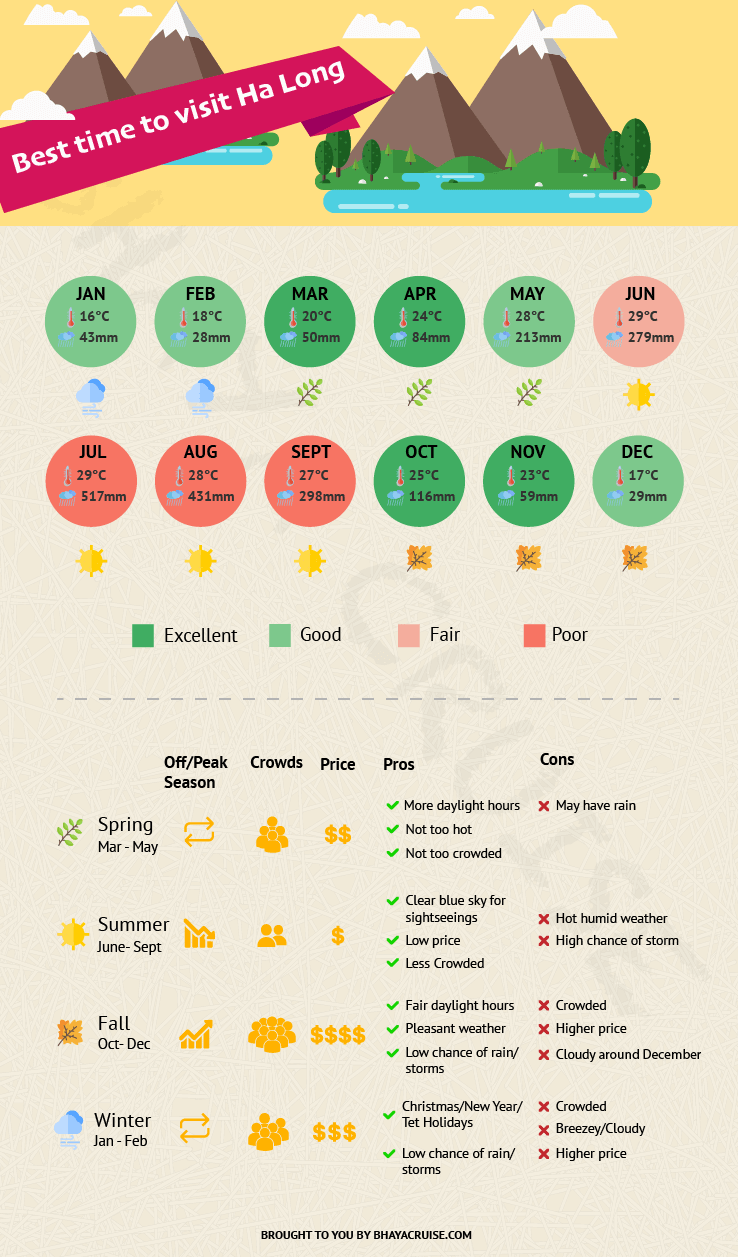
Halong Bay sits in northern Vietnam, where a humid tropical monsoon climate defines the year. Two broad weather patterns guide expectations. From May to September, conditions turn hot and humid, with higher rainfall and occasional storms. From November to March, the air becomes cooler and drier, with calmer seas and more stable conditions.
Within this framework, temperatures remain moderate compared to inland areas. In winter, daytime temperatures often range from 15°C to 22°C. Early mornings and evenings can feel cooler, especially on open decks. In summer, inland heat may reach 32–35°C, but on the bay, sea breezes help reduce intensity. Most days on the water feel slightly milder than in Hanoi.
Humidity plays a steady role. Even in cooler months, the air retains moisture, which creates mist and soft light across the limestone formations. In warmer months, humidity rises and combines with heat, shaping the classic tropical feel of Halong Bay.
These patterns matter for cruise planning. Temperature affects comfort on deck, while humidity and rainfall influence visibility and activities. Understanding this range helps travelers choose the right balance between climate, scenery, and experience.
Four Seasons in Halong Bay
- Spring, from March to April, brings a gradual shift from cool to warm. Temperatures settle in the low to mid-20s°C, with light drizzle in early months and more sun by late spring. The bay turns green, and conditions support outdoor activities such as kayaking and cave visits.
- Summer, from May to September, is the hottest period. Temperatures rise into the high-20s to low-30s°C on the bay. Rainfall increases, often in short, intense bursts. This is also the season with higher storm risk, especially in July and August. At the same time, the sea becomes warm and inviting.
- Autumn, from October to November, offers the most stable weather. Temperatures ease into the low- to high-20s°C range, humidity drops, and rainfall decreases. Skies clear, and visibility improves. These months attract many international travelers.
- Winter, from December to February, introduces cooler air and a quieter atmosphere. Temperatures range from the mid-teens to low-20s°C. Mornings often begin with mist, which softens the landscape. Domestic travel slows after holidays, and the bay feels more peaceful.
Halong Bay Weather by Season
Winter (December – February): Misty, Peaceful, and Festive
Winter in Halong Bay brings a calm and reflective atmosphere. Temperatures range from the mid-teens to low-20s°C. The air feels cool, especially in the early morning and evening, yet rarely harsh. Rainfall is low, and seas remain steady, making cruising smooth.
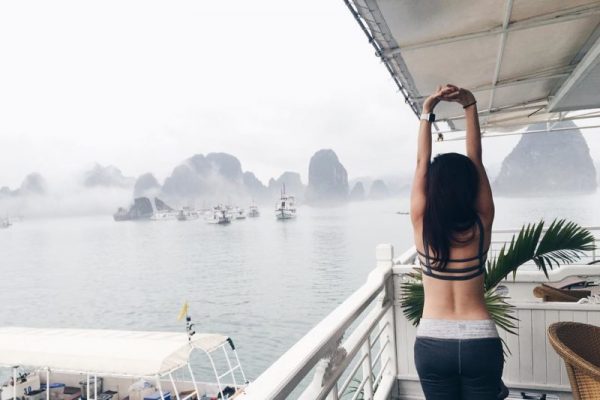
Misty mornings define this season. Fog often drifts across the limestone formations, creating a soft, layered view. While visibility may be reduced at times, the mood becomes more intimate. Decks feel quieter, and the pace slows.
This period also aligns with festive travel. Christmas and New Year cruises create a warm onboard setting, with curated dining and seasonal activities. Squid fishing becomes more active in cooler months, offering a simple but engaging evening experience.
Pros
- Fewer domestic crowds after peak holidays
- Calm waters and stable cruising
- Quiet, romantic atmosphere
- Seasonal celebrations onboard
Cons
- Cooler temperatures, less suited for swimming
- Limited sunshine on some days
- Mist can reduce wide views
Best for
- Couples seeking privacy
- Cultural travelers
- Wellness-focused journeys
Bhaya Classic and The Au Co offer structured festive itineraries with cave visits and cultural elements. For travelers seeking privacy, Bhaya Legend provides a private charter setting suited for small groups or celebrations.
Spring (March – April): Mild, Green, and Increasingly Sunny
Spring marks one of the most balanced periods in Halong Bay. March and April bring temperatures in the low- to mid-20s°C, with light rain and rising humidity. By May, the weather turns warmer, with longer hours of sunlight.
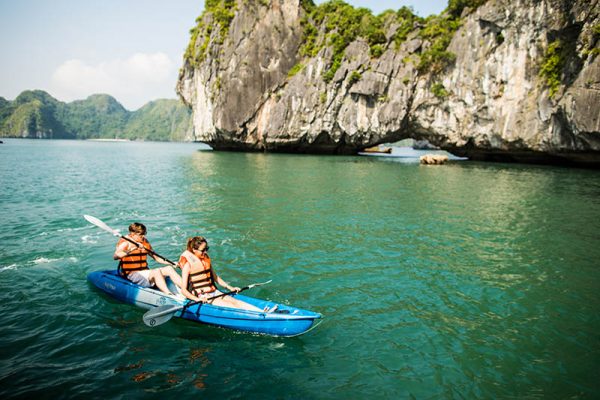
The landscape becomes vibrant. Vegetation along limestone cliffs deepens in color, and visibility improves compared to winter. Conditions support a wide range of activities, from kayaking to cave exploration and light trekking.
Humidity increases, yet it remains manageable. Short showers may occur, but they rarely disrupt full-day itineraries. This balance makes spring a favored season among cruise operators.
Pros
- Comfortable temperatures for outdoor activities
- Green scenery and good visibility
- Balanced mix of sun and mild air
- Reliable cruising conditions
Cons
- Occasional drizzle
- Gradual rise in humidity toward May
Best for
- First-time visitors
- Photographers
- Active travelers
Bhaya Classic 2D1N and 3D2N itineraries perform well in spring, offering a steady pace across key sites. Bhaya Soul aligns with the season’s calm energy, while The Au Co allows extended exploration, including cycling on Cat Ba Island under mild conditions.
Summer (May – September): Hot, Lush & Storm-Prone
Summer brings energy to Halong Bay. Temperatures often reach the high-20s to low-30s°C on the water. The sea turns warm, and daylight extends, allowing more time for outdoor activities. Swimming, kayaking, and beach visits become central to the experience.

Rainfall increases during this period. Showers tend to be short but intense, often followed by clear skies. The landscape appears fuller, with dense greenery and shifting cloud formations.
Storm risk becomes the key factor. July and August carry the highest likelihood of tropical storms. Cruise schedules may adjust, and in some cases, departures may be delayed or canceled for safety.
Pros
- Warm sea, ideal for water activities
- Fewer international travelers
- Competitive pricing and promotions
- Dynamic skies after rainfall
Reality check
- Higher chance of itinerary changes
- Storm monitoring required
- Humidity can feel strong
Summer 2026 suits travelers who value flexibility and cost efficiency. Bhaya Classic and Bhaya Legend offer strong value, with access to areas like Trinh Nu Beach and quieter kayaking routes. Travelers planning between May and September should review Bhaya’s cruise offers for seasonal savings.
Autumn (October – November): Peak Weather, Peak Demand
Autumn offers the most stable and widely recommended conditions. Temperatures range from the low-20s to high-20s°C. Humidity drops, rainfall decreases, and skies remain clear across most days.
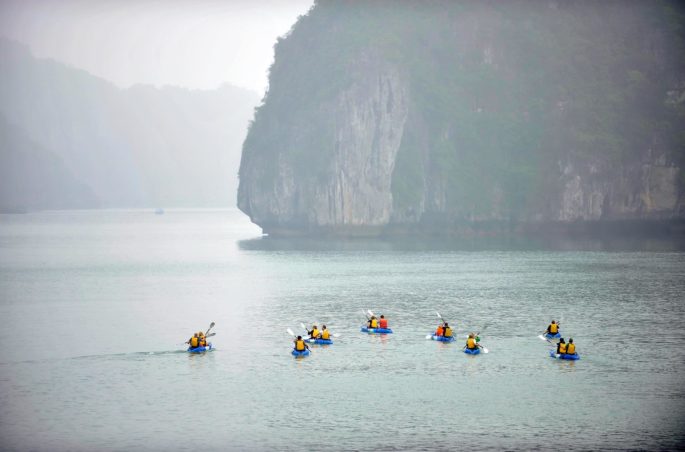
Visibility reaches its best. Limestone formations appear sharp against blue skies, and sunsets become more defined. Sea conditions remain calm, supporting all cruise activities without disruption.
Demand rises during this period. International travelers favor these months, and availability can tighten.
Pros
- Clear skies and strong visibility
- Comfortable temperatures
- Low rainfall and minimal storm risk
- Ideal for all cruise activities
Cons
- Higher prices
- Increased demand
Best for
- Honeymoons and milestone trips
- Travelers prioritizing comfort
- Scenic photography
The Au Co stands out in autumn with its extended journeys across Halong, Lan Ha, and Bai Tu Long. Bhaya Soul also aligns with the calm setting, offering wellness-focused experiences in stable conditions.
Best Time to Visit Halong Bay in 2026
Choosing the best time to visit Halong Bay in 2026 depends on what you value most—clear skies, fewer crowds, lower prices, or warm water. The bay remains accessible year-round, yet each window serves a different travel style.
In short, March–April and October–November 2026 offer the most balanced conditions, while summer suits value-driven trips and winter favors quiet, reflective journeys.
For the Best Weather & Scenic Cruising
March–April and October–November stand as the most reliable months. During these periods, temperatures remain mild, rainfall stays low to moderate, and skies often clear. Visibility improves, which enhances the scale and depth of the limestone landscape.
Spring offers fresh greenery and soft light, while autumn delivers sharper views and stable conditions. Both periods support full itineraries with minimal disruption.
Travelers seeking a deeper experience should consider 3-day, 2-night cruises. These allow access to quieter areas such as Lan Ha Bay and Bai Tu Long Bay, where scenery feels less crowded and more varied.
For Fewer Crowds & Quiet Deck Time
Late February, May (outside Vietnamese public holidays), and early December offer a quieter balance. These months sit between peak demand periods, which reduces traffic on popular routes.
The weather remains acceptable, though less predictable than peak months. The trade-off often rewards travelers with more space and a slower pace.
Privacy becomes easier to achieve during these windows. Mid-week departures also reduce crowd levels further.
For the Best Prices & Deals
From May to September, Halong Bay enters its value season. Many cruises reduce rates by 10–20% compared to peak months, especially for advance bookings or last-minute offers.
This period suits travelers who remain flexible. While weather can shift, many days still support full cruising.
Booking directly with operators often provides access to updated offers and clearer policies.

For Swimming, Snorkeling & Water Activities
Warm water defines the experience from late April through early October. Sea temperatures rise, making swimming and kayaking more comfortable.
May–June and September provide a strong balance between warmth and stability. Peak summer months remain suitable but carry higher storm risk.
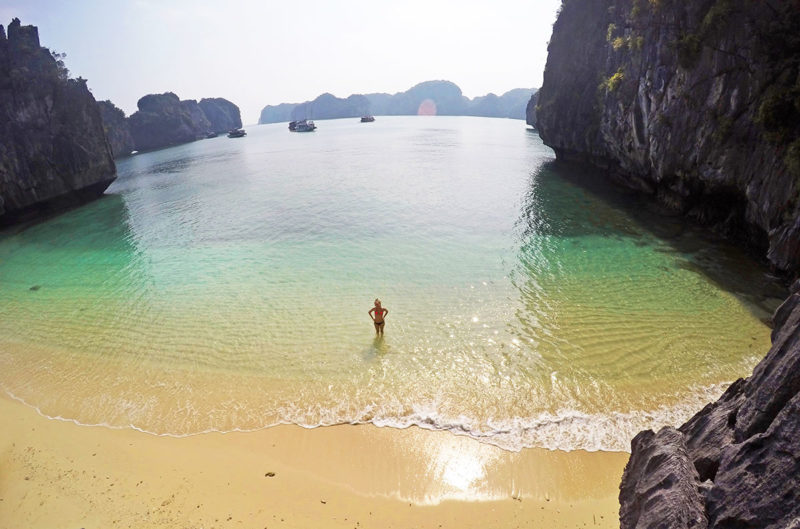
Bhaya itineraries include access to beaches such as Trinh Nu and Titov, along with quiet lagoons for kayaking.
For Culture, Festivals & Special Moments
Halong Bay also reflects Vietnam’s cultural calendar. Tet (Lunar New Year), April holidays, and Christmas/New Year create distinct onboard experiences.
These periods include curated dining, themed activities, and a festive atmosphere. Demand increases, and pricing may rise.

Month-by-Month Halong Bay Weather Snapshot
Weather in Halong Bay follows stable yearly patterns, though daily conditions can vary. The infographic below provides a practical view of each month in 2026, including climate, crowd trends, and suitable Bhaya options.
Contingency Plans: Handling a Ha Long Bay Tour Cancellation Due to Adverse Weather Conditions
The Role of Halong Bay Management Board in Tour Cancellations Due to Bad Weather.
The Halong Bay Management Board is the governing body overseeing all activities within Halong Bay, including:
- Permissions and Safety: Granting permissions to cruise companies to sail while retaining the right to cancel or shorten trips for passenger safety.
- Reasons for Cancellation: Mainly triggered by adverse weather conditions such as typhoons, storms, or heavy fog.
- Decision-Making Window: Typically, decisions regarding tour or cruise cancellations are made by the Halong Bay Management Board before 3:00 PM on the day of the trip.
 While cruise companies and travel agents are obliged to abide by the Board’s decisions, they prioritize informing passengers promptly and arranging the best possible alternatives.
For passengers, proactive measures are advisable: Stay Informed: Regularly check news updates and maintain contact with travel agents or cruise operators for swift notifications regarding any cancellations.
In case of trip cancellations due to inclement weather, here are a few scenarios to consider for alternate arrangements.
Scenario #1 – Prior to departure from Hanoi
If notified of a cancellation before departing for your trip, promptly reach out to your travel agent for further guidance and alternatives.
- When is the next trip?
- Alternative Options
- Cancellation Policy From Your Cruise Company
If you find yourself waiting for the next trip, consider confirming your hotel booking time and, if interested, explore Hanoi on a short tour while making the most of your time.
Scenario #2 – After arriving in Halong Bay
If you receive cancellation news after arriving at Ha Long Bay, you have the option to:
- Return To Hanoi
- Wait For The Cruise The Day After
- Check Cancellation Policy From Your Cruise Company
For the first option, the cruise operator will arrange transportation for your return to Hanoi.
In case you decide to wait, please be aware that due to heavy rain or storms, the next available cruise might be delayed by several days.
Scenario #3 – During your cruise trip
In the event of a cancellation on a cruise trip, your safety is always a priority.
Depending on the weather conditions, the cruise operator may make different arrangements to ensure your safety.
If you are informed of the cancellation on the first day of the trip and the weather forecast for the next day is favorable, the trip may be shortened accordingly.
- You should spend a night at a hotel on the mainland and then resume your journey.
If bad weather is not going get better:
- Asking Cruise Company Transfer Back To Hanoi
- Asking Your Cruise Company About Refund Policy
Note: For details on Bhaya Cruises’ refund policy during storms or typhoons, refer to their specific guidelines on refund policy of Bhaya Cruises.
Conclusion
Halong Bay remains a year-round destination, shaped by four distinct seasons. Each period offers a different perspective. Winter brings calm and mist. Spring introduces balance and greenery. Summer opens warm water and value. Autumn delivers clear skies and steady conditions.
For 2026, the most recommended windows depend on your priorities. Choose spring or autumn for comfort and scenery. Select summer for better rates and water activities. Consider winter for quiet space and a slower pace.
With the right timing, each journey becomes intentional. Bhaya Cruises offers a range of options—from short 2D1N trips to extended 3D2N journeys across Halong, Lan Ha, and Bai Tu Long Bay, along with wellness-focused sailings.
For tailored advice, travelers can connect with Bhaya’s team to align travel dates, cruise style, and seasonal conditions into one seamless plan.




Pingback: Halong Bay no Vietnã - Dicas de viagem, cruzeiros e roteiro infalível
Pingback: mazhor4sezon
Pingback: Which Is The Best Season To Travel To Halong Bay? – INSIGHT INFORMER
Pingback: Halong Bay Travel Guide – Flights, Hotels, Homes, Tours, Car Rentals – NovaTreks
Pingback: Hạ Long Bay Travel Guide – Flights, Hotels, Homes, Tours, Car Rentals – NovaTreks
Pingback: 20 Essential Items To Pack For A Halong Bay Cruise - Bhaya Cruises Blog
Pingback: Halong Bay weather in December, is it worth visiting? - Bhaya Cruises Blog
Pingback: A Complete Guide to Halong Bay Cruises: Best Options and Tips – talkingvietnam.com
Pingback: Exploring Halong Bay in Style: Top Luxury Cruise Options – talkingvietnam.com
Pingback: When Is the Best Time to Take a Cruise in Vietnam? – talkingvietnam.com
Pingback: Kayaking in Ha Long Bay: Plan Your 2025 Adventure for Stunning Scenery and Unforgettable Moments
Pingback: How to Find Affordable Cruises in Vietnam - talkingvietnam.com
Pingback: 10 Tips for a Perfect Cruise Experience in Vietnam - talkingvietnam.com
Pingback: Hanoi to Halong Bay: Ultimate Guide on How to Get to Halong from Hanoi
Pingback: Halong Bay Beaches to Visit in 2025 - 2026 (Updated Guide)
Pingback: US Traveler’s Guide to Halong Bay Vietnam 2025 - 2026
Pingback: Top Halong Bay Cruise Routes for visitors in 2025 - 2026
Pingback: 2025's Complete Halong Bay Travel Guide: Essential Tips for First-Time Visitors
Pingback: Weather in Halong Bay: Storm in the summer - Bhaya Cruises Blog
Pingback: Halong Bay Cruise with Kids: 5 Things to Know (2025 Update)
Pingback: The Best Month for a Vietnam Tour: A Comprehensive Guide - Punjabi Traveler
Pingback: South Korean Traveler’s Guide to Halong Bay [Updated 2026]
Pingback: Cat Ba Island vs Halong Bay: Which Is Better for You?
Pingback: A Complete Travel Guide for Singaporeans to Ha Long Bay