
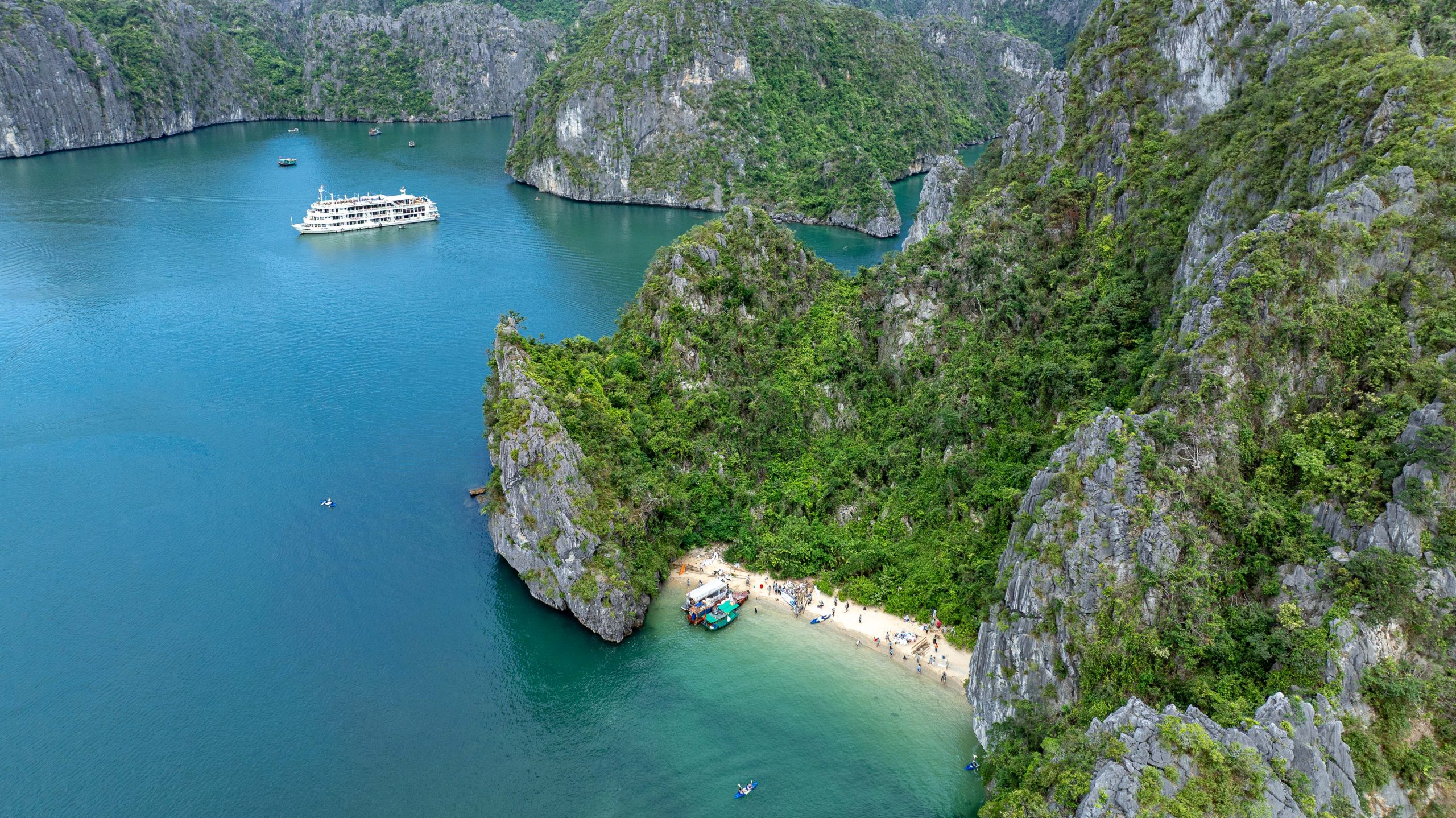
Northeast of the famous Halong Bay, past the tourist marinas and the organized traffic of tour boats, lies a stretch of water that most visitors never reach. Bai Tu Long Bay shares the same UNESCO World Heritage listing as Halong Bay, the same ancient limestone karst landscape rising from the Gulf of Tonkin, and the same quality of light over the water at dawn.
With fewer licensed cruise operators permitted to navigate its waters, Bai Tu Long Bay offers a quieter, more unhurried version of northern Vietnam’s most iconic seascape. Over 600 islands spread across Quang Ninh Province, including the protected forests of Bai Tu Long National Park and the white-sand shores of Van Don Island.
This guide covers everything you need to plan a visit: what the bay is, what to do there, when to go, how to get there from Hanoi, and what no one tells you before you board.
Overview of Bai Tu Long Bay
Bai Tu Long Bay sits in the northeastern corner of Quang Ninh Province, stretching from Halong City through Cam Pha and into the Van Don island district before reaching the sea border with China.
Geologically, it is indistinguishable from Halong Bay: the same 500-million-year-old limestone formations, the same drowned karst valleys flooded by rising seas, the same ancient caves carved by time and water. Both bays were inscribed as a single UNESCO World Heritage Site, first in 1994 and extended in 2000.
The practical difference is access. The Vietnamese government issues cruise operation permits by zone. Halong Bay’s core zone accommodates hundreds of licensed vessels. Bai Tu Long Bay’s permit zone supports far fewer, which means fewer boats at anchor overnight, quieter kayaking corridors, and longer silences between islands.
Bai Tu Long also encompasses Bai Tu Long National Park, recognized as an ASEAN Heritage Park, which protects a rare combination of coastal forest, mangrove, and marine ecosystems.
For travelers choosing between the two, the question is not which bay is more beautiful. The question is what kind of experience you want.
| Factor | Bai Tu Long Bay | Halong Bay (core zone) |
|---|---|---|
| Boat traffic | Low to moderate | High, especially midday |
| Licensed cruise operators | Fewer, select | Many tiers available |
| Landscape type | Karst islands, national park | Karst islands, caves, floating villages |
| Cultural access | Floating fishing villages, Van Don Island | Floating villages, Ti Top Island |
| Best for | Travelers who prioritize calm and immersion | Travelers who want infrastructure and convenience |
| Distance from Hanoi | Approx. 165–185 km (103–115 miles) | Approx. 155–175 km (96–109 miles) |
All distances are approximate and subject to route variation. Please confirm travel logistics with your operator before booking.
Some itineraries cross through both bays. The Au Co’s 4-day signature route is designed precisely for this, giving travelers the cultural depth of Bai Tu Long Bay and the landmark scenery of Halong Bay within a single voyage.
Top Things to Do in Bai Tu Long Bay
Bai Tu Long Bay rewards visitors who take their time. The activities below represent the most meaningful ways to spend that time, grounded in what the bay actually offers rather than what a generic activity list would suggest.
Join an overnight cruise
The overnight cruise is the defining experience of Bai Tu Long Bay, and the strongest argument for choosing it over a day trip. Once the day-cruise boats return to Halong City in the late afternoon, the bay settles. Anchor points between the islands are quiet. Sunrise from a top deck, with mist sitting over the karst peaks and no other vessel visible, is not a travel cliché here. It is simply what happens when you give the bay enough time.
Day cruises are available and worthwhile for travelers with limited time, but they spend the peak hours on the water and return before the bay’s character fully emerges. For a genuine sense of the place, a minimum of one night aboard is the right choice.
Kayak through limestone grottos
Kayaking in Bai Tu Long Bay accesses places that larger vessels cannot reach. Narrow tidal passages between karst walls, submerged cave entrances that open into enclosed lagoons, and shallow water corridors lined with hanging vegetation are all part of guided kayaking excursions on overnight cruises. The low boat traffic in the bay’s permit zone means these routes are rarely congested.
Most overnight cruises include one guided kayaking session in the itinerary. Travelers who want more time on the water should check whether their chosen cruise offers open kayaking periods alongside guided excursions.

Visit Vung Vieng and Cong Dam floating fishing villages
The floating fishing villages of Vung Vieng and Cong Dam are among the few remaining traditional communities living entirely on the water in northern Vietnam. Residents live on wooden homes built on floating pontoons, keeping fish in submerged cages and navigating by small wooden boat.
Guided visits by bamboo rowing boat allow travelers to move through the village at a pace suited to observation rather than transit. These visits are an encounter with a way of life that has existed on these waters for generations, carrying the kind of authentic coastal experience that makes Bai Tu Long Bay a genuinely different proposition.

Explore Thien Canh Son Cave & other karst caves
Thien Canh Son Cave (Hang Thien Canh Son), on Hon Co Island within the Cong Do Nature Reserve, is one of the main cave stops along the Bai Tu Long Bay cruise route. Less visited than the show caves in Halong Bay’s core zone, it features two connected caverns of stalactite and stalagmite formations without the tour-group congestion.
Other accessible caves along Bai Tu Long itineraries include formations reachable by kayak and on foot, depending on the cruise route. Ask your operator which cave excursions are included in your specific itinerary.

Swim and snorkel at Minh Chau and Quan Lan beaches
Van Don Island, within the Bai Tu Long permit zone, holds some of northern Vietnam’s most consistently clean beaches. Minh Chau and Quan Lan both offer fine white sand and calm water suitable for swimming from approximately late April through October. Neither beach has the infrastructure of a resort strip.

Take a bamboo boat through narrow water corridors
Bamboo boat excursions, typically guided by local fishers, pass through karst corridors too narrow and shallow for any motorized vessel. They operate at a different pace from kayaking, requiring nothing from the traveler except presence.
For families traveling with young children, or for travelers who find kayaking physically demanding, the bamboo boat offers the same intimate access to the landscape with less physical effort.
Bai Tu Long Bay Cruise Options: Day vs. Overnight
Choosing between a day cruise and an overnight cruise shapes the entire character of your visit. Day cruises depart from Halong City or Cai Rong in the morning and return by late afternoon. They cover the bay’s highlights efficiently and suit travelers with limited time or those who prefer not to sleep on a boat.
The trade-off is real: the bay’s most memorable moments, including quiet anchorages, sunset over the karst, and near-empty water at dawn, are only available to those who stay.
Overnight cruises range from a single night (2 days, 1 night) to two-night or three-night itineraries. A one-night cruise covers the core bay experience adequately. A two-night or three-day cruise adds the option to reach Van Don Island, include a beach day at Minh Chau or Quan Lan, or combine Bai Tu Long Bay with Halong Bay waters.
The Au Co’s 4-day itinerary is designed for travelers who want both bays in depth, crossing Halong Bay and Bai Tu Long Bay on a single voyage with cultural stops, kayaking, and beach time built into the route. For travelers seeking a private, unhurried escape into the quieter waters of Bai Tu Long Bay, the Bhaya Legend 3-Day Private Cruise offers an exclusive charter experience with village visits, cave exploration, and cultural immersion away from the crowds.
Best Time to Visit Bai Tu Long Bay
Bai Tu Long Bay is accessible year-round, but conditions vary enough across the calendar to make timing meaningful. The table below gives a practical breakdown by month.
| Month | Weather | Sea State | Crowds | Best For |
|---|---|---|---|---|
| January | Cool, dry, 18–22°C (64–72°F) | Calm | Low | Misty karst scenery, photography |
| February | Cool, dry, 18–24°C (64–75°F) | Calm | Low-moderate | Comfortable cruising, cave visits |
| March | Warm, dry, 20–26°C (68–79°F) | Calm | Moderate | Kayaking, beach access beginning |
| April | Warm, 24–28°C (75–82°F) | Mostly calm | Moderate | Water activities, pre-peak visits |
| May | Hot, wet season begins, 26–32°C (79–90°F) | Variable | Moderate | Budget travel, early summer |
| June | Hot, wet, 28–34°C (82–93°F) | Variable | Moderate-high | Swimming and water activities season |
| July | Hot, wet, 28–35°C (82–95°F) | Rough possible | High | Peak season; monitor typhoon forecasts |
| August | Hot, wet, 28–35°C (82–95°F) | Rough possible | High | Peak season; monitor typhoon forecasts |
| September | Warm, wet, 26–32°C (79–90°F) | Variable | Moderate | Fewer crowds, some itinerary adjustments |
| October | Warm, drying, 24–30°C (75–86°F) | Calm | Low-moderate | Excellent all-round conditions |
| November | Cool, dry, 20–26°C (68–79°F) | Calm | Low | Best weather window begins |
| December | Cool, dry, 18–23°C (64–73°F) | Calm | Low | Quiet, clear visibility |
The clearest recommendation for most international travelers is to visit between October and April. November through January brings the most atmospheric conditions: cool air, low humidity, and morning mist that sits across the limestone peaks before burning off by mid-morning. Water temperatures in this window are cooler, generally around 20–22°C (68–72°F), which suits cave visits and deck time better than swimming.
From May to September, the bay is warm and lush, with water temperatures ideal for swimming and snorkeling. The trade-off is higher humidity, occasional rain squalls, and the risk of tropical storms from July through September. Cruise operators reduce or adjust schedules during storm warnings. Always check weather forecasts within 48 to 72 hours of departure and confirm your itinerary with your operator.
All weather and seasonal details are for general reference and may vary year to year. Please confirm with your cruise operator before booking.
How to Get to Bai Tu Long Bay from Hanoi?
Most travelers reach Bai Tu Long Bay by road from Hanoi, then board their cruise at one of the designated embarkation points in Quang Ninh Province. The journey is straightforward, and the steps below cover your main options.
Step 1: Travel from Hanoi to Quang Ninh
The most common route follows the Hanoi-Halong Expressway. The distance from central Hanoi to Halong City is approximately 155–165 km (96–103 miles). As of 2025, travel time via the expressway is approximately 2.5 to 3 hours by car or shuttle bus under normal traffic conditions, a significant improvement from older coastal routes that could take 4 hours or more.
Step 2: Choose your transport
- Shuttle bus: Most cruise operators, including Bhaya, offer daily round-trip shuttle bus transfers from Hanoi’s Old Quarter with pick-up times coordinated to boarding schedules. This is the most practical option for independent travelers.
- Private car: More flexible for groups or families. Traffic around Halong City during peak periods (weekends, national holidays) can add 30 to 60 minutes to journey times.
- Limousine or sleeper bus: Several private companies operate comfort bus services from Hanoi’s My Dinh or Gia Lam terminals with journey times comparable to shuttle buses.
Step 3: Board at the correct embarkation point
Boarding locations vary by cruise operator and itinerary. Bhaya cruises embark from Halong Bay Cruise Center. Some operators serving Bai Tu Long Bay’s eastern routes board at Cai Rong Port on Van Don Island, which adds approximately 45 minutes to the road journey from Halong City. Confirm your specific boarding point with your operator at the time of booking.
Essential Travel Tips for Bai Tu Long Bay
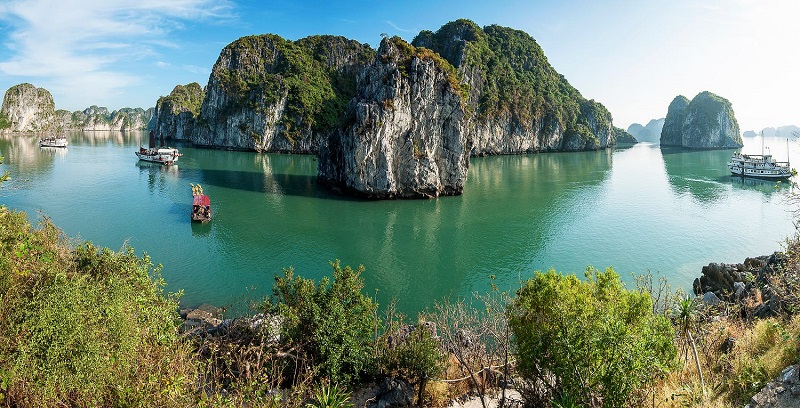
These are the practical details that most travel guides skip, grounded in the reality of cruising a bay with limited onshore infrastructure.
- Pack a soft bag, not a hard suitcase. Most cruise cabins have limited storage space. A carry-on-sized soft bag or backpack fits under bunks and in narrow wardrobes where a rigid case does not. Leave large luggage at your Hanoi hotel if your operator offers storage.
- Bring SPF 50+ sun protection for every day on the water. Reflected light off the water intensifies UV exposure significantly. Sun-protective clothing and a wide-brim hat make a full day of kayaking and deck time manageable. Sunscreen reapplication every two hours is the realistic minimum on the water.
- Pack motion-sickness medication if you have any sensitivity. Bai Tu Long Bay is sheltered and generally calm, but overnight cruises are still at sea. Conditions can shift overnight, and the combination of movement, unfamiliar sleep, and engine vibration on smaller vessels affects some travelers. Medication taken before boarding is more effective than waiting to see how you feel.
- Respect the national park zone. Bai Tu Long National Park is an ASEAN Heritage Park and a protected ecosystem. Do not feed fish, remove coral, shells, or rocks, or dispose of any plastic in or near the water. Most reputable cruise operators brief passengers on environmental rules before excursions.
- Carry Vietnamese dong cash for on-island purchases. Card payment is not widely available in the floating fishing villages or at small vendors on Van Don Island. Small denominations are useful for purchasing local snacks, drinks, or handcrafts directly from village vendors.
- Verify that your cruise is permitted to navigate Bai Tu Long Bay waters. Not every operator licensed for Halong Bay’s core zone holds a separate permit for Bai Tu Long Bay’s specific northeastern zone. Some cruises marketed as “Bai Tu Long Bay cruises” navigate the boundary area without entering the quieter permit zone. Ask your operator to confirm the specific anchorage points and island stops in your itinerary before booking. Operators with genuine Bai Tu Long access will have no hesitation in providing this information.
Conclusion
Bai Tu Long Bay offers the karst scenery and World Heritage status of Halong Bay with a pace and quiet that the more famous bay can no longer consistently provide. Fewer vessels, intact fishing villages, a national park that rewards slow attention, and beaches that have not yet been organized into resort infrastructure: these are not marketing claims. They are simply what the bay is when fewer people arrive at once.
The right way to visit is by overnight cruise, ideally for two nights if the itinerary allows. The right time is between October and April, when the weather is dry, the light is clear, and the mornings are cool enough to spend on deck.
Travelers with extra time before or after their voyage can also extend the journey inland with Bhaya’s curated Hanoi and Ninh Binh experiences, rounding out a slower, more immersive trip through Northern Vietnam. Whether you seek a wellness escape on the water or an immersive voyage through two bays, Bhaya’s collection of boutique cruises offers routes designed to carry you into the quieter reaches of the bay at your own pace.
Frequently Asked Questions
Is Bai Tu Long Bay better than Halong Bay?
Neither bay is objectively better. Bai Tu Long Bay offers lower boat traffic, quieter anchorages, and more direct access to traditional fishing villages. Halong Bay has greater infrastructure, more cruise options at every price point, and is marginally closer to Hanoi.
How long does it take to get to Bai Tu Long Bay from Hanoi?
By road via the Hanoi-Halong Expressway, the journey from central Hanoi to Halong City takes approximately 2.5 to 3 hours under normal traffic conditions. Some cruises embark from Cai Rong Port on Van Don Island, which adds a further 45 minutes.
What is the best time of year to visit Bai Tu Long Bay?
October through April is the most reliable window, with dry weather, calm seas, and comfortable temperatures. November to January is the most scenic period, with morning mist over the karst peaks and fewer visitors on the water. May to September is warmer and wetter, with higher swimming temperatures but increased storm risk from July onward.
Can you visit Bai Tu Long Bay on a day trip from Hanoi?
A day trip is logistically possible but not recommended for a meaningful experience. The road journey from Hanoi takes roughly 2.5 to 3 hours each way, leaving limited time on the water before the return trip.
What activities are available in Bai Tu Long Bay?
The main activities on an overnight cruise include guided kayaking through karst grottos and hidden lagoons, bamboo boat excursions through narrow water corridors, cave exploration including Dragon Pearl Cave, swimming and snorkeling at beaches on Van Don Island, and cultural visits to Vung Vieng and Cong Dam floating fishing villages.
Is Bai Tu Long Bay part of the UNESCO World Heritage Site?
Yes. Bai Tu Long Bay forms part of the same UNESCO World Heritage Site as Halong Bay, inscribed in 1994 and extended in 2000 to cover the broader karst zone. The bay also encompasses Bai Tu Long National Park, designated as an ASEAN Heritage Park, which protects a combined marine and terrestrial ecosystem with significant biodiversity value across both coastal forest and sea habitats.
Do all cruise operators have permission to enter Bai Tu Long Bay?
No. Cruise operations in Vietnam are regulated by zone-specific permits. Not every operator licensed for Halong Bay’s core zone holds a separate permit to navigate Bai Tu Long Bay’s northeastern waters. Before booking, ask your operator to confirm the specific anchorage points, island stops, and permit zone coverage of your itinerary.





Pingback: [2026] Complete Halong Bay Travel Guide for First-Time Visitors
Pingback: [2026] Lan Ha Bay: Things To Do & Travel Tips You Should Know
Pingback: Bai Tu Long Bay: The Quieter Alternative to Halong Bay - Truly Voyage UK