
Trinh Nu Cave (or Virgin Cave), tucked into Bo Hon Island, deserves more than a passing mention. It’s a genuine archaeological site with human history stretching back roughly 4,000 years, a hidden saltwater pond with its own small ecosystem, and a wartime past most cruise brochures leave out entirely.
This guide brings all of that together in one place: the legend, the geology, the history, and the practical details on which cruises actually stop here and when to go.
Trinh Nu Cave Overview
Trinh Nu Cave sits on Bo Hon Island, in the core cluster of islands that make up central Halong Bay.
Address: Cat Hai, Hai Phong
- About 3 km southeast of Sung Sot Cave, the bay’s largest cavern
- Roughly 500 to 700 m from Trong Cave, its counterpart across the water
- Between 13.5 and 16 km from Tuan Chau Marina or the Ha Long International Passenger Port, depending on which port you depart from

This Halong Bay map breaks down each zone and cruise route across the bay, useful for seeing how Trinh Nu fits into a wider itinerary.
The Legend of Trinh Nu Cave
The story behind Trinh Nu Cave centers on a fisherman’s daughter caught between two men. She had already fallen for a young fisherman preparing for their wedding at sea, but a wealthy landlord who controlled the local fishing grounds wanted her as a concubine. When her family refused, he exiled her alone to a barren island nearby.
Stranded through a violent storm, she waited for her lover to return, and the legend says she turned to stone rather than give up the wait. Visitors who step inside the cave today see a stalagmite formation many say looks like a woman lying with her hair falling toward the sea, the detail that gave the site its name.
Her lover fared no better. Rowing out to find her, he lost his boat to the same storm and washed ashore on a neighboring islet. He hammered at the rock face until his hands bled trying to signal her, and eventually turned to stone himself. That spot, about 700 m across the water, is known today as Trong Cave, or Drum Cave or Male Cave.
By times, fishermen sheltering here during storms, and later during wartime, kept the story alive.
Trinh Nu Cave Structure and Natural Features
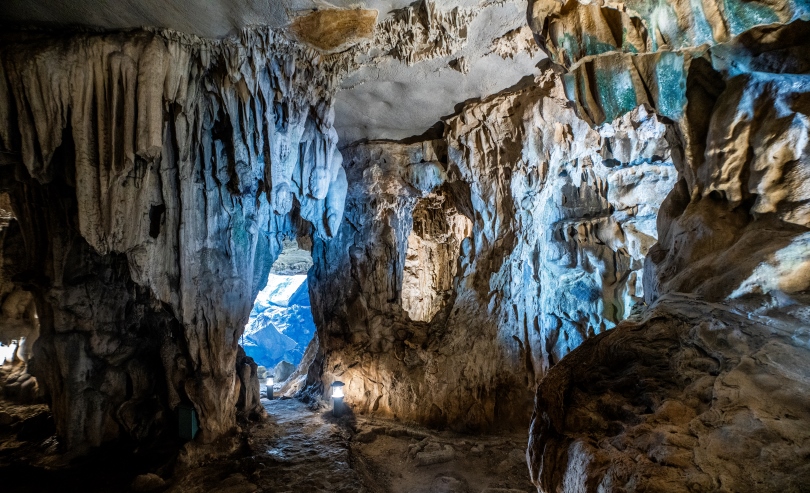
Trinh Nu Cave divides into three linked compartments, entered and exited through two facing gates about 15 m high and 25 m wide.
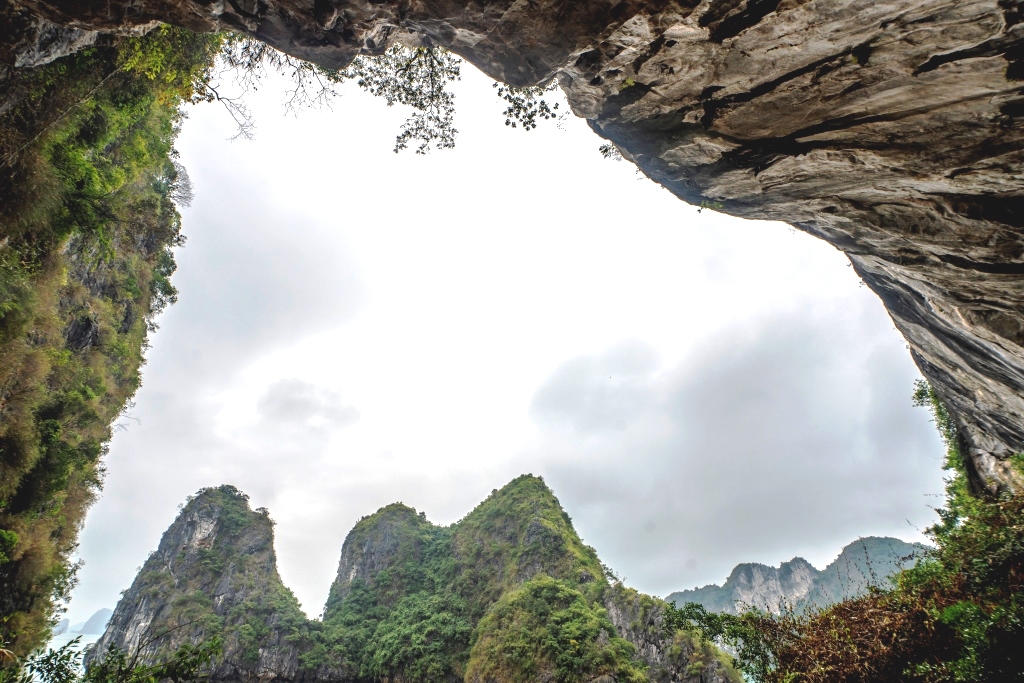
Stalactites and stalagmites line the walls in shapes that catch daylight differently through each opening, which shifts the mood of the cave through the day. Towards the Southeast, it is absolutely a pristine scene whilst looking at the emerald seawater and standing-tall plants.
The cave’s most unusual feature is easy to miss: a small pond inside holds roughly 3% salt content, unusual for water sealed this far from the open sea. A study by researchers from the University of Ljubljana documented two species living in that pocket:
- Alpheoid shrimp, adapted to the pond’s saltwater
- A Calanoid copepod from the group Bathynellacea, normally found only in freshwater, an unusual find in a saline pool
Outside the main chambers, seasonal vegetation covers the rock, and bats and birds shelter on the cave’s upper ledges. The pond’s residents are part of what makes the site more than a folklore stop.
Bhaya’s guide to Halong Bay’s attractions covers a dozen more caves worth adding to your route.
A Site of Archaeological and Historical Significance
Long before the legend took hold, Trinh Nu Cave was a settlement site for the Halong culture, a Neolithic community that lived across these islands roughly 4,000 to 4,500 years ago. Nhan Dan newspaper places the wider Halong culture at approximately 3,000 to 5,000 years old, a range covering the slightly different figures cited for this cave.
Excavations in 2000 turned up ash, bone fragments, and stone tools from that period. A second round of finds in 2010, just outside the entrance, uncovered ceramic wharf pieces, including porcelain from the Tran dynasty (13th to 14th centuries) and glazed pottery from the Le dynasty (16th to 18th centuries), pointing to this coastline’s role in the old Van Don trading network.

The cave’s more recent history is wartime. During the Vietnam War, it served as a hidden stop on the “No Number Ship” supply route moving weapons north to south, and Marines used it as a base securing the bay’s waterways.
How to Visit Trinh Nu Cave
Trinh Nu Cave is under special authorization of the Halong City government, so not every Halong Bay cruise stops at Trinh Nu Cave. It sits on specific overnight cruise programs, so check your itinerary before assuming it’s included.
Bhaya Cruises, the main contributor of this project, has renovated and maintained the Trinh Nu area by building a small gangway and stairs for ease of access as well as regularly cleaning the beach. We are also one of several operators whose routes call here.
- Larger cruise ships anchor offshore and ferry guests in by small rowboat.
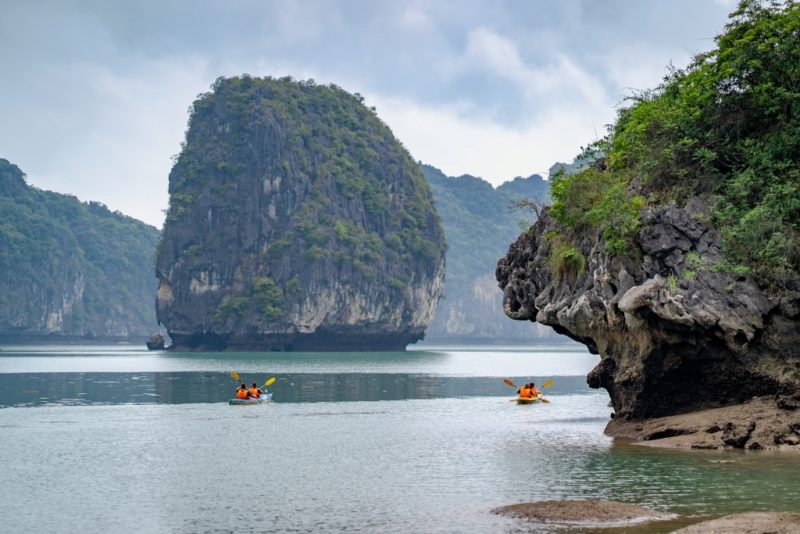
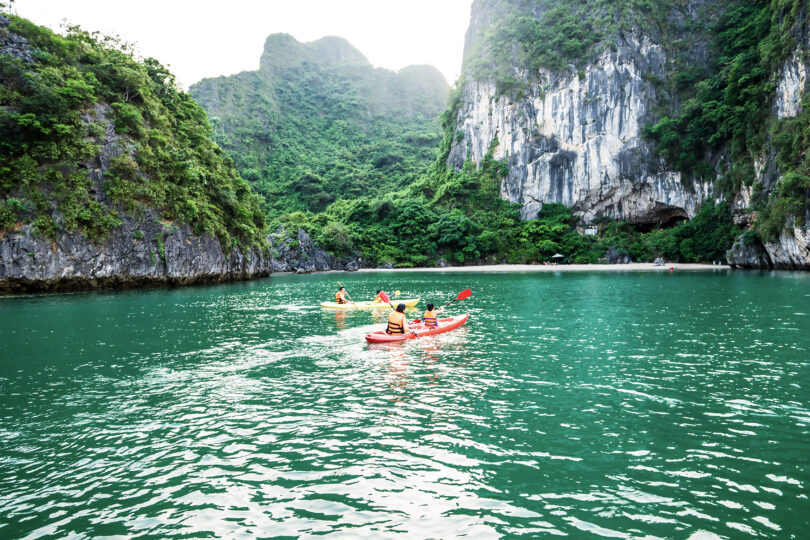
- Some private cruises allow time for kayaking and enjoying the beach secluded.
- Overnight cruises that include the cave usually pair it with Tien Ong Cave or Tung Sau Pearl Farm on the same day.
Remember to confirm with your operator before booking for updated information.
Timing depends on what you want from the trip. March, April, September, and November bring the clearest conditions for sightseeing. If swimming or kayaking at the small beach is the priority, April through August offers warmer water, though with more rain and humidity.
You can look for more information on Halong Bay weather conditions month by month in our guide. Also, the guide to getting from Hanoi to Halong Bay covers the transfer itself.
Conclusion
Trinh Nu Cave rewards visitors on two levels, which is a legend worth the retelling, and roughly 4,000 years of documented human history that most day-trippers never hear about. The saltwater pond, the wartime supply route, and the archaeological finds around its entrance all sit quietly behind a story most people come only for the folklore.
Seeing all of it depends on picking an itinerary that actually stops here, since plenty of Halong Bay cruises skip the cave entirely. Explore Trinh Nu Cave and Bo Hon Island’s hidden coves aboard The Au Co, whose signature route weaves cultural landmarks across both Halong and Lan Ha Bay.
Frequently Asked Questions
How old is Trinh Nu Cave, archaeologically speaking?
Excavations show the site was inhabited during the Halong culture, a Neolithic community that Nhan Dan places at roughly 3,000 to 5,000 years old. Finds specific to this cave are generally cited between 4,000 and 4,500 years. Digs in 2000 uncovered ash and bone fragments, while a 2010 excavation turned up ceramic wharf pieces from the Tran and Le dynasties.
Is Trinh Nu Cave included in every Halong Bay cruise?
No. Trinh Nu Cave sits on select itineraries and specific overnight cruise programs, not on every Halong Bay tour. Several operators, including Bhaya Cruises, stop here, but standard day cruises often bypass it for other caves like Sung Sot. Check the specific itinerary before booking rather than assuming any Halong Bay cruise includes it.
Is Trinh Nu Cave worth visiting?
Yes, especially if you want more from Halong Bay than its most-photographed caves. Trinh Nu combines a well-known love story with a genuine archaeological record and a small, unusual saltwater pond ecosystem. Access is limited to specific itineraries and involves a short kayak or rowboat transfer, so it suits travelers willing to trade a packed day-cruise schedule for a quieter stop.





Pingback: Kayaking In Halong Bay: Is It As Hard As It Looks? – KayakCritic