12:34 PM
Planning a winter journey to Halong Bay? January offers a calm and reflective side of this UNESCO-listed seascape. The bay enters its coolest season, with fresh air, light winds, and a quiet atmosphere that feels far from the busy months ahead.
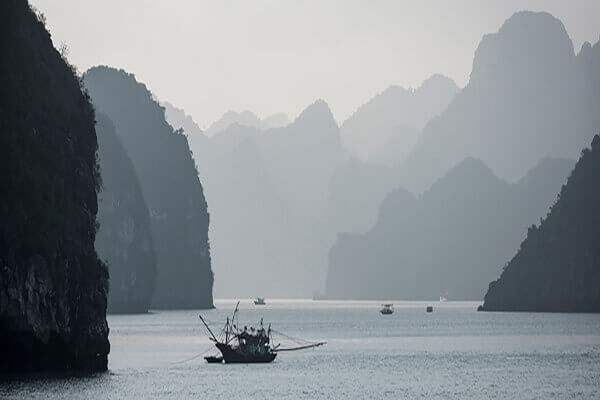
This time of year sits firmly within northern Vietnam’s winter pattern. Days feel cool rather than cold, while mornings often begin with soft mist drifting between limestone peaks. The result is a cinematic setting that rewards slow travel and careful observation.
In this guide, you will find clear details on January weather and temperatures, how these conditions shape cruise experiences, and what to pack for comfort on board. You will also learn which cruise styles align best with the season—whether you prefer quiet wellness time, scenic cruising, or active exploration on land and water.
Is January a Good Time to Visit Halong Bay?
January is one of the most comfortable months for travelers who prefer mild weather over heat. The air feels crisp, the sea remains calm, and rainfall stays low. This creates stable conditions for cruising and sightseeing.
The experience leans toward atmosphere rather than beach-style activity. You trade warm swimming water for peaceful landscapes and cooler hiking conditions. For many travelers, this balance feels more relaxed and easier to enjoy throughout the day.
Crowds remain moderate. The period before Lunar New Year is generally quieter, while the holiday itself can bring a short increase in domestic travel.
Pros and cons of visiting in January:
- Cool temperatures (around 15–20°C / 59–68°F), ideal for walking and exploring
- Low rainfall and stable cruising conditions
- Calm seas, suitable for overnight itineraries
- Misty scenery that enhances photography
- Sea temperature is cool; swimming is limited
- Occasional fog may soften distant views
- Evenings on deck can feel chilly
Compared with December, January is slightly cooler and more settled. Moving into February, temperatures begin to rise gently, though mist and humidity may increase.
Halong Bay Weather Snapshot in January
January brings a clear shift from the humid months of late autumn. The air feels drier, and rainfall drops to one of the lowest levels of the year.
Conditions remain stable for cruising, with minimal disruption from weather.
Detailed Temperatures in January
January temperatures feel different on the water compared with inland cities like Hanoi. The open bay allows a light breeze to move across the decks, which can make mornings and evenings feel cooler than the actual temperature suggests.
During the day, temperatures often reach 18–20°C (64–68°F). This range suits outdoor exploration, including cave visits, short hikes, and kayaking. The sun provides gentle warmth without strong intensity, making it comfortable to stay outside for extended periods.
At night, temperatures drop to around 14–16°C (57–61°F). Onboard experiences shift indoors, with warm dining spaces and lounge areas becoming more inviting.
Sea temperatures average 20–22°C (68–72°F). For travelers from cooler climates, this may still feel manageable for a short swim. For most visitors, however, water activities focus more on kayaking or scenic cruising rather than extended swimming sessions.
Practical timing tips:
- Late morning to early afternoon offers the most comfortable outdoor conditions
- Sunrise and sunset are best enjoyed with a light jacket on deck
- Midday excursions feel pleasant without overheating
Rainfall, Humidity, and Visibility
Rainfall remains low in January. Showers, when they occur, are light and short. This supports a smooth cruise experience with minimal itinerary changes.
Humidity also drops compared with summer months. The air feels fresher and less dense, which improves comfort during walking or climbing activities.
Visibility varies. Instead of clear blue skies, winter introduces soft mist and occasional fog. This does not reduce the experience—it reshapes it.
The limestone formations appear layered and distant, creating depth across the bay. Many travelers value this atmospheric quality as a defining feature of Halong Bay in winter.
What to expect:
- Mostly dry days with light drizzle at times
- Fresh air and moderate humidity
- Misty mornings that clear gradually
- Soft, diffused light ideal for photography
How January Weather Affects Cruise Experiences?
January shifts the cruise experience toward calm exploration and indoor comfort. The cooler air encourages a slower rhythm, where each activity feels unhurried.
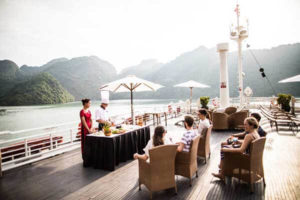
Onboard, guests spend time between open decks and warm lounges. Sunrise sessions, such as Tai Chi, feel quiet and reflective. Evenings often center around dining and relaxation indoors.
Excursions remain active but comfortable. Cave visits benefit from cooler air, making walking easier. Hiking viewpoints becomes more enjoyable without heat stress. Kayaking continues to be a highlight due to calm water conditions.
Swimming is less common, though short dips remain possible for those comfortable with cooler temperatures.
Weather-related disruptions are rare in January. Unlike summer months, there is little risk of storms. Cruise itineraries generally proceed as planned, with operators maintaining flexibility for minor adjustments when needed.
Best Things To Do in Halong Bay in January
January invites a different set of experiences—focused on scenery, culture, and calm movement rather than water-based activities.
- Capture misty landscapes at sunrise and sunset
- Explore limestone caves in cool, stable conditions
- Join Tai Chi sessions on deck in the morning air
- Kayak through quiet lagoons and sheltered areas
- Enjoy warm meals indoors with panoramic views
- Visit viewpoints without summer heat
- Experience peaceful cruising with fewer crowds
Bhaya itineraries are designed to adapt to seasonal conditions. Short cruises (2 days 1 night) provide a balanced introduction, while longer journeys (3 days 2 nights or more) allow more time to enjoy the quiet pace of winter.
Choosing The Right Bhaya Cruise in January
January favors cruises that combine comfort, scenery, and thoughtful pacing. Each Bhaya brand offers a different approach aligned with these priorities.
- Bhaya Classi: A reliable choice for first-time visitors. The 2-day and 3-day itineraries cover key highlights while maintaining a steady rhythm. This works well for travelers seeking a structured yet relaxed winter experience.
- The Au Co: Designed for longer journeys, this option explores both Halong Bay and Lan Ha Bay. The extended route suits January’s calm seas and offers deeper immersion in quieter areas.
- Bhaya Legend (Private Charter): Ideal for families or small groups. Private charters allow flexible timing of activities, which helps adjust to cooler mornings or warmer midday periods.
- Bhaya Soul: A strong match for winter travel. Wellness-focused experiences—spa treatments, meditation, and quiet deck time—align naturally with January’s slower pace.
Recommended approach for January:
- Choose itineraries with a mix of indoor and outdoor spaces
- Prioritize scenic cruising and cultural experiences over swimming
- Opt for longer cruises if you value a deeper, quieter journey
FAQs
Is it warm enough to swim in Halong Bay in January?
The sea averages 20–22°C (68–72°F). Some travelers may swim briefly, but most prefer kayaking or onboard relaxation.
Does it rain a lot in January?
No. Rainfall is low, with only occasional light showers.
Are cruises cancelled in January due to weather?
Cancellations are rare. The month has stable conditions with minimal storm risk.
What should I wear on a Halong Bay cruise in January?
Pack layers. A light jacket, long-sleeve shirts, and comfortable walking shoes work well. Add a warmer layer for evenings on deck.
Is Halong Bay crowded in January?
Crowds are moderate. Outside the Lunar New Year period, the bay feels quieter than peak seasons.