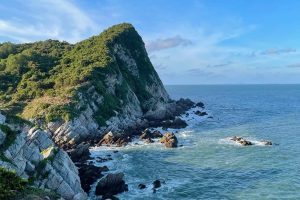

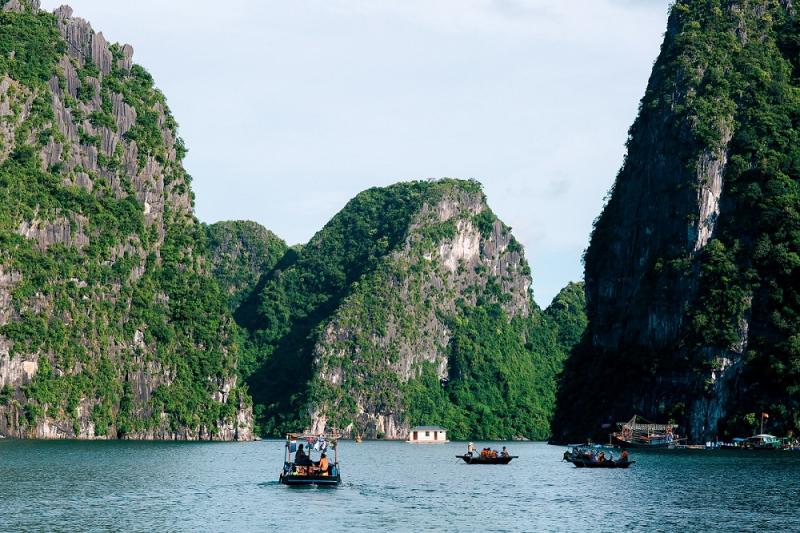
Cat Ba Island is where Halong Bay’s limestone seascape meets one of Vietnam’s most biodiverse forest ecosystems. Tucked within the Cat Ba Archipelago in the Gulf of Tonkin, Cat Ba National Park offers a different kind of encounter with this part of northern Vietnam, one built around ancient trees, jungle trails, and an island shaped by millions of years of karst geology.
This guide covers everything you need to plan a visit to Cat Ba National Park in 2026: what the park is, what lives there, which trails to hike, how to get there, what it costs, and when to go.
Overview of Cat Ba National Park
Cat Ba National Park is a protected natural area on Cat Ba Island, the largest of the 367 islands that make up the Cat Ba Archipelago. The park was established in 1986 and covers approximately 17,360 hectares, combining around 9,800 hectares of terrestrial forest with roughly 5,400 hectares of marine habitat along the island’s coastline.
In 2004, UNESCO recognized the Cat Ba Archipelago as a World Biosphere Reserve. In 2023, the area was elevated further when it became part of the Halong Bay – Cat Ba Archipelago World Natural Heritage Site, bringing international protection to both the bay’s seascape and the island’s interior in a single designation.
Cat Ba National Park is one of only two protected areas in Vietnam that encompass both terrestrial and marine environments under the same boundary. Its forest interior includes evergreen tropical rainforest on limestone mountains, coastal mangrove forests, and freshwater flooded forests. These habitats form an ecological mosaic that supports a level of biodiversity unusual for an island of this size.
For travelers arriving from a Halong Bay cruise, the national park offers a natural complement. It begins where the water ends and continues deep into the forest, adding a land-based dimension to a destination most visitors experience only from the deck of a boat.

Entrance Fees, Opening Hours, and What to Expect
Cat Ba National Park opens daily at 7 AM and closes at 5 PM. The entrance fee for international visitors is approximately 60,000 VND per person as of 2026. A parking fee of approximately 5,000 VND applies for motorbikes. Both fees are paid at the ticket counter at the park entrance.

Here is what to expect on arrival:
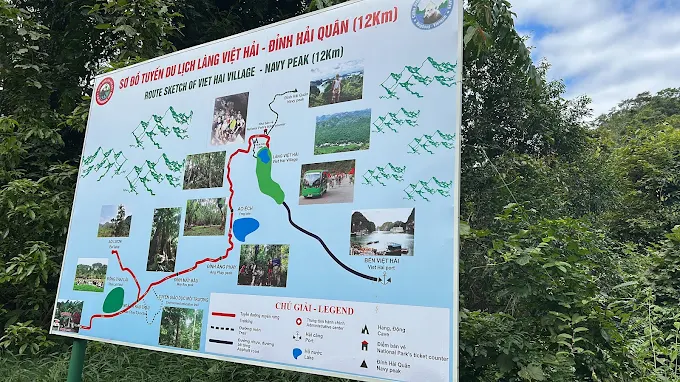
- No printed trail maps are distributed at the entrance. Photograph the map displayed on the board at the trailhead before setting off into the forest.
- A natural history museum on the grounds houses botanical specimens and wildlife information about the park. Opening hours for the museum may vary by day.
- A wildlife rehabilitation center is on-site and can be visited as part of the entrance ticket.
- Guided eco-tours are available and cost approximately 300,000 to 500,000 VND per person, inclusive of a local guide. Guides are significantly more effective for wildlife sightings and are essential for the longer routes.
- Recommended gear: sturdy footwear for all trails, at least 1.5 liters of water per person, sun protection, insect repellent, and rain gear if visiting between May and October.
- For the most current pricing, visit catbanationalpark.com/entrance-fees.
All prices listed are for reference only and may be subject to change. Please confirm fees directly with Cat Ba National Park before your visit.
Wildlife and Biodiversity in Cat Ba National Park
Cat Ba National Park holds some of the most concentrated biodiversity in northern Vietnam. According to official park records, the park contains 1,595 recorded species of vascular plants across 188 families, including the ancient Kim Giao tree, a rare conifer found in the highland forest near Ngu Lam Peak and considered one of the island’s defining botanical features.
The park supports 32 mammal species, more than 70 bird species, and over 20 reptile and amphibian species. Cat Ba lies on a major waterfowl migration route, attracting seasonal visitors alongside resident species such as kingfishers, sunbirds, the great hornbill, and the pied hornbill. Hornbills are most reliably spotted at dawn and dusk in the deeper sections of the forest.
The park’s marine ecosystems add another dimension to the broader ecological picture: mangrove forests along the coastline, coral reef habitats in the surrounding waters, and seagrass beds that support a range of juvenile marine species.
The Cat Ba Langur: Vietnam’s Most Critically Endangered Primate
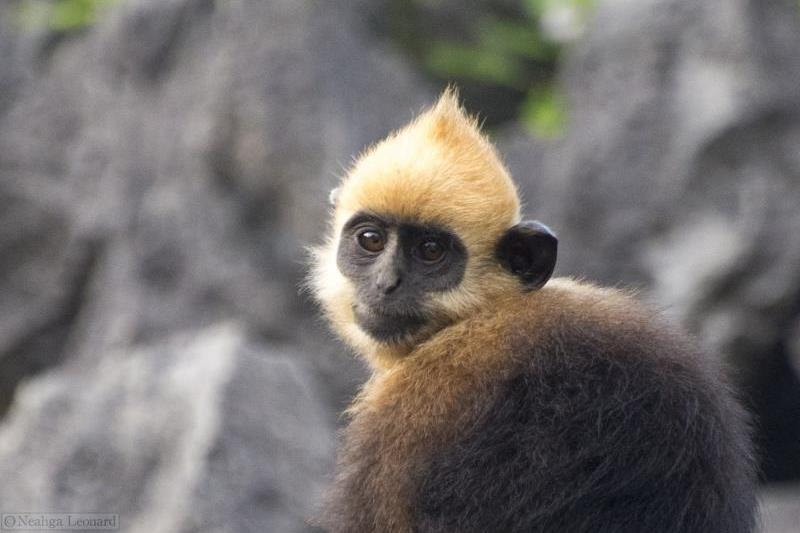
The Cat Ba langur (Trachypithecus poliocephalus), also known as the golden-headed langur, exists only on Cat Ba Island. No wild population survives anywhere else on earth, which places this species in a category of ecological significance that very few animals share.
Population surveys have estimated fewer than 60 individuals remaining in the wild. The species’ decline was driven largely by historical hunting pressure and habitat disturbance. Conservation programs currently active on the island have helped stabilize numbers, though the population remains critically small.
Visitors rarely see langurs on short trail visits. The animals live in small family groups among remote, rocky karst formations in the park’s interior. A guided trek into the deeper sections of the forest offers the best chance of a sighting. Even without seeing one, the knowledge that they are present, watching from somewhere in the canopy overhead, changes the quality of the walk.
Hiking Trails in Cat Ba National Park
Cat Ba National Park has trails for nearly every fitness level. Options range from a 30-minute forest loop to a full-day crossing that ends at a remote fishing village on Lan Ha Bay. The park opens daily at 7 AM and closes at 5 PM. That closing time is a hard limit, and trail selection must account for it.
One practical note before setting off: the park does not provide printed trail maps at the entrance. A map is posted on a board at the trailhead. Photograph it before entering the forest. Mobile networks are unreliable once you are inside the trees.
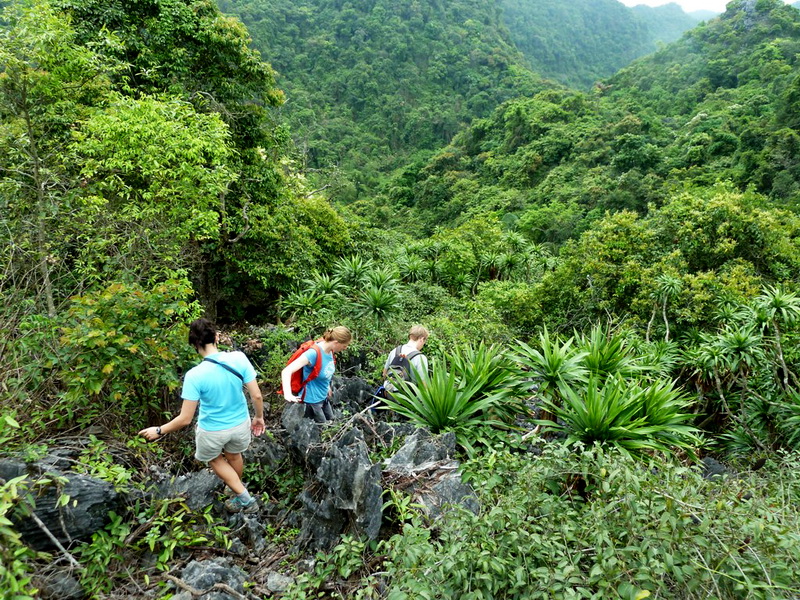
Guided tours are available on-site and cost approximately 200,000 to 400,000 VND per person as of 2026. A guide is optional for the two shorter routes but strongly recommended for any trail beyond 4 km (2.5 miles). Guides improve wildlife sighting rates significantly and know the sections of longer routes that become difficult after rain.
The table below compares the four main trails. The Viet Hai Village route carries one particular reward at the end: the trail concludes near Lan Ha Bay, where a boat can return you to Cat Ba Town rather than retracing the full route on foot.
| Trail Name | Distance | Duration | Difficulty | Key Highlights |
|---|---|---|---|---|
| Kim Giao Forest and Ngu Lam Peak | 1.5 km (0.9 mi) | 30 to 60 min | Easy | Ancient Kim Giao trees, panoramic hilltop viewpoint, accessible for all fitness levels |
| Ngu Lam Loop | 4.4 km (2.7 mi) | 3 to 4 hours | Moderate | Karst rock formations, tropical forest corridors, wide valley views |
| Trung Trang Cave Trail | 1.5 km (0.9 mi) | 1 to 2 hours | Easy | Accessible cave system, limestone formations, shaded approach |
| Park Center to Viet Hai Village | 14 km (8.7 mi) | 5 to 8 hours | Difficult | Ao Ech freshwater lake, old-growth forest, Viet Hai fishing village, Lan Ha Bay boat return |
All distances and durations are approximate and subject to trail conditions. Please confirm current access with the park before visiting.
For the long Viet Hai route, enter the park no later than 8 AM. Bring at least 1.5 liters of water per person, sun protection, and sturdy footwear. Gloves and trekking poles are useful on the final steep sections before the village. For current trail conditions and any access restrictions, the Cat Ba National Park official website is the most reliable source.
How to Get to Cat Ba National Park?
Cat Ba National Park sits at the center of Cat Ba Island, approximately 14 km (8.7 miles) from Cat Ba Town by road. Reaching the island requires a combination of road and water travel. The two most practical routes connect from Hanoi and from Halong City.
From Hanoi:
- Take a shuttle bus from central Hanoi to Hai Phong, a journey of approximately 130 km (81 miles) taking around 2 hours.
- From Hai Phong, board a ferry to Cat Ba Island. Crossing time is approximately 45 minutes to 1.5 hours depending on the service.
- From Cat Ba Town, reach the park entrance by motorbike rental, bicycle, or taxi along a well-maintained road.
From Halong City:
A ferry or boat across Lan Ha Bay connects Halong City to Cat Ba Island in approximately 1.5 hours. This route passes through the bay’s karst landscape and is a journey worth taking slowly.
Once on Cat Ba Island, motorbike taxis and local taxis run regularly between Cat Ba Town and the national park entrance.
All transport times and ferry schedules listed above are for reference only and subject to change. Please confirm details with your transport provider before booking.
Best Time to Visit Cat Ba National Park
Cat Ba National Park is open year-round, but the experience varies considerably by season.
- The dry season, running from November to April, offers the most reliable conditions for hiking. Temperatures average approximately 18 to 23°C (64 to 73°F), humidity is lower, and trails stay firm underfoot. Visibility from elevated viewpoints like Ngu Lam Peak is at its clearest during these months, with the bay and surrounding archipelago visible on clear days.
- The wet season, from May to October, brings warm temperatures averaging 27 to 33°C (81 to 91°F), higher humidity, and tropical rain on many days. Trails can become slippery, particularly on the steeper sections of the Viet Hai route. The forest is at its densest and most intensely green during this period, and the waterfowl migration windows within this season attract more birdwatching activity.
Peak visitor volume falls between June and August, when northern hemisphere summer holidays bring more travelers to the island. Cat Ba Town is busier during this period, and the shorter park trails see more foot traffic on weekends.
The shoulder months of April and October tend to be the ideal window. Weather conditions are favorable, the trails are not crowded, and the bay waters remain calm for any planned boat activities.
Across all seasons, start any trail before 9 AM. Morning temperatures are lower, wildlife is most active in the first hours of daylight, and the forest sounds are at their richest before the midday heat sets in.
| Season | Months | Temperature | Visitor Volume | Best For |
|---|---|---|---|---|
| Dry (ideal) | November to April | Approx. 18 to 23°C (64 to 73°F) | Low to moderate | Hiking, wildlife spotting, clear views from peaks |
| Shoulder (sweet spot) | April, October | Approx. 23 to 26°C (73 to 79°F) | Moderate | Balanced weather with fewer crowds |
| Wet (vibrant) | May to September | Approx. 27 to 33°C (81 to 91°F) | High (June to August) | Lush scenery, birdwatching, budget-friendly travel |
Weather data reflects historical patterns as of 2026. Actual conditions vary. Check current forecasts before your visit.
Conclusion
Cat Ba National Park holds a rare combination in one place: a forest rich enough to support one of the world’s most critically endangered primates, trails that scale from a 30-minute walk to a full day’s crossing, and a location that places the park directly beside two of Vietnam’s most celebrated bay landscapes. Whether you take the short Ngu Lam loop for a morning or cross to Viet Hai Village for the full experience, the park rewards the effort with a depth of natural encounter that most visitors to this region never reach.
Planning your Halong Bay journey? Explore Bhaya Soul’s 3-day wellness cruise across Halong Bay and Lan Ha Bay, where calm waters, ancient landscapes, and a thoughtfully curated onboard experience offer the right rhythm for completing the journey that begins in the forest.
Frequently Asked Questions
How long does it take to hike Cat Ba National Park?
Short trails such as the Kim Giao Forest and Ngu Lam Peak route take around 30 to 60 minutes. The Ngu Lam Loop typically requires 3 to 4 hours. For a more immersive experience, the full-day trek to Viet Hai Village covers approximately 14 km (8.7 miles) and takes between 5 and 8 hours depending on fitness level and hiking pace.
Is Cat Ba National Park worth visiting?
Yes. Cat Ba National Park is one of northern Vietnam’s most rewarding nature destinations, offering diverse hiking trails, rich biodiversity, and direct access to the landscapes of Lan Ha Bay. It is particularly appealing for travelers seeking outdoor activities beyond a traditional cruise itinerary.
Can you hike in Cat Ba National Park without a guide?
Yes. Shorter routes, including the Ngu Lam Peak loop and the Trung Trang Cave trail, can be explored independently. However, for the longer trek to Viet Hai Village, hiring a local guide is strongly recommended. Guides improve navigation, increase wildlife sighting opportunities, and help manage trail conditions that may change after heavy rain.
What is the entrance fee for Cat Ba National Park?
As of 2026, the entrance fee for international visitors is approximately 60,000 VND per person. A motorbike parking fee of around 5,000 VND may also apply. Fees are subject to change, so it is advisable to confirm current pricing at the official park website or at the ticket counter before your visit.
What is the best time to visit Cat Ba National Park?
November through April offers the best hiking conditions, with cooler temperatures, lower humidity, and firmer trails. The shoulder months of April and October are particularly attractive, balancing pleasant weather with moderate visitor numbers.
What wildlife can I see in Cat Ba National Park?
Cat Ba National Park is home to approximately 1,595 plant species, 32 mammal species, and more than 70 bird species. Frequently spotted wildlife includes kingfishers, sunbirds, great hornbills, and pied hornbills, particularly around dawn and dusk. The park also protects the critically endangered Cat Ba langur, one of the world’s rarest primates, found in its remote limestone habitats.