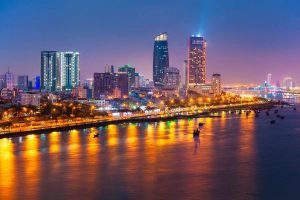

You have spent two nights in the mountains, and your cruise leaves the pier at midday. Between those two moments sits roughly 450 km of northern Vietnam, and no direct train or flight to shorten it. Most travelers making this trip are not simply moving between two destinations. They are trying to go from Sapa to Halong Bay at a particular hour, with luggage, after a long night on the road.
Three routes will get you there including a direct sleeper bus, a private car, or a connection through Hanoi. The one you should book depends less on what you want to spend and more on what time you need to arrive.
How far is Sapa from Halong Bay?
Sapa sits about 365 to 450 km from Halong Bay by road, a journey of roughly 8 to 9 hours.
Two things surprise first-time visitors. Sapa has no airport, so there is no flight to compare. It also has no railway station. The nearest track is at Lao Cai, about 35 km down the mountain, roughly an hour by road. Because Vietnam’s rail network radiates out from the capital, no train links Lao Cai directly to Quang Ninh province.
Treat this as a full travel day rather than a transfer, and current timetables are published by Vietnam Railways.
The two practical routes between Sapa and Halong Bay include direct by road, or connecting through Hanoi.
3 travel options from Sapa to Halong Bay
Each option trades money for either time or comfort. The table below gives the shape of the decision, and the sections beneath explain who each one suits. Read it alongside your cruise check-in time rather than in isolation.
By direct sleeper bus
The direct sleeper bus is the cheapest and most used way to reach Halong Bay from Sapa, and the fleet has improved. Older open-berth coaches have largely given way to cabin buses with private or semi-private berths, air conditioning and USB charging.
Three operators run the route regularly in 2026:
- HK Buslines departs 734 Dien Bien Phu at 08:30, 11:30, 21:30 and 22:15, dropping at in central Ha Long, Bai Chay area, Hong Hai area, 312 Nguyen Van Cu Office, Hon Gai, and Ha Long Cruise Port, from around $24.
- TBus departs 577 or 599 Dien Bien Phu at 10:00, 11:00, 16:00 and 22:00, dropping at Bai Chay bus station or its representative office, from around $19 to $35.
- Phuc Xuyen departs 599 Dien Bien Phu at 08:00, 11:00, 16:00 and 18:30, dropping at Bai Chay bus station or its representative office, from around US $19.
HK Buslines set you down near the cruise harbours, while TBus and Phuc Xuyen leaves you at the bus station, which means one more taxi. Cheaper local services stop often along the way to collect passengers and freight, and few offer hotel pickup.
By private car
A private car is the fastest way to cover the route and the only one that lets you choose your own departure hour. Door to door, expect 8 to 9 hours including a rest stop.
Rates are quoted per vehicle rather than per seat, which changes the arithmetic for families. A 4 to 7 seat car runs roughly $180 to $193 for the one-way transfer, and a 9 to 11 seat limousine van costs around $259 to $315.
Split four ways, a private car lands close to what four bus cabins would cost, with several hours saved and no bus station at either end. You can also break the drive in Hanoi for lunch without buying a second ticket.
Via Hanoi by overnight train
Most guides dismiss the train as the slow option. On paper it is, at twelve hours or more. In practice it is the only route that converts your transit time into a night’s sleep in a bed.
The sequence runs Sapa to Lao Cai station by road, then the sleeper train to Hanoi, then road to the bay. Boutique operators such as Chapa Express attach private 2-berth and 4-berth cabins to the Hanoi to Lao Cai line, with berths from around $25 per person and 2-berth cabins ranging from roughly $58 to $116 depending on class.
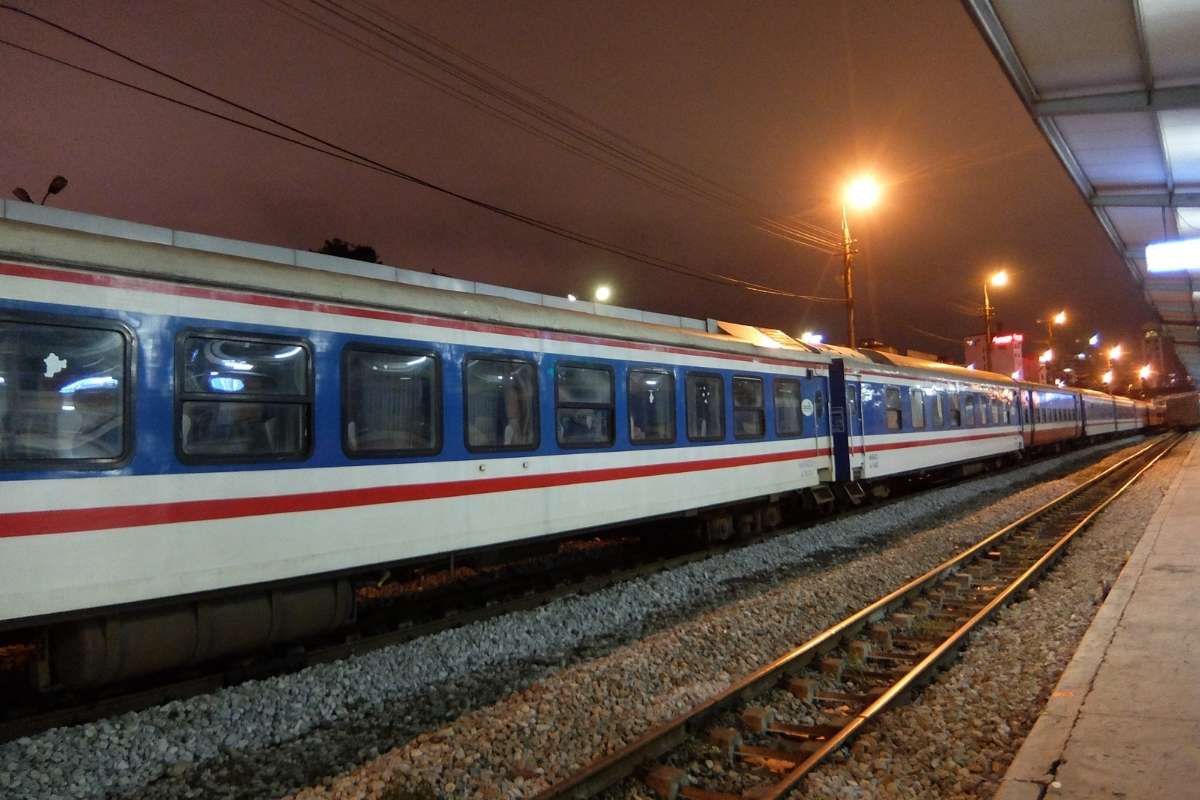
The SP4 leaves Lao Cai at 21:40 and reaches Hanoi at 05:30, which leaves the entire morning free for the final leg.
Our Hanoi to Halong Bay transport guide covers that stretch, now about 2.5 hours by expressway. Also, guests booking a Bhaya cruise will be provided with shuttle bus transfers to Bhaya Cruise Center from the center of Hanoi.
Timing your Sapa to Halong Bay arrival around a cruise
Most overnight cruises in Halong Bay board between 11:30 and 12:00, so a same-day arrival has to happen in the morning. This single fact should drive your whole booking.
Work backwards from check-in:
- Take a night departure: A bus leaving Sapa between 20:00 and 22:15 reaches Bai Chay or Tuan Chau in the early morning, with hours to spare before boarding.
- Do not rely on a morning departure: A bus leaving Sapa at 8:00 arrives late afternoon, long after your cruise has sailed. That schedule needs an overnight stay in Halong first.
- Confirm your harbour by name: Several ports serve the bay, and they are not close together. Bhaya guests board at Bhaya Cruise Center, while other operators use Halong International Cruise Port or Tuan Chau Island.
- Build in a buffer night: Mountain fog and holiday traffic both delay this route, and a night in Halong costs far less than a missed cruise.
Should you visit Sapa or Halong Bay first?
Either order works, but they suit different trips. Cruising first and finishing in the mountains lets you use the northbound night train, so you sleep through the longest leg. Starting in Sapa suits travelers flying out of Hanoi or Haiphong at the end, since the bay sits closer to both airports.
Season matters too. Sapa is often clouded in from December through February, while Halong Bay is calmest and clearest in autumn. If your dates fall in midwinter, weight the itinerary toward the coast.
Some travelers skip the transfer planning altogether with the 4-day Halong Bay and Sapa wellness journey. It pairs a night aboard Bhaya Soul with a private sleeper cabin north and a mountain stay.

Practical tips for the Sapa to Halong Bay journey
- Book 1 to 2 weeks ahead in peak season: Cabin buses and night trains sell out around Tet, April 30 and September 2.
- Keep a day bag with you: Main luggage travels in the hold, so carry documents, medication and a change of clothes in the cabin.
- Prepare for the mountain descent: The road from Sapa down to the valley winds steeply, and motion sickness catches out plenty of passengers.
- Check addresses against current maps: Vietnam reorganised its provinces in mid-2025. Sa Pa is now a ward of Lao Cai province, and Halong city was replaced by wards including Bai Chay and Tuan Chau, so older listings may not match.
- Get your pickup point in writing: Hotel lobby collection is common but not universal, and offices sit on different streets.
Conclusion
Choose your route by arrival time first and budget second. If you need to make a midday cruise, book a night departure from Sapa or take the overnight train through Hanoi and arrive with the morning ahead of you. Once you are travelling as a family or carrying luggage, a private car pays for itself in hours saved.
Explore Bhaya’s longer voyages to find an itinerary that gives Halong Bay the time it deserves.
Frequently Asked Questions
Can I take a train from Sapa to Halong Bay?
Not directly. Sapa has no station, and the nearest track is at Lao Cai, about an hour away by road. Vietnam’s rail network runs through Hanoi, so a train journey means Lao Cai to Hanoi overnight, then road transport to the bay. The SP4 reaches Hanoi at 05:30, leaving the morning free.
Can I reach a Halong Bay cruise from Sapa on the same day?
Only if you travel overnight. Cruises typically board between 11:30 and 12:00, so you need to leave Sapa on a night bus departing 20:00 to 22:15, or take the SP4 train and continue by road from Hanoi. A morning departure from Sapa will not reach the pier in time.
Is a private car worth the extra cost on this route?
For two people, probably not. For three or more, often yes. Rates are charged per vehicle, so a 4 to 7 seat car at $180 to $193 splits close to the price of individual bus cabins. You also save around two hours and choose your own departure time.