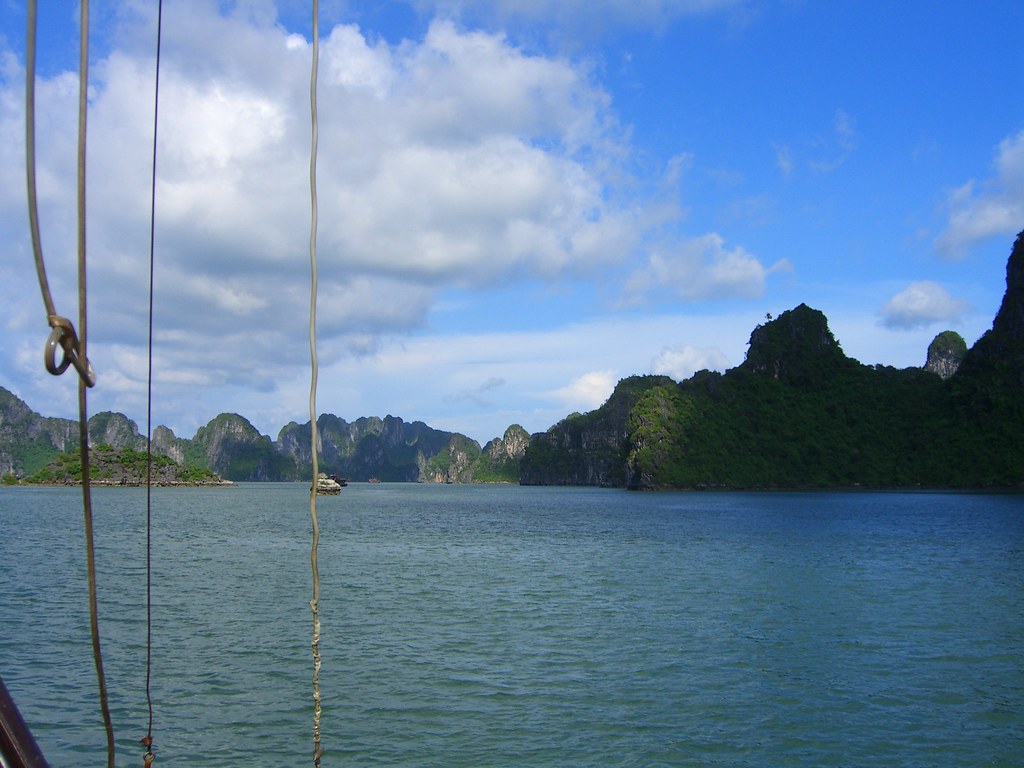
If you are planning a trip to northern Vietnam, the Gulf of Tonkin is where the country’s most photographed seascapes come to life. This wide arm of sea holds three connected bays, each with its own character, along with limestone islands, quiet lagoons, and floating villages.
This guide helps you to learn what the Gulf of Tonkin is, how its three bays differ, the best time to visit, how to reach the water from Hanoi, and how to choose the cruise that suits your pace.
Overview of the Gulf of Tonkin
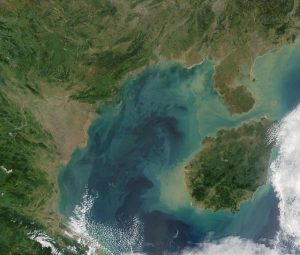
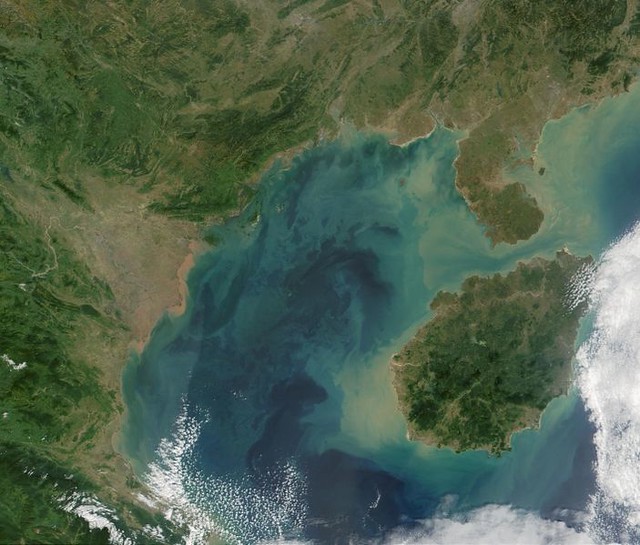
The Gulf of Tonkin is a shallow arm of the sea between northern Vietnam and southern China, fed by the Red River and framed by thousands of limestone islands. It stretches roughly 500 km (310 miles) at its longest and reaches depths of around 70 m (230 ft). On the Vietnamese side, it shelters three bays that draw most travelers: Halong Bay, Lan Ha Bay, and Bai Tu Long Bay.
The name itself has deep roots. During the French colonial era, the northern region of Vietnam was known as Tonkin, and the gulf took its name from that period.
The heart of the gulf carries global recognition. In September 2023, UNESCO extended its long-standing listing and renamed it the Halong Bay and Cat Ba Archipelago World Heritage Site, which now covers 65,650 hectares and 1,133 islands and islets across Quang Ninh province and Hai Phong city.
The three bays of the Gulf of Tonkin
The Gulf of Tonkin holds three main bays, and choosing between them shapes your whole trip. Here is how they compare at a glance:
| Bay | Character | Crowds | Best for |
|---|---|---|---|
| Halong Bay | Iconic karsts, classic views | Busiest | First-time visitors |
| Lan Ha Bay | Beaches, lagoons, near Cat Ba | Moderate | Couples, kayakers |
| Bai Tu Long Bay | Remote, unspoiled seascape | Quietest | Seekers of solitude |
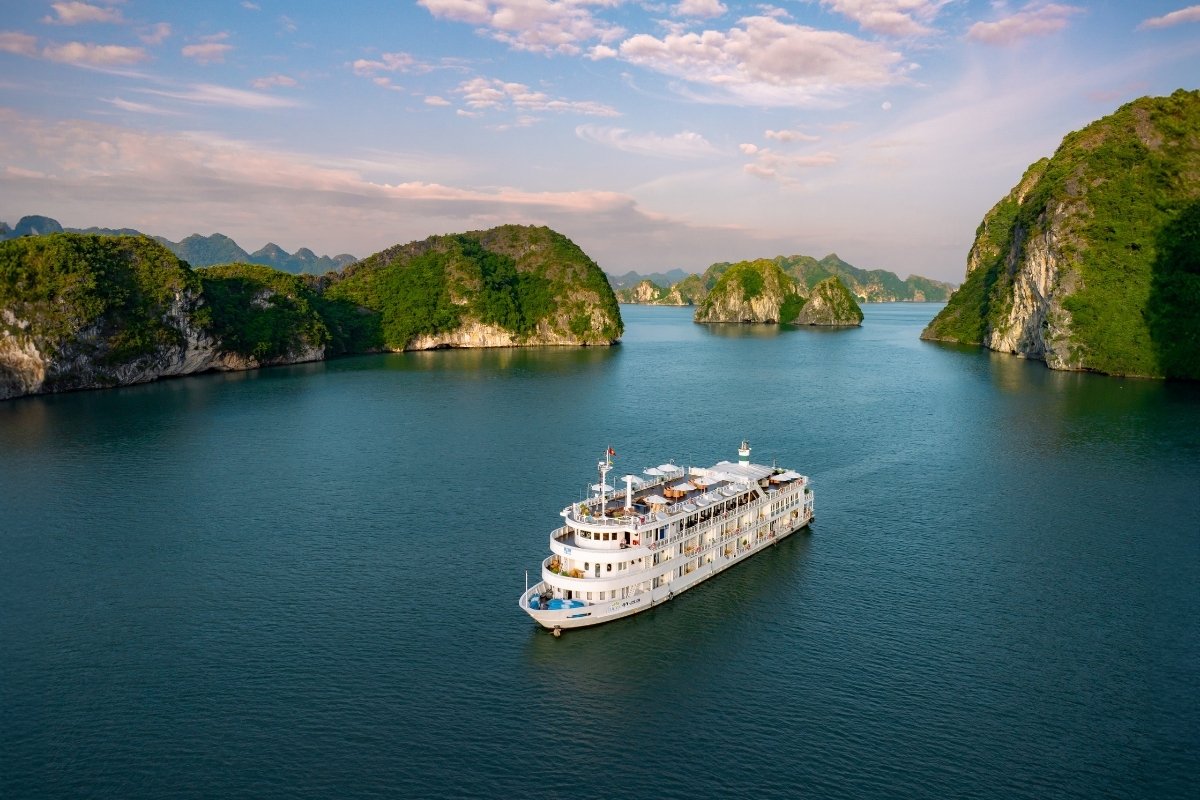
Many travelers try to pick a single bay, but the three sit close together, so a longer itinerary can link them. The Au Co sails the longest cruise route across 2 Bays including Halong and Lan Ha Bay, which suits anyone who wants scenic variety without changing boats.
Things to Do in the Gulf of Tonkin
The best way to experience the Gulf of Tonkin depends on how much time you have and how deeply you want to explore. Here are the main options, from shortest to most immersive.
- Day cruise: You will experience a five to six hour trip from the harbour. It usually comes with lunch, cave visit, and time on the water. This is the best choice when your schedule is tight.
- Overnight cruise: One night aboard a boat is the most classic choice. Imagine you will wake to mist over the karsts and fit in kayaking, caves, and a sunset on deck in a spectacular scenery.
- Multi-day cruise: Two nights or more cruise is ideal for those who want to reach quiet corners and link more than one bay.
- Kayaking and caves: Paddling into lagoons and through limestone arches gives you the most intimate view of the water. In fact, most cruises usually include it.
- Island stays: Basing yourself on Cat Ba Island can add more exciting activities to a bay trip including hiking, cycling, and beaches.
Within one day or more, for the first-time visit, most tourists choose to spend the time on a well-planned cruise trip. An overnight Halong Bay cruise offers the best balance of scenery and comfort.
Best time to travel the Gulf of Tonkin
The best time to travel the Gulf of Tonkin can be separated into two main seasons when the air is mild and skies are often clear.
- During spring, from March to April
- During autumn, from September to November.
These windows bring comfortable temperatures for cruising and kayaking, along with the best chances of the calm, glassy water the bay is known for.
On the other hand, summer, from May to August, is warm and green, with temperatures often above 30°C (86°F). It is the local holiday season, so bays are busier and occasional tropical storms can delay departures. Meanwhile, winter, from December to February, turns cooler and misty, with a soft grey light that many photographers prefer, though a jacket helps on deck.
Whatever the season, weather at sea can shift quickly, so conditions and cruise schedules may change at short notice.
How to get to the Gulf of Tonkin from Hanoi?
Most trips to the Gulf of Tonkin start in Hanoi, and the drive to the coast now takes around 2.5 hours thanks to the Hanoi to Halong expressway.
- Shuttle buses are the simplest option for most visitors. Many cruise operators run a morning coach that collects guests from central Hanoi and drops them at the harbour in time for boarding.
- Private cars offer more flexibility if you are travelling as a family or want to stop along the way. Otherwise, trains and public buses also serve Halong, though they take longer and need more planning.
A Bhaya shuttle transfer, for example, connects Hanoi with the Bhaya Cruise Center for a smooth start to the day. Besides Cruise Center, Bhaya guests can walk directly onto the cruise vessel from the dedicated pier, skipping tender boats.
Cruise Choosing and What to Expect
Choosing your cruise comes down to matching the length and style of the boat to your trip. A one or two night sailing suits most first-time visitors, while three days or more rewards travelers who want to explore beyond Halong Bay.
A typical itinerary blends time on the water with gentle activity. You should expect the cruise including kayaking or a bamboo boat ride, a cave visit, a Vietnamese cooking demonstration, and quiet hours on the sun deck. For extra cultural and healing activities, some voyages also offer mornings beginning with a Tai Chi session as the sun rises over the karsts.
For boutique luxury with a wellness focus, Bhaya Soul offers spa treatments, health-conscious dining, and onboard yoga, which makes it a calm choice for couples and solo travelers. If cultural depth and scenic variety matter more, the Au Co Gulf of Tonkin package spans both bays across three days. Meanwhile, for all 3 bays covered, including Ha Long, Lan Ha and Bai Tu long, the 4-day package of Au Co will be a comprehensive choice.
Cabins on well-run cruises are comfortable and often come with private balconies, and dining leans on fresh seafood and seasonal produce.
Conclusion
The Gulf of Tonkin rewards travelers who plan around the details that matter: the right bay for your style, a season with calm water, and a cruise that moves at your pace. You just match those three, and the seascape does the rest. Whether you are drawn to the quiet of Bai Tu Long or the beaches of Lan Ha, there is a rhythm here that fits how you like to travel. Plan your voyage across Halong Bay and Lan Ha Bay with the Au Co’s signature route, and let northern Vietnam’s living seascape unfold slowly.
Frequently Asked Questions
Which bay in the Gulf of Tonkin feels the most remote?
Bai Tu Long Bay has the strongest sense of remoteness. Located in the northeastern part of the gulf, it is known for lesser-visited landscapes, wide open waters, and a feeling of exclusivity that suits travelers looking for a slower and more private escape.
How many days do you need to travel the Gulf of Tonkin?
Two days and one night is enough for a first visit, allowing time for a night on the water, a cave visit, and kayaking. Three days and two nights gives you more time to reach quieter corners and explore more than one bay. If your schedule is limited, a single-day cruise still offers a taste of the region’s karst scenery, although you will miss the sunrise and peaceful atmosphere of an overnight stay.
Is the Gulf of Tonkin safe for tourists?
Yes. The Gulf of Tonkin is a well-established tourism destination with a long history of welcoming visitors. Cruise operators follow safety procedures and reputable companies may delay or reschedule departures when storms are forecast, so it is worth keeping some flexibility in your itinerary. Follow the crew’s instructions during activities such as kayaking and check the weather outlook before travelling, particularly during the summer months.