
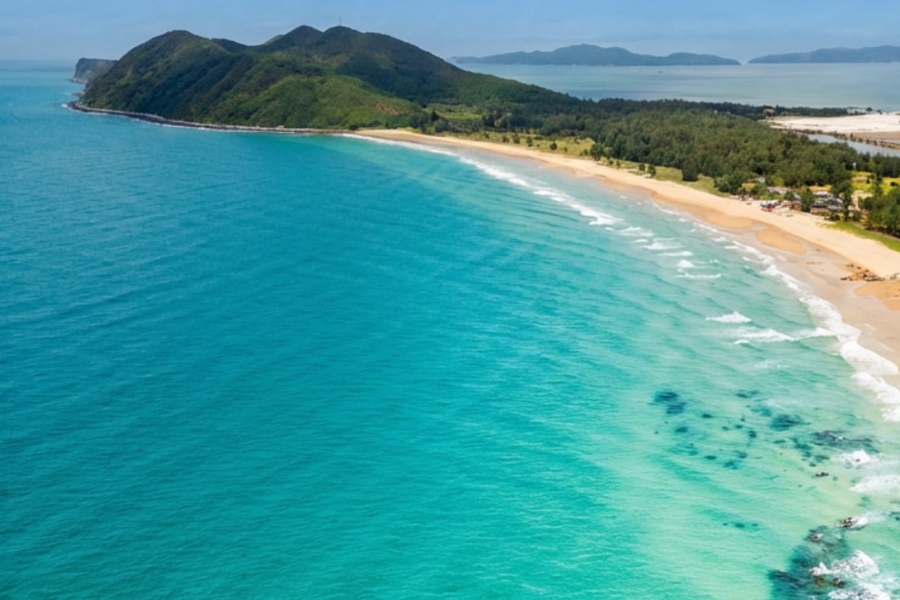
Quan Lan Island sits in Bai Tu Long Bay, roughly 40 km (25 miles) east of Van Don’s main port, and it represents something genuinely rare in Vietnamese coastal tourism: a long beach where the sand is still clean at midday and the water is still quiet by evening.
The island holds three distinct beaches, each with a different character. It also holds a communal temple more than 400 years old, a fishing community that runs its market before dawn, and a lunar festival that draws crowds from across Quang Ninh Province.
This guide covers everything you need to plan a visit in 2026, from arriving by speedboat to choosing the right season.
Beaches of Quan Lan Island: Which One Is Right for You?
Quan Lan Island has three distinct beaches, and most visitors make the mistake of staying at just one. Each serves a different purpose, and the differences matter when you are planning your days.
- Quan Lan Beach stretches more than 7 km (4.3 miles) along the island’s western edge. It sits close to the island center and the ferry port, which means it has the most services: guesthouses, seafood restaurants, and basic supplies. The water here is shallow and calm, and the gentle gradient into the sea makes it well suited to families and first-time visitors.
- Son Hao Beach occupies the mid-island stretch. The water runs slightly deeper and the shore is less developed. It suits stronger swimmers and anyone who wants real space on a peak-season weekend.
- Minh Chau Beach, at the northern end of the island, is considered the most pristine of the three. The sand is notably fine and white, the surf is very calm, and the reef just off the northern shore is accessible at low tide for snorkeling. Facilities are minimal, so bring your own food and water if you plan a full day here.
| Beach | Best For | Water Conditions | Distance from Port |
|---|---|---|---|
| Quan Lan Beach | Families, first-time visitors | Shallow, very calm | 1 km (0.6 mi) |
| Son Hao Beach | Swimmers, solitude | Moderate depth, light swell | 3 km (1.9 mi) |
| Minh Chau Beach | Snorkeling, pristine scenery | Very calm, reef at low tide | 6 km (3.7 mi) |
How to Get to Quan Lan Beach from Hanoi?
Getting to Quan Lan Island requires two stages: an overland journey to Van Don District’s Ao Tien Port, followed by a speedboat crossing to the island. The total travel time from central Hanoi is approximately 4 to 5 hours, depending on traffic and ferry timing.
Hanoi to Ao Tien Port
Ao Tien Port, the primary passenger gateway for speedboats and ferries to Quan Lan, lies in Van Don District approximately 210 km (130 miles) from central Hanoi. The most common option for independent travelers is a shuttle bus departing from Hanoi’s My Dinh or Giap Bat bus terminals.
The journey takes approximately 3.5 to 4 hours under normal conditions, though traffic on the approach to Ha Long City can add time during peak summer weekends.

Ao Tien Port to Quan Lan Island
High-speed passenger ferries depart Ao Tien Port for Quan Lan Island daily. The crossing covers roughly 30 km (19 miles) of open bay and takes approximately 30 to 45 minutes. Services typically run two to three times per day, with the schedule varying by season.
Tickets are sold at the port. Arriving 20 to 30 minutes before departure is advisable from late May through August.
All ferry details, including fares and timetables, are for reference only and may be subject to change. Confirm current schedules directly with the operator before traveling.
Things To Do at Quan Lan Beach
Swimming is the primary activity, and Quan Lan Beach handles it well. The water on the main beach is shallow enough for children and calm enough for unhurried laps. Early morning, before 9am, the beach belongs almost entirely to locals doing their daily exercise and the occasional guest from a nearby guesthouse.
Off Minh Chau Beach, snorkeling is possible at low tide. The reef along the northern shore holds reef fish, sea urchins, and occasional cuttlefish. Bringing your own mask and fins is advisable, as rental gear is limited on the island. The snorkeling is modest by international comparison, but it offers a genuine encounter with the Bai Tu Long Bay marine ecosystem rather than a managed attraction.
Island cycling is a rewarding half-day activity. The flat central road connecting the ferry port to Minh Chau Beach runs through casuarina groves and past fishing villages. Rental bicycles are available near the port. The full return route to Minh Chau covers approximately 12 km (7.5 miles).
Eo Gio, a cluster of weathered cliffs on the island’s eastern edge, offers the widest view on the island. From the top, the panorama takes in the open bay, the curved beach below, and, on a clear day, the limestone outcrops of the wider Bai Tu Long zone. The site is accessible by motorbike and is best visited before 7am to catch the early light.
The port-side fish market, running approximately 3am to 5am, is worth an early alarm. Fishing boats return from the night’s catch, and vendors sell live and fresh seafood at local prices alongside dried goods packaged for travelers to carry home.
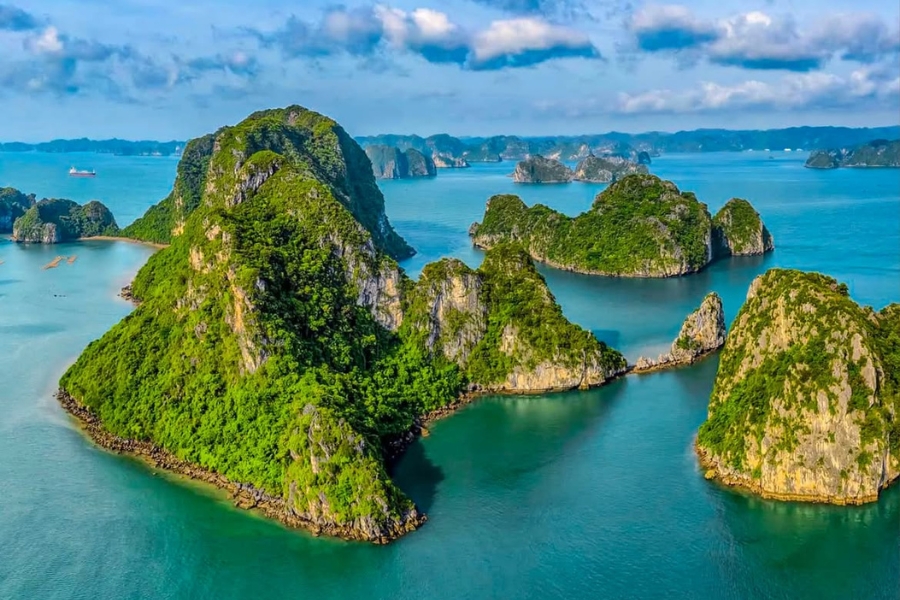
Cultural Heritage Worth Your Time on Quan Lan Island
Quan Lan Island carries more history than most beach destinations in northern Vietnam, and much of it is easy to visit in half a day by motorbike.
- Quan Lan Temple (Dinh Quan Lan) is the most significant site on the island. The temple is more than 400 years old and is regarded as the only ancient communal hall built on a remote offshore island in Vietnam. It enshrines General Tran Khanh Du, a commander of the Tran Dynasty who defended the Van Don trading port against Mongol naval forces in 1288.
- Linh Quang Tu Pagoda, located near the island center, is a functioning Buddhist pagoda surrounded by mature trees. It sees few visitors outside the island’s own community and offers a peaceful pause away from the beach.
- The Quan Lan Festival, held annually on the 10th to 20th day of the sixth lunar month (which typically falls in July), is one of the most authentic folk celebrations in Quang Ninh Province. The festival features traditional boat races between island villages, offerings at the temple, and communal gatherings. If your trip overlaps with it, the timing rewards the planning.
When visiting the temple or pagoda, dress modestly and ask before photographing worshippers or ritual preparations.
What to Eat at Quan Lan Beach?
The seafood on Quan Lan Island is not simply interchangeable with seafood elsewhere in northern Vietnam. Three species are specific to Van Don waters and worth seeking out.
- Sa sung (sipunculan worm, sometimes called peanut worm in English) is Quang Ninh’s most prized marine delicacy. The worm is dried and stir-fried or added to congee, and carries a savory, lightly oceanic flavor unlike anything else in Vietnamese cuisine. It is also sold as a packaged souvenir and travels well.
- Cu ky (stone crab) is smaller than the tiger crabs found further south, but the meat is sweet and firm. It is typically steamed or stir-fried with lemongrass and is the most reliably available item on beachfront menus throughout the season.
- Tu hai (razor clam) is farmed locally in Van Don waters. The clams are grilled with scallion oil or steamed with ginger and appear on most restaurant menus at prices considerably lower than what the same ingredient costs in Hanoi.
For the freshest selection at local prices, visit the port-side morning market between 4am and 6am. Vendors sell live catch directly from the boats as well as dried sa sung in sealed packets ready to take home.
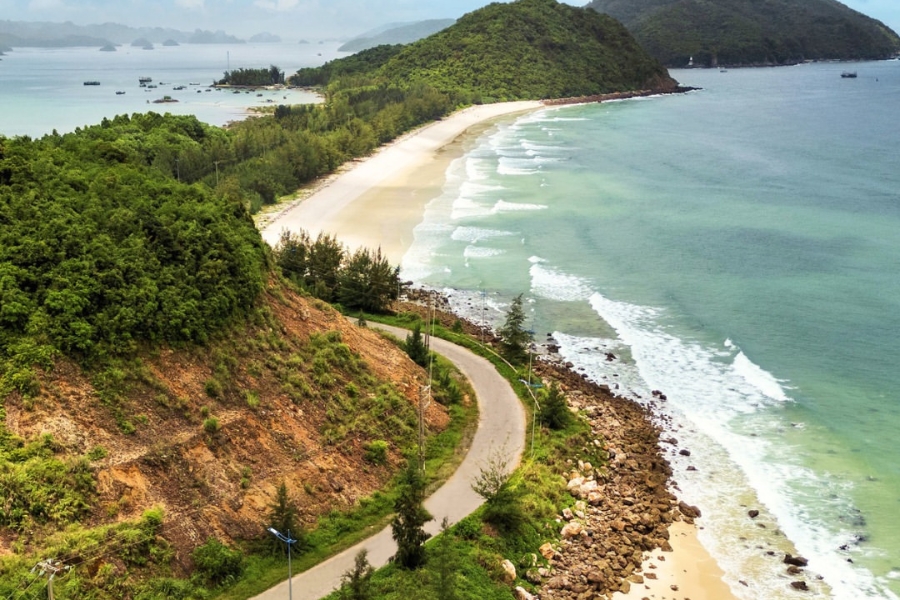
Best Time to Visit Quan Lan Beach in 2026
The best window for visiting Quan Lan Beach is late April through early June. During this period, the weather is warm and settled, the sea is calm and clear, and the island has not yet reached peak domestic crowd levels.
| Month | Weather | Sea Conditions | Crowd Level |
|---|---|---|---|
| April-May | Warm, mostly sunny | Calm, clear | Low to moderate |
| June-July | Hot, sunny | Calm, warm | High |
| August | Hot | Warm | Very high |
| September | Warm | Moderate | Moderate |
| October | Mild, variable | Rough at times | Low |
| November-March | Cool, overcast | Often rough | Very low |
Conclusion
Quan Lan Beach does not compete with Halong Bay. It offers something different: a stretch of coast that still functions on its own terms, where the seafood arrives from the morning catch, the beach empties by midweek, and a temple has been standing in the same place for four centuries. Getting there requires effort. That effort is the point.
For travelers who want to experience the full range of northern Vietnam’s coastline, pairing time on the water with a few days on the island makes both experiences richer. If you are looking for a refined starting point, Bhaya Soul offers a wellness-focused luxury cruise on Halong Bay, with attentive service and intimate boat sizes that suit travelers who prefer depth over volume. From there, the road east to Van Don and the open sand of Quan Lan Island is a natural next step.
Plan your voyage at bhayacruises.com.
Frequently Asked Questions
How far is Quan Lan Beach from Hanoi?
Quan Lan Island is approximately 200 km (124 miles) from central Hanoi by road and sea combined. The journey usually involves a shuttle bus or car to Cai Rong Port in Van Don, taking around 3 to 3.5 hours, followed by a 45- to 60-minute speedboat crossing to the island.
What is the difference between Quan Lan Beach, Minh Chau Beach, and Son Hao Beach?
Quan Lan Beach is the longest and most accessible, with restaurants and accommodation nearby. Son Hao Beach has a wilder character and is better suited to stronger swimmers looking for more space. Minh Chau Beach is the most pristine, with very calm water and a reef that can be accessed for snorkeling at low tide.
Is Quan Lan Island suitable for families with young children?
Yes. Quan Lan Beach is particularly family-friendly, with calm, shallow water, a gentle entry gradient, and beachfront restaurants nearby. Minh Chau Beach is another good option, with very calm surf and conditions that make it one of the island’s safer swimming areas.
What is the best month to visit Quan Lan Beach?
Late April through early June offers the best balance of favourable weather, calm seas, and manageable visitor numbers. July and August generally provide excellent swimming conditions but bring higher prices and more domestic visitors. From November through February, rougher seas and reduced ferry services can make beach activities impractical.
What traditional food should I try on Quan Lan Island?
Sa sung (peanut worm) is the island’s most distinctive specialty. This rare marine delicacy from Van Don waters is served dried and fried or in congee, and is also available as a packaged souvenir. Other local highlights include cu ky (stone crab) and tu hai (razor clam).