
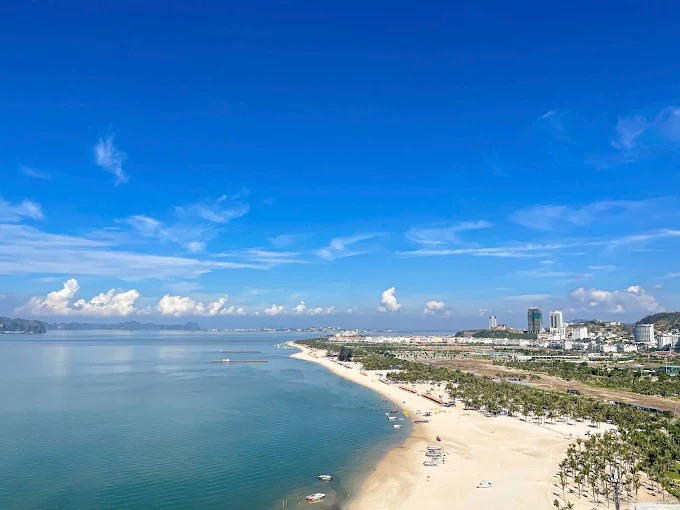
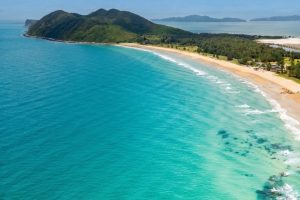
Picture a wide arc of white sand, framed by pine trees and the silhouette of a cable-stayed bridge at dusk, with the karst towers of Halong Bay dissolving into the horizon. That is Bai Chay Beach – Ha Long City’s most beloved stretch of coastline, and one of the most accessible beaches in northern Vietnam.
Free to enter, stretching over 1,000 metres along the shore, it draws swimmers, families, and travellers who use it as a calm base before setting out onto the bay.
This guide covers everything you need to plan your visit: where Bai Chay sits, when to go, what to do, how to get there from Hanoi, and how to extend your trip onto the water.
Overview of Bai Chay Beach
Bai Chay Beach sits in Bai Chay ward, Ha Long City, Quang Ninh Province, roughly 158 km (98 miles) east of Hanoi and approximately 42 km northeast of Hai Phong. Geographically, it lies between Tuan Chau Island to the west and Hon Gai Island to the east, placing it at the heart of Ha Long City’s tourism zone.
The beach itself is an engineered coastal strip, developed from a small natural cove into a well-maintained swimming destination. Its shoreline is gently sloping and wide enough for thousands of visitors to spread out comfortably. A row of pine trees lines the promenade, softening the afternoon heat and giving the beach a calm, shaded atmosphere distinct from the busier resort strips found elsewhere in Vietnam.
- Location: Ky Quan, Bai Chay, Quang Ninh, Vietnam
- Distance from Hanoi: ~158 km (98 miles)
- Beach length: Over 1,000 m
- Entrance fee: Free
- Operating hours: Approximately 6:30 AM to 6:00 PM
Bai Chay carries a dual identity that makes it particularly useful for travellers. It works as a standalone destination, offering a full day of beach activities, seafood dining, and sightseeing around Ha Long City. And it serves as the embarkation point for overnight and multi-day bay cruises, with Ha Long International Port (Sun Port) located within Bai Chay ward.
Guests travelling with Bhaya Cruises board their vessels just minutes from the beach, making an overnight stay in Bai Chay a natural and unhurried way to begin a cruise journey.
Best Time to Visit Bai Chay Beach
The best time to visit Bai Chay Beach is from April to June, when the sea is warm and calm enough for swimming. Northern Vietnam has a distinct seasonal pattern, so your experience depends heavily on when you come. Here is how the year breaks down:
| Months | Temperature | Beach Conditions | Cruise Suitability |
|---|---|---|---|
| March–April | 20–25°C (68–77°F) | Mild, occasional mist, moderate crowds | Excellent – calm seas, soft light |
| May–September | 28–35°C (82–95°F) | Warm water, busy, vibrant | Good – ideal for swimming, watch for storms |
| October–November | 22–28°C (72–82°F) | Clear skies, comfortable, quieter | Outstanding – peak visibility, calm bay |
| December–February | 15–20°C (59–68°F) | Cooler, quieter, beach less crowded | Good – serene, scenic, culturally rich |
For time of day, early morning and late afternoon are the most pleasant, avoiding the midday heat. Weather in the region can shift quickly, so check a local forecast in the days before you travel.
For those planning around Halong Bay’s full seasonal calendar, Bhaya’s guide provides a month-by-month breakdown including weather conditions and cruise route recommendations.
Top Things to Do at Bai Chay Beach
Bai Chay rewards visitors who stay long enough to move through its layers – from the water’s edge outward to the city’s cultural and entertainment landmarks.
- Swim and sunbathe on the beach. The gently sloping shoreline makes Bai Chay one of the safest swimming spots in northern Vietnam. Lifeguards are present during peak season, and designated zones keep the water organised. Arrive before 9 AM or after 4 PM to avoid midday heat and the thickest weekend crowds. The pine-lined promenade provides shade for those who prefer a walk to a swim.
- Try water sports and beach rentals. Jet skiing, kayaking, bicycle rentals, and kite flying are available directly on the beach from independent vendors. Prices vary and change seasonally, so negotiate and confirm costs on-site before committing. These activities are most plentiful from May through September, when the summer visitor flow supports a wider range of operators.
- Walk Bai Chay Bridge at sunset. The 2,487-metre (8,159-foot) cable-stayed bridge connects Bai Chay ward to Hon Gai. At the time of its inauguration in 2006, it was the longest central cable-stayed bridge in Vietnam and held a world record for its 435-metre main span. Walking the bridge at dusk offers wide views of Ha Long City and Cua Luc Bay. After dark, the illuminated bridge reflects across the water in a way that makes it one of the most-photographed scenes in the city. Entry is free.
- Visit Sun World Ha Long Complex. Adjacent to the beach, this large entertainment hub includes Dragon Park, Typhoon Water Park, and the Queen Cable Car gondola, which lifts visitors high above the bay for aerial views of the limestone islands. Admission fees for individual attractions are charged separately and change seasonally. Check current pricing directly with Sun World before visiting, as rates are not fixed.
- Explore the Halong Night Market. Starting at 6 PM and running until midnight, the night market at Halong Marine Plaza on Hoang Quoc Viet Street is the most atmospheric way to spend an evening in Bai Chay. Vendors sell grilled seafood, local snacks, hand-crafted souvenirs, and clothing at accessible prices. Many stalls are cash-only, so carry Vietnamese dong. The market is busiest on Friday and Saturday evenings.
- Tour the Quang Ninh Museum and Library. Designed by Spanish architect Salvador Perez Arroyo and completed in 2013, this paired building complex won national architectural recognition for its striking dark-glass exterior that mirrors the bay’s surface. Inside, the museum traces Quang Ninh’s geological history and coal heritage. It is open Tuesday through Sunday, 8 AM to 5 PM, and provides a genuinely interesting hour away from the beach.
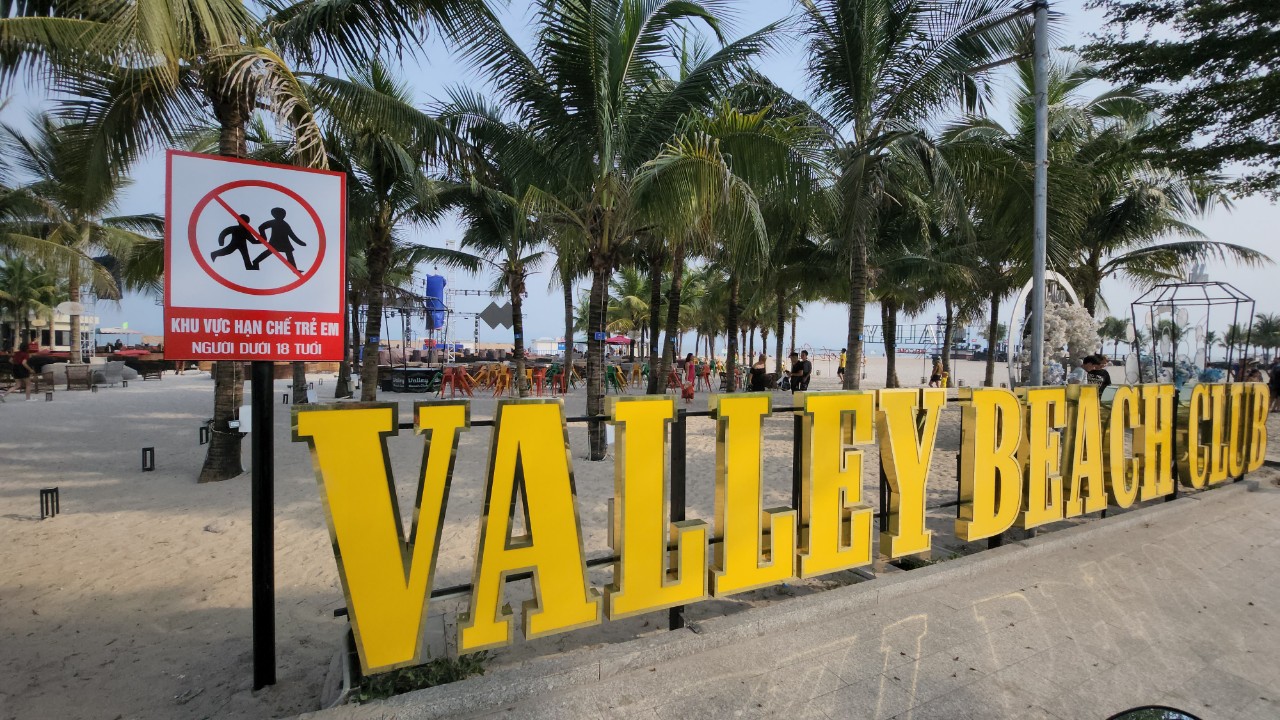
How to Get to Bai Chay Beach from Hanoi?
Bai Chay sits about 150 km (93 miles) from Hanoi, and the fastest routes take between roughly 2.5 and 4 hours. The expressway between Hanoi and Halong has made the drive straightforward, so most travelers choose road transport. The table below compares the main options.
| Transport | Duration | Approximate Cost | Best For |
|---|---|---|---|
| Shuttle / limousine bus | ~2.5 hrs | 100,000–200,000 VND/person | Solo travellers, budget-conscious visitors |
| Private car | ~2.5 hrs | Varies by provider | Families, groups, flexible schedules |
| Self-drive motorbike | ~3–4 hrs | Fuel cost only | Experienced riders, flexible itineraries |
Travelers usually fly to Hanoi’s Noi Bai airport or to Van Don International Airport in Quang Ninh, then continue by road. Once you reach Halong City, a short taxi ride brings you to the beach. See our guide on how to get to Halong Bay for route details and pier information.
Extending Your Visit: From Bai Chay Beach to the Bay
Bai Chay is at its most rewarding when treated as a gateway, not just a destination. The beach offers genuine pleasures, but just beyond the pine-tree promenade lies one of the world’s great natural wonders, accessible in under an hour from the shore.
Halong Bay, a UNESCO World Heritage Site, is the bay most travellers picture when they think of northern Vietnam: dramatic limestone karsts rising from emerald water, caves carved over millennia, and a quietude that feels unexpected given how close it sits to Ha Long City. Lan Ha Bay, approached from the Cat Ba Island direction and accessible on longer cruise routes, offers a wilder and less-visited alternative, with hidden lagoons and forested shorelines. Bai Tu Long Bay stretches further east still and remains the least-travelled of the three, rewarding guests seeking genuine solitude.
Travellers who stay one night near Bai Chay before boarding enjoy an easy, unhurried start. No 4 AM departures from Hanoi, no rush through the port. The morning feels like an extension of a holiday rather than a logistical exercise.
Matching your travel style to the right cruise makes a considerable difference in what you carry home from the experience.
| Your Travel Style | Recommended Cruise | What Sets It Apart |
|---|---|---|
| Wellness and mindful escape | Bhaya Soul | 20 luxury suites, complimentary herbal foot ritual, meditation at Tien Ong Cave, Soul Sanctuary retreats |
| Cultural immersion across two bays | The Au Co | Signature 3-day route spanning Halong Bay and Lan Ha Bay, floating village visits, cultural depth |
| Fully private, fully tailored | Bhaya Legend | Exclusive private charter, customisable itinerary, ideal for groups or special celebrations |
- Bhaya Soul is Bhaya’s most recent and celebrated vessel, named by Time Magazine as one of the World’s Greatest Places to Stay for 2026. The cruise carries just 20 suites across four suite categories, and its itinerary is built around slow travel: a complimentary 40-minute herbal foot ritual, guided walking meditation at the archaeological site of Tien Ong Cave, kayaking in the hidden Ba Ham area, and evening sound meditation under the stars. For guests looking to reconnect with themselves as much as with the bay, Bhaya Soul offers both 2-night and 3-night departures.
- The Au Co takes a different angle, carrying guests on a signature three-day route that spans both Halong Bay and Lan Ha Bay. For those who want to understand the region’s cultural and geographical breadth in a single voyage, this itinerary offers extraordinary variety – from the famous limestone pillars of Halong to the quieter caves and authentic fishing villages of Lan Ha.
- Bhaya Legend is the fully customisable private charter option, best suited to couples seeking exclusivity, families who want the bay entirely to themselves, or groups planning a corporate or celebratory voyage.
Practical Tips Before You Visit Bai Chay Beach
A little preparation makes the difference between a comfortable visit and a frustrating one. These are the details most guides leave out.
- Bring reef-safe sunscreen. The sun reflects off the water and the white sand with intensity, particularly between May and September. Conventional sunscreens containing oxybenzone and octinoxate are damaging to marine ecosystems, and reef-safe alternatives are now widely available in Hanoi and Ha Long City.
- Pack water shoes or firm sandals. The sand heats significantly by midday, and some sections of the beach and promenade have uneven surfaces. Flip-flops are fine for the waterline but impractical for longer walks.
- Carry Vietnamese dong in cash. Most beach vendors, night market stalls, and small restaurants operate cash-only. ATMs are available in Ha Long City but less common directly on the beachfront.
- Dress modestly off the beach. The Quang Ninh Museum, nearby pagodas, and the floating villages accessible by cruise all expect modest dress. A light layer or sarong that covers the shoulders and knees serves the purpose.
- Swim within designated zones. During peak season, lifeguards patrol flagged areas. Do not swim outside these zones, particularly when weather is unsettled. If typhoon warnings are active, leave the water immediately.
- Time your visit strategically. Weekday mornings before 9 AM and late afternoons after 4 PM are the quietest periods. Weekend afternoons in July and August draw the largest domestic crowds.
- Eat along Ha Long Street. The seafood restaurant strip along Ha Long Street in Bai Chay ward offers the broadest selection of freshly caught fish and shellfish at prices well below those inside the hotel zone. The Halong Night Market is another reliable option for affordable and authentic flavours.
Frequently Asked Questions
Is Bai Chay Beach free to visit?
Yes. Bai Chay Beach is free to enter, with no admission fee. Managed facilities generally operate from 6:30 AM to 6:00 PM, although the beachfront promenade and beach itself are typically accessible outside these hours.
How far is Bai Chay Beach from Hanoi?
Bai Chay Beach is approximately 158 km (98 miles) from Hanoi. Travelling via the Ha Long Expressway, the journey takes around 2.5 hours by shuttle bus or private car.
What is the best month to visit Bai Chay Beach?
The best time to visit is April to June, when warm water and sunny weather create ideal conditions for swimming. September to November is another excellent season, offering cooler temperatures, clearer skies, and fewer visitors.
Is Bai Chay a natural or artificial beach?
Bai Chay is an engineered artificial beach, developed from a small natural cove into a managed coastline stretching more than 1,000 metres. It was designed with a gentle slope to provide a safe swimming environment supported by modern visitor facilities.
Can I take a Halong Bay cruise from Bai Chay Beach?
Yes. Ha Long International Port (Sun Port), the primary departure terminal for Halong Bay and Lan Ha Bay cruises, is located within Bai Chay Ward just a short distance from the beach. Most cruises depart in the morning, making an overnight stay in Bai Chay a convenient option. Bhaya Cruises also operates its full fleet from this port.
What are the top things to do near Bai Chay Beach?
Besides swimming and relaxing on the beach, popular nearby attractions include walking across the 2,487-metre Bai Chay Bridge at sunset, exploring the Quang Ninh Museum and Library (open Tuesday to Sunday), browsing the Halong Night Market, and riding the Queen Cable Car at Sun World Ha Long.
Is Bai Chay Beach suitable for families with young children?
Yes. The gently sloping shoreline and designated swimming areas make Bai Chay Beach one of the most family-friendly beaches in northern Vietnam. Lifeguards are on duty during peak season, while the nearby Sun World Ha Long entertainment complex offers attractions suitable for children of all ages.


Pingback: Halong Night Market: Your Complete Evening Guide (2026)